Your furnace runs six, sometimes seven months out of the year here along the Wasatch Front. That’s more than most places in the country. Then summer hits, and your AC picks up the slack — often pushing through days above 100 degrees in July and August. Between the altitude, the bone-dry air, winter inversions, and some of the hardest water in the nation, consistent hvac maintenance is the only way to keep your system from wearing out before its time.
Here’s the thing about hvac maintenance: it’s not glamorous, but it’s the single biggest factor in whether your system lasts 20 years or gives up at 10. According to ENERGY STAR, heating and cooling account for about 42% of your home’s energy bill. That’s nearly half your utility costs tied up in equipment that most people ignore until something breaks.
If your system hasn’t been serviced in a while, give us a call at (801) 997-8909 or check out our $69 AC tune-up special. No pressure — we’re happy to answer questions even if you’re not ready to schedule yet.
Why HVAC Maintenance Matters Even More in Utah
Most national maintenance guides are written for somewhere flat and humid. Utah is neither. We sit at 4,200 to 4,500 feet along the Wasatch Front, and that altitude changes how your equipment performs in ways that matter.
Thinner air at our elevation affects gas furnace combustion. The burners don’t get as much oxygen per cubic foot, which means they need to be calibrated differently than a furnace in, say, Indianapolis. If the gas-to-air ratio is off, you’re wasting fuel and potentially creating carbon monoxide issues. AC systems behave differently at altitude too — sizing calculations that work at sea level don’t translate directly up here.
Then there’s the dry air. Utah’s humidity is among the lowest in the nation, and that means dust accumulates on your coils and filters faster than almost anywhere else. Seals and gaskets dry out and crack sooner. If you have a whole-home humidifier, the hard water we deal with (15 to 25 grains per gallon in most Wasatch Front homes) causes mineral buildup that can choke the system.
And then there are the inversions. Every winter, warm air traps cold, polluted air in the Salt Lake Valley, and PM2.5 levels spike to some of the worst in the country. Your HVAC filter becomes your family’s primary defense for indoor air quality. According to Salt Lake City’s sustainability division, indoor air can be up to five times more polluted than outdoor air without proper filtration. That stat should bother you.
Research from NIST shows that skipping hvac maintenance can increase your energy use by 30% or more. The Department of Energy puts it plainly: a well-maintained system lasts 15 to 20 years, while a neglected one often fails around 10. In Utah, where your equipment works harder than average, those numbers matter even more.
Your Utah HVAC Maintenance Calendar
Generic seasonal guides tell you to “check your system in spring and fall.” That’s fine advice if you live somewhere with a four-month heating season. Utah’s heating season runs October through April — that’s six to seven months. Our cooling season brings wildfire smoke. Our winters bring inversions. You need a seasonal hvac maintenance calendar built for where you actually live.
Spring (March – May): Cooling System Prep
Spring is when you get ahead of the rush. Schedule your AC tune-up now, before every homeowner in Draper and Sandy remembers they have an air conditioner on the same 95-degree day in June.
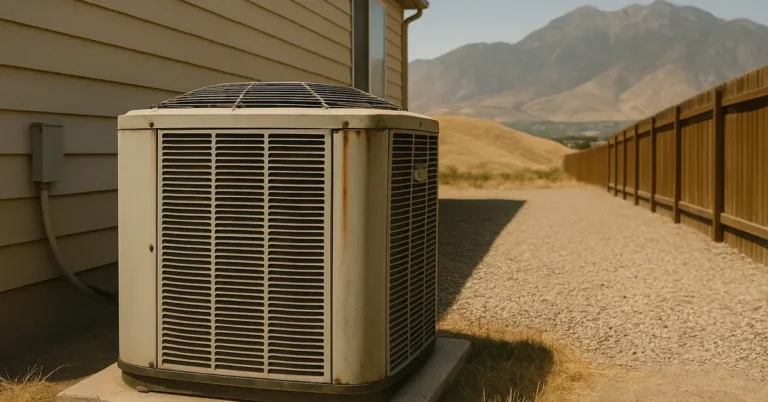
After a long winter of inversion season, your filters have been working overtime. Replace them — and if allergies are a problem in your household, choosing the right MERV rating matters more than most people think. Our guide on spring allergies and HVAC air quality walks through exactly which filters reduce pollen indoors. Go outside and clear any debris, leaves, or cottonwood fluff away from your condenser unit. Check the refrigerant lines running along the outside of your house for any visible damage — cracking, wear, or anything that looks off.
Test your thermostat in cooling mode before you actually need it. Nothing worse than discovering your AC won’t kick on during the first heat wave. If you want the full walkthrough, we put together a detailed spring AC startup checklist with all eight steps. And if your condenser unit looks rough after winter, our guide on cleaning your AC condenser after a Utah winter walks you through it.
If you’re one of the many Utah homeowners with a swamp cooler and an AC system, spring is also when you make that transition. Get the swamp cooler winterized or prepped, depending on which direction you’re heading.
Summer (June – September): Keep Your AC Running Strong
Check your filters monthly during summer. But when wildfire smoke rolls in — and it will, usually somewhere between July and September — bump that to every two to three weeks. Smoke particles clog filters fast, and a clogged filter makes your system work harder while cleaning your air less effectively.
Keep at least two feet of clearance around your outdoor unit. Plants, toys, patio furniture — anything crowding it restricts airflow and kills efficiency. If you notice ice forming on your refrigerant lines, that’s a red flag. It usually means low refrigerant charge or an airflow restriction. Don’t ignore it.
One tip that saves real money: run your fan on “auto” instead of “on.” The exception? During smoke events, running it continuously helps filter your indoor air even when the system isn’t actively cooling. MERV 13 filters capture about 85% of the smallest particles, according to Salt Lake City’s air quality division. Regular filter changes alone can reduce your utility bills by 5 to 15%.
Watch for warning signs: warm air coming from vents, strange noises, or the system cycling on and off rapidly. Those aren’t things that fix themselves.
Fall (September – November): Furnace Season Prep
This is the big one. Your furnace is about to run for six-plus months straight. Get your hvac maintenance done before heating season kicks in — ideally in September or early October, before every tech in the valley is booked solid.
When you fire up the furnace for the first time, a slight burning smell is normal. It’s dust burning off the heat exchanger. If that smell lingers beyond the first day or smells like something electrical, shut it down and call someone.
Replace your filter before inversion season starts. Check every carbon monoxide detector in your house — at altitude, furnace combustion needs to be properly calibrated, and CO is the silent danger nobody thinks about until it’s too late. Clear all your vents and registers of the dust that accumulated over summer.
Leaky ductwork is another quiet efficiency killer. ENERGY STAR estimates duct leaks can reduce your system’s efficiency by up to 30%. We’ve written a complete furnace maintenance checklist for winter that covers everything in detail, so I won’t repeat all of it here.
Winter (December – February): Protect Efficiency and Air Quality
Monthly filter changes during inversion season are non-negotiable. This is the time of year when your filter is doing double duty — keeping your furnace running efficiently and keeping your family breathing cleaner air. We recommend MERV 11 at minimum, and MERV 13 if your system can handle it. The difference in particle capture is significant. For a complete breakdown of Utah’s seasonal filter needs, including summer dust loads and wildfire smoke, see our guide on how often to change your AC filter during Utah’s dusty summer.
Monitor your indoor humidity. Utah’s dry winter air combined with constant furnace heat can drop your home’s humidity to uncomfortable — even unhealthy — levels. Cracked skin, static electricity, and increased respiratory irritation are all signs you’re too dry. If you have a whole-home humidifier, descale it regularly. Our hard water builds up mineral deposits fast.
If you have a heat pump or your condenser sits outside, keep it clear of snow and ice accumulation. And keep an eye on your energy bills. A sudden spike often tells you something in the system needs attention before it becomes a bigger problem.
For more guidance on how often your furnace specifically should be serviced, check out our post on furnace service frequency.
Rather than tracking all this yourself, our Home Health Plan covers annual tune-ups for both your AC and furnace, plus priority scheduling when you need us. Or just call us at (801) 997-8909 and we’ll figure out a plan that works for you.
HVAC Maintenance You Can Do Yourself vs. When to Call a Pro
Not every hvac maintenance task requires a professional. Here’s an hvac maintenance checklist split by what you can handle on your own and what needs a trained tech. Changing filters, clearing debris from around your condenser, checking your thermostat settings, keeping vents and registers open and dust-free, doing a visual inspection of accessible ductwork, and testing your carbon monoxide detectors — all of that is fair game. It costs you nothing but a few minutes.
But some tasks genuinely need a professional. Refrigerant levels, electrical connections, combustion analysis (especially at our altitude), deep coil cleaning, duct sealing, and blower component cleaning — these require training and equipment you don’t have in your garage. Spring is an ideal time for a professional ductwork inspection to catch leaks before summer puts maximum demand on your cooling system. ENERGY STAR notes that dirty blower components alone can reduce your system’s efficiency by 15%. That’s real money walking out the door.
Yeah, we know — spending $69 on a tune-up might feel like something you can skip. But here’s what actually happens during that visit: we’re checking electrical connections, measuring refrigerant charge, analyzing combustion, cleaning components, and catching small problems before they become expensive ones. Curious what a professional tune-up looks like step-by-step? Our guide on what to expect during an AC tune-up walks through the full process from start to finish. Industry data shows that every $1 in deferred maintenance eventually becomes $4 in repair or replacement costs. The math works in your favor.
The “I can handle everything myself” mindset is one of the more common misconceptions we run into. We actually wrote a whole post about common HVAC myths that covers this and a few other ones worth knowing about. Gas furnace work and anything involving electrical components should always be left to someone who’s Utah state licensed and knows what they’re looking at.
Warning Signs Your HVAC System Needs Attention
Even with regular hvac maintenance, your system can develop issues. The trick is catching them early.
Unusual noises are the most obvious sign. Banging often means something is loose inside the unit. Screeching usually points to a belt or motor bearing issue. Our guide on 6 weird AC noises and what they mean breaks down buzzing, rattling, grinding, hissing, and other sounds — including which ones mean you should shut down immediately. Clicking at startup that doesn’t stop can indicate a failing control board or ignition problem.
Uneven temperatures room to room, a sudden spike in your energy bill, or weak airflow from your vents — these all point to something that needs a closer look. Short cycling, where the system kicks on and off every few minutes without reaching your set temperature, is another red flag that shouldn’t wait.
Pay attention to smells. A musty odor usually means mold somewhere in your ductwork. A burning smell could be an electrical issue. And if you ever smell rotten eggs — that’s a gas leak. Leave the house immediately, don’t flip any switches, and call your gas company from outside.
For AC-specific warning signs, we have a detailed breakdown of 10 signs your AC needs repair or replacement. If it’s your furnace acting up, our gas furnace troubleshooting guide can help you figure out what’s going on.
Frequently Asked Questions About HVAC Maintenance
How often should you get your HVAC system serviced?
Twice a year at minimum — AC tune-up in spring, furnace tune-up in fall. In Utah, you’ll also want to change filters monthly during winter inversion season (December through February) and more frequently during summer wildfire smoke events. For furnace-specific guidance, see our post on how often to service your furnace.
What does HVAC maintenance include?
A professional visit typically covers filter replacement, evaporator and condenser coil cleaning, refrigerant level check, electrical connection inspection, combustion analysis, and duct inspection. These are the core hvac maintenance tips that matter most: at Utah’s altitude, combustion analysis is especially important for gas furnaces — the thinner air changes how burners perform and can create safety issues if calibration is off.
How much does HVAC maintenance cost?
In 2026, a single maintenance visit runs $75 to $200 nationally. We offer AC tune-ups at $69. Maintenance plans typically range from $150 to $500 per year depending on coverage. The return on investment is real — industry research shows every $1 you skip on maintenance eventually becomes $4 in repair costs.
Is an HVAC maintenance plan worth it?
For most Utah homeowners, yes. Our heating season alone is six to seven months, which means more wear on your furnace than a homeowner in a milder climate. A plan like our Home Health Plan includes scheduled tune-ups, priority scheduling, and repair discounts — plus you don’t have to remember what needs to happen each season.
How long does an HVAC system last with regular maintenance?
The Department of Energy says 15 to 20 years with proper maintenance, versus roughly 10 years without. In Utah, our hard water, dry air, and extended heating season can shorten that lifespan further if you’re skipping hvac maintenance — we cover exactly how long AC units last in Utah and the warning signs to watch for. A little attention each year goes a long way.
Utah’s climate asks more of your HVAC system than most places in the country. The altitude, the inversions, the dry air, the hard water — it all adds up. But the flip side is that a little consistent hvac maintenance keeps things running well for a long time. Spring AC tune-up. Fall furnace tune-up. Monthly filters during inversions. That’s the rhythm.
We’re a family-owned Utah company, Utah state licensed, with over 20 years of experience keeping homes comfortable along the Wasatch Front. If your system needs a checkup — or if something doesn’t sound right and you want a second opinion — we’re here.
Give us a call at (801) 997-8909. We offer a 120-minute emergency response time during business hours, and emergency calls are handled after hours. The $49 dispatch fee applies weekdays 9am-5pm and is applied to your repair; after 5pm, weekends, and holidays it is $149. Or if you’d rather just set it and forget it, take a look at our Home Health Plan and let us handle the seasonal stuff for you.
Need help? Learn more about our professional HVAC maintenance or call us at (801) 997-8909.
Ninja HVAC also serves Henefer and surrounding communities.
- Loading headings...