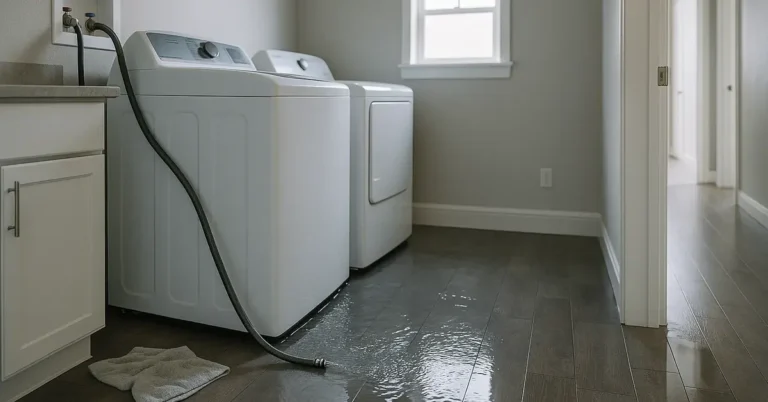
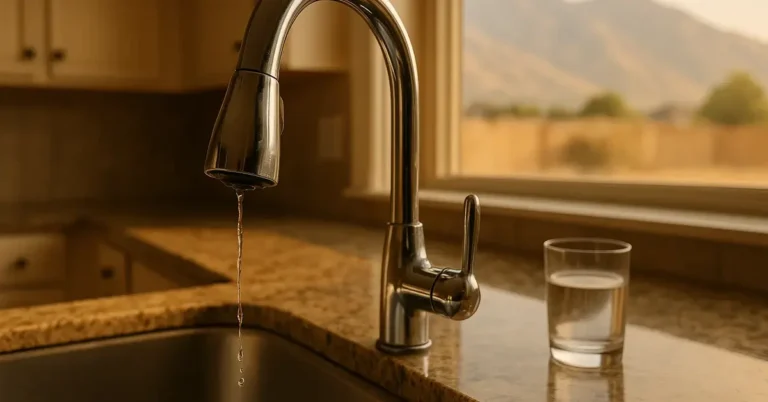
Last summer, I got a call from a homeowner in Lehi. Seven years into owning their house, and the water heater had just died. When I pulled it out, the inside looked like someone had poured concrete down the tank. Hard water sediment becomes especially noticeable during how hard water sediment affects pressure in summer.
That wasn’t concrete. It was calcium buildup from hard water, layered thick enough to choke out the heating elements completely.
If you’re dealing with Utah hard water plumbing issues along the Wasatch Front, you’ve probably noticed the white crusty stuff on your faucets or cloudy film on your glassware. That’s hard water at work. The real damage happens where you can’t see it — inside your pipes, water heater, and every appliance connected to your water supply.
Utah has some of the hardest water in the country. Over time, it’s quietly destroying your plumbing and costing you money in ways you might not connect to water quality.
If you’re dealing with plumbing issues and suspect hard water might be the culprit, give us a call at (801) 997-8909. We’ll help you figure out what’s going on.
What Makes Utah’s Water So Hard?
Hard water contains high levels of dissolved minerals, mainly calcium and magnesium. As water moves through the ground, it picks up these minerals from rocks and soil. In Utah, water passes through limestone along the Wasatch Front, loading up with minerals before reaching your house.
According to the USGS water hardness classification, 0-60 PPM is soft, 61-120 PPM is moderately hard, 121-180 PPM is hard, and over 180 PPM is very hard. Utah’s statewide average is 298 PPM.
Salt Lake City ranges from 121 to 487 PPM (9-11 GPG in most areas). Provo and Orem hit 18-22 GPG. Davis County sits around 14-19 GPG.
St. George has extremely hard water that deposits calcium faster than anywhere else in the state.
There’s also a seasonal factor. Salt Lake City gets over 60% of its water from mountain streams during winter and spring — the softest water you’ll get. In summer, the city supplements with well water, which is significantly harder. Your pipes take more of a beating during hotter months.
How Hard Water Damages Your Plumbing System
Hard water damage happens two ways, and both are happening in your house right now if you’ve got untreated hard water.
First, there’s scale buildup. Every time water flows through your pipes, it leaves behind mineral deposits. Think of it like cholesterol in an artery — it builds up slowly until the opening narrows, reducing water flow and sometimes causing drain problems.
I’ve cut open 20-year-old copper pipes where the inside diameter had shrunk by more than half. That’s why your water pressure drops over time. Your pipes are closing up from the inside. If yours only sags in the heat, see our guide to weak summer water pressure at Utah homes.
Second, there’s corrosion. Those same minerals accelerate the breakdown of the metal itself. Copper pipes and galvanized steel are both vulnerable.
The minerals speed up oxidation and pitting. A 50-year plumbing system can start developing hard water damage pipes with pinhole leaks after just 15 or 20 years.
You can’t see this damage when it starts. Scale builds silently. Corrosion happens gradually. By the time you notice something’s wrong — reduced flow, discolored water, a leak — the damage has been building for years.
It’s not just pipes. Every fixture, valve, washer and seal that touches water faces the same mineral assault. Water heaters, dishwashers, washing machines, ice makers — if water flows through it, hard water is wearing it down.
The Damage Timeline: What to Expect Year by Year
Here’s how hard water damage plays out in Utah homes. Your timeline depends on water hardness and usage, but this is what we see repeatedly.
Years 0-2: The efficiency drop. Minerals begin coating your water heater tank and heating elements. You won’t notice it yet, but your water heater is already working harder. Scale acts like insulation, forcing heating elements to run longer. Energy bills can creep up by 20-30%. Dishwashers start leaving spots on dishes. You go through more soap because hard water doesn’t lather well.
Years 2-5: Noticeable problems. Water pressure starts dropping, especially in showers and faucets. You’ll clean white buildup off faucets more often. Your water heater might make popping or rumbling sounds — that’s water trying to boil under layers of sediment. Appliances fail earlier than they should. A dishwasher quits after 6 or 8 years instead of 12. Washing machines struggle. If you’re noticing water heater repair needs, hard water is often a factor.
Years 5+: Major damage. Scale buildup cuts water flow by 20-25%. Water heaters fail outright. In Utah, we see them die at 6-9 years old — half the 15-year lifespan you’d expect with softer water.
One often-overlooked factor in that early failure? Anode rod neglect. Utah’s hard water eats through the sacrificial anode rod — the protective metal rod that keeps your tank from rusting — in 2-3 years instead of the 5+ years it lasts in softer water areas. If you’re not replacing it on that accelerated Utah timeline, your tank starts corroding years early. For details on how hard water affects anode rods and when to replace them, we’ve got a full breakdown.
When they fail, the water heater replacement costs hit hard. Pipes develop leaks. Valves seize up.

8 Warning Signs You’re Dealing with Hard Water Damage
You don’t need a water test to know you’ve got hard water issues. Your house will tell you. Here’s what to watch for.
1. White, chalky buildup everywhere. Faucets, showerheads, sink edges — anywhere water sits and evaporates, you’ll see crusty white or gray deposits. If you’re scrubbing it off regularly, your pipes face the same buildup inside. This mineral buildup can sometimes be mistaken for freeze damage, especially on outdoor fixtures — if you’re checking your outdoor faucets after winter, knowing the difference between calcium deposits and actual cracks from freezing is important. Hard water also accelerates wear on faucet washers and seals, which is why outdoor faucets often start leaking when you turn them on in spring. For a comprehensive walkthrough of all the plumbing issues to check in spring, see our spring plumbing inspection checklist.
2. Weakening water pressure. Your shower used to have good pressure, now it’s a trickle. Scale buildup chokes off the flow.
Mineral buildup in rim jets can also cause toilets that won’t flush all the way through. When calcium clogs the small holes under the toilet rim, water flow weakens and the flush loses power.
3. Strange water heater noises. Popping, banging, or rumbling sounds mean sediment has piled up at the bottom of the tank. Your water heater is struggling.
4. Leaks around fixtures. Hard water degrades rubber washers and seals faster than normal. Unexplained moisture around toilets, faucets, or valves might be mineral damage to seals, leading to issues like toilet leaks at the base. If you notice water pooling around your toilet, don’t wait — check out our guide on whether a toilet leak is an emergency to decide if you need to call a plumber immediately or if it can wait until business hours.
5. Appliances that die young. A dishwasher that quits after six years or a washing machine acting up early — hard water might be why. Mineral buildup clogs valves and coats heating elements.
6. Cloudy spots on dishes. Everything comes out of the dishwasher looking filmy or spotted. That’s mineral residue.
7. Dry skin and dull hair. Hard water makes it harder to rinse soap and shampoo completely, leaving residue on your skin and hair.
8. Higher utility bills. When your water heater works 30% harder to heat through scale, your gas or electric bill climbs.

How to Test Your Water Hardness (DIY and Professional)
Testing is simple and cheap. Pick up a water hardness test kit at any hardware store for $10-15. Most use test strips — dip in water, wait a minute, and compare the color to a chart. You’ll get a reading in GPG or PPM in about five minutes.
Results: under 3.5 GPG (60 PPM) is soft, 3.5-7 GPG is moderate, 7-10.5 GPG is hard, and above 10.5 GPG is very hard.
In Utah, if you’re testing above 10 GPG, your water is actively damaging your plumbing.
If you’re on city water, check your local utility’s water quality report. Salt Lake City Public Utilities publishes theirs online. Test in summer for the worst-case scenario — that’s when hardness peaks because of the seasonal shift to well water.
Not sure where to start? We can test your water hardness and recommend the right solution. Call us at (801) 997-8909.

Your Options: From Quick Fixes to Permanent Solutions
What makes sense for your house depends on your budget, how bad the damage is, and how long you plan to stay. Let’s walk through the options.
Interim fixes for tight budgets. If a full water softener Utah installation isn’t in the cards right now, you can slow the damage. Clean your faucet aerators and showerheads every few months. Flush your water heater once or twice a year to remove sediment — our spring water heater flush guide walks you through the process step by step. Use descaling products for appliances. None of this solves the root problem, but it buys you time. These tasks are all part of a good spring plumbing inspection routine that helps you catch hard water damage early.
Salt-based water softeners. This is the most effective solution. A salt-based water softener Utah system uses ion exchange to swap calcium and magnesium for sodium, producing genuinely soft water with no scale or buildup. You’ll notice the difference immediately in how soap lathers and how your skin feels.
Professionally installed systems run $2,300-$6,300 depending on size and capacity. Maintenance is simple: add salt to the brine tank every month or two (about $5-10 per month).
The main downside is adding a small amount of sodium to your water. Install a bypass valve so your kitchen cold water line stays unsoftened for drinking and cooking.
Salt-free conditioners. These don’t remove minerals — they change the structure so minerals don’t stick to surfaces as easily. The water still tests as hard, but you get less buildup. They don’t require salt or electricity, but they’re not as effective as true softeners, especially with very hard water like ours.
Whole-house vs. point-of-use. A whole-house system treats all the water coming into your home. Point-of-use systems treat water at a specific location, like just the water heater. They’re cheaper and easier to install, but they leave the rest of your plumbing unprotected.
ROI: Does it pay for itself? A $2,300 water softener seems expensive until you add up what hard water costs you. A water heater replacement every 7 years instead of 15 costs an extra $2,100-$4,400. A dishwasher failing at 8 years instead of 12 is another $600. Add in 20-30% higher energy bills and plumbing repairs, and you’re easily spending $5,000-$8,000 over a decade. A softener pays for itself within a few years.

Common Questions About Hard Water in Utah
How does hard water damage plumbing?
Hard water damages plumbing in two main ways. First, minerals build up inside pipes, narrowing the openings and reducing water flow. Second, those same minerals accelerate corrosion in copper and galvanized pipes, leading to pinhole leaks and a shorter lifespan. The damage happens slowly but adds up over years.
What is the water hardness level in Salt Lake City?
Salt Lake City’s water hardness ranges from 121 to 487 PPM depending on which part of the valley you live in. Most areas fall between 157-189 PPM (about 9-11 grains per gallon). That puts it in the “hard” to “very hard” category. The hardness varies seasonally — it’s higher in summer when the city uses more well water to supplement mountain stream sources.
Does a water softener really save money?
Yes. A professionally installed water softener runs $2,300-$6,300 upfront. But hard water costs you $5,000-$8,000 or more over a decade in premature appliance failures, higher energy bills, and plumbing repairs. The softener typically pays for itself within 3-5 years.
Can I install a water softener myself?
Technically, yes — but we don’t recommend it unless you’re confident working with plumbing. You’re tying into your main water line, which means you need to cut pipes, solder connections, install bypass valves, and program the system correctly. A bad installation can cause leaks or system failures. Professional installation includes proper sizing, correct placement, and warranty coverage.
Will a water softener remove existing scale buildup?
Somewhat. A water softener prevents new scale from forming, and over time, softened water can slowly dissolve some existing buildup. But it won’t magically clear decades of scale overnight. For heavily scaled drain lines, professional cleaning can scour out the buildup — our guide on hydro jetting versus snaking for scaled pipes covers when each makes sense. For heavily scaled pipes, you might need professional descaling or pipe replacement along with softener installation.
How do I know if my water heater failed because of hard water?
If your tank water heater died before 10 years, and you’ve never flushed it, hard water was likely a major factor. Other signs: heavy sediment when you drain it, rust-colored hot water before it failed, rumbling or popping sounds, and reduced capacity over time. Utah’s hard water is one of the top reasons water heaters fail early here.
Final Thoughts
Utah’s hard water isn’t going anywhere. The minerals in our groundwater and surface water are part of living along the Wasatch Front. You can’t change the geology.
But you can protect your plumbing. A water softener is the most effective long-term solution, and it pays for itself in appliance savings and lower energy bills. If you’re not ready for that investment yet, start with the interim fixes — flush your water heater, clean aerators, and watch for the warning signs.
The worst thing you can do is nothing. Hard water damage is cumulative. Every month, every year, the scale builds a little thicker, the corrosion digs a little deeper. By the time you notice a problem, you’re already years into the damage.
We’ve been helping Utah homeowners deal with hard water issues for 20+ years. If you’re dealing with low water pressure, early appliance failures, or you just want to know your options, give us a call at (801) 997-8909. We’ll test your water hardness, walk you through the solutions, and give you a quote with no pressure.
Check out our full plumbing services to see everything we cover across the Wasatch Front — from water softener installation to water heater replacement and everything in between.
Related: how much electricity your water heater uses
Ninja HVAC also serves Independence and surrounding communities.