You stepped outside this spring morning in 2026 and your eyes started watering within seconds. Typical Utah spring, right? But here’s what’s weird — you came back inside and somehow felt worse.
If your spring allergies HVAC filter isn’t up to the task, indoor air on the Wasatch Front can feel worse than outdoors right now. Understanding how your filter works is the first step to relief.
About 25.7% of adults deal with seasonal allergies, according to the CDC.
In Utah spring, indoor air quality takes a hit earlier than most states — tree pollen starts showing up in February, and by April we’re in the thick of it. Most homeowners don’t realize their heating system spent all winter trapping dust and pollutants. Now spring hits, you fire up the AC, and all that accumulated junk starts recirculating through your house.
We’re going to walk through exactly why this happens, what Utah’s specific pollen timeline looks like, and what you need to do right now.
If your indoor air quality needs attention, give us a call at (801) 997-8909. We’re happy to help.
Why Your Spring Allergies HVAC Filter Needs Attention Right Now
Let’s talk about what happened all winter. Your furnace ran for months, pulling air through that filter along with dust, skin cells, pet dander, and whatever particles your family tracked in.
That filter did its job. It caught stuff. But if you didn’t change it regularly through winter, that filter is now packed with months of accumulated allergens.
Now it’s March. The weather’s warming up. You’re thinking about getting your AC ready for summer. But that clogged filter is sitting there like a time bomb.
When airflow gets restricted by a dirty filter, your system struggles. In Utah’s dry climate — 10 to 30% humidity most of the year — restricted airflow means particles stay suspended longer.
Utah’s altitude makes this worse. We lose about 12-15% of our AC efficiency just from elevation. Add a clogged filter and your system is working overtime.
Indoor air quality in spring can be up to five times more polluted than outdoor air. Between our dry air and wintertime inversions, our homes can become allergy traps if the HVAC system isn’t doing its job. And while Utah typically runs dry, managing humidity during monsoon season also plays a role in indoor air quality year-round.
The other issue? A lot of homeowners have the wrong MERV rating on their filter. Too low, and pollen blows right through. Too high on an older system, and you’re choking airflow even when the filter is clean. If you’re dealing with persistent dust and allergen issues despite changing filters regularly, leaky ductwork could be pulling contaminants from your attic or crawlspace — see our ductwork inspection guide for what to check. Filter misconceptions like these are surprisingly common — we cover several of them in our guide to common HVAC myths that cost homeowners money.
Utah’s Spring Pollen Timeline (And When to Act)

Utah’s allergy season doesn’t wait for the calendar. We start seeing tree pollen as early as February. Oak, birch, cedar, maple, pine — they all start releasing pollen while there’s still snow on the mountains.
By April and May, we hit peak pollen season on the Wasatch Front. This is when Salt Lake Valley, Utah Valley, Draper, Lehi, Sandy — everywhere along the I-15 corridor — sees the highest Utah pollen HVAC systems have to deal with all year.
Then comes late May. Cottonwood season.
If you’ve lived here for more than one spring, you know. That white fluff isn’t just annoying — it’s loaded with pollen and it gets into everything.
Pollen release is heaviest between 5 and 10 in the morning. If your spring allergies HVAC filter isn’t up to the task, those morning hours are when the most allergens enter your home’s air circulation.
The timing matters because you can’t wait until you’re already miserable to upgrade. If you’re reading this in March or early April, you still have time to get ahead of it.
This is why we tell homeowners: change your filter now. Not next month. Now.
MERV Rating for Allergies: What Works for Utah Homes

MERV stands for Minimum Efficiency Reporting Value, and understanding the right MERV rating for allergies is critical. It’s a scale that tells you how well an air filter catches particles. The scale runs from 1 to 20.
A MERV 8 filter is what most homes use by default. It’s fine for basic dust but lets smaller pollen particles slip through.
MERV 11 to 13 is where you want to be if spring allergies are hitting you hard. Studies show that MERV 11-12 filters can reduce indoor allergen concentrations by up to 60% compared to lower-rated filters.
The U.S. Department of Energy recommends MERV 13 filters for residential use. So if you’re at MERV 8 right now, you’re at the bare minimum.
MERV 13 filters aren’t just for allergies — they’re also EPA’s recommended minimum for protecting your home from wildfire smoke, which gets into Utah homes at much higher rates than most people realize.
But here’s the catch — not every HVAC system can handle a high-MERV filter. This is especially true for Utah homes built before 2000.
Can Your System Handle a Higher MERV Filter?
Higher-MERV filters are denser. They catch more particles but also restrict airflow more than a basic MERV 8.
If your system wasn’t designed for that resistance, you can damage your equipment. Older systems with standard blower motors are the biggest concern.
If your furnace or air handler is more than 15 years old, there’s a decent chance it wasn’t built to push air through a MERV 13 filter.
Utah’s altitude already reduces your system’s efficiency by 12-15%. Adding a high-MERV filter to a system that’s already struggling can push it over the edge.
Here’s the practical answer: if your system is newer (installed after 2010) with a variable-speed blower, you can likely handle MERV 11 or even MERV 13. If it’s older, MERV 11 is usually safe.
Want to get ahead of this? Our Home Health Plan covers annual tune-ups and priority scheduling. Or just call us at (801) 997-8909.
When you’re shopping for filters, look for the actual MERV rating on the packaging. A filter that doesn’t fit properly lets unfiltered air bypass the whole thing.
Cost-wise, MERV 8 filters run $10-15. MERV 11 filters are $15-25. MERV 13 filters are $20-35. You’re talking about a $10-20 difference for sixty percent better allergen reduction.
What to Do Right Now (Before Peak Pollen Hits)
Alright, enough theory. Here’s what you actually need to do this week.
First, go check your current filter right now. Pull it out and look at it. If you can’t remember the last time you changed it, that’s your answer.
Next, pick the right MERV rating for allergies based on your system. Got a newer system with a variable-speed blower? Go with MERV 11 or 13.
Older system with a standard motor? MERV 11 is your safe bet.
During allergy season, change your spring allergies HVAC filter every 30 to 45 days. Not every 90 days like the package says. Spring in Utah isn’t normal conditions. You’ve got pollen, dust, and cottonwood.
Your filter gets clogged faster.
Mark it on your calendar. Set a reminder on your phone. Whatever it takes. And while you’re adjusting your system for spring, make sure your thermostat settings are dialed in for Utah’s spring temperature swings — the wrong settings can make your system run longer and circulate more unfiltered air.
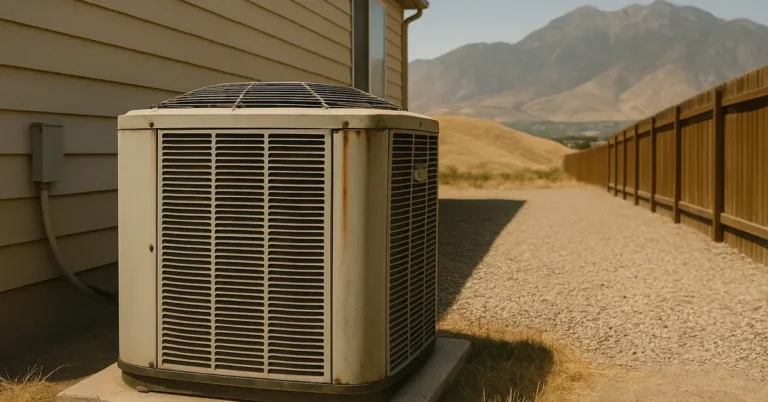
Before summer hits, consider getting a professional HVAC tune-up. We check airflow, inspect ductwork for leaks, make sure your blower motor is running efficiently. While you’re at it, spring is also the perfect time to clean your AC condenser unit after winter — pollen, cottonwood, and debris can clog the outdoor unit and reduce efficiency.
A lot of Utah homes — especially older ones — have ductwork issues they don’t even know about. Leaky ducts mean you’re losing conditioned air and pulling in unfiltered air from your attic or crawlspace.
If you haven’t had your system checked in a couple years, it’s worth doing. We offer comprehensive maintenance checks that catch these issues before they become expensive repairs.
This isn’t always a DIY job. If you’ve got accessible ductwork in your basement, you can do a visual inspection. Look for gaps, loose connections, or visible dust buildup around seams. If you see issues, call a pro.
When should you call a pro? If your system is older and you’re not sure it can handle a higher-MERV filter, call. If you’ve upgraded your filter and the system is running constantly or making weird noises, call.
For basic filter changes, you’re fine doing it yourself. For anything involving the actual system or ducts, it’s worth getting professional eyes on it.
Frequently Asked Questions
How do HVAC filters help with allergies?
HVAC filters trap airborne particles before they circulate through your home. When you run your heating or cooling system, air gets pulled through the filter.
Pollen, dust, and pet dander get caught in the filter material. The higher the MERV rating, the smaller the particles it can catch. A good spring allergies HVAC filter removes the majority of allergy triggers from your indoor air — but only if it’s clean and the right rating.
What MERV rating should I use for allergies?
MERV 11 to 13 is the sweet spot for allergy relief in most homes. Upgrading from a basic MERV 8 to MERV 11 catches about 60% more allergens.
Going up to MERV 13 catches even more, but your system needs to handle the increased airflow resistance.
If your system is older, start with MERV 11. For newer systems with variable-speed blowers, MERV 13 is usually fine.
How often should I change my HVAC filter during allergy season?
Every 30 to 45 days during Utah’s spring allergy season. The standard 90-day recommendation doesn’t account for heavy pollen loads.
It gets clogged faster.
A clogged filter can’t do its job. Set a reminder and stick to it.
If you’ve got pets or someone with severe allergies, lean toward every 30 days. For a complete breakdown of Utah’s unique filter schedule by season, check out our guide on how often to change your AC filter during Utah’s dusty summer.
Can my HVAC system handle a MERV 13 filter?
It depends on your system’s age. Systems built after 2010 with variable-speed or ECM blower motors can usually handle MERV 13 without issues.
Older systems with standard single-speed motors might struggle.
The denser filter creates more resistance, which makes the blower work harder and can shorten equipment life.
If you’re not sure, check your system’s manual or call an HVAC tech. MERV 11 is the safer bet for older systems and still provides significant allergy relief.
Why are my allergies worse inside my house?
Indoor air quality in spring can be up to five times more polluted than outdoor air, especially in Utah. Clogged HVAC filters recirculate trapped allergens, poor ventilation keeps pollen and dust suspended, leaky ductwork pulls unfiltered air from attics, and Utah’s dry climate keeps particles airborne longer. If you’re closing windows to keep pollen out but not filtering your indoor air properly with the right spring allergies HVAC filter, you’re trapping allergens inside.
Final Thoughts
Spring allergies in Utah are bad enough without your own home making them worse. But if you’re sitting on a clogged filter or using a MERV 8 when you need a MERV 11, you’re fighting a losing battle.
We’re about three to four weeks out from peak pollen season. The trees are already releasing. Cottonwood is coming. If you haven’t changed your filter since winter, this is the week to do it.
Change your spring allergies HVAC filter every 30-45 days through May. Pick the right MERV rating for allergies based on your system. And if your system hasn’t been tuned up in a while, get it checked before summer hits.
Ninja HVAC is a Utah state licensed, family-owned company with over 20 years of experience. Give us a call at (801) 997-8909 — we can help you figure out exactly what your system needs to handle Utah’s spring allergy season.
Need help? Learn more about our indoor air quality services or call us at (801) 997-8909.