
FURNACE & HEATING REPAIR
IN UTAH — UPFRONT PRICING
When the heat quits on a sub-zero Utah night, you need fast diagnosis and honest heating repair — not a pressure sale. Ninja Plumbing, Heating and Air are Utah heating contractors who repair gas furnaces, heat pumps, boilers, and ductless mini-split heat with full diagnostics and upfront flat-rate quotes. Whether you searched heating repair utah online or just woke up to a cold house, we dispatch 7 days a week across the Wasatch Front.
The 120 Rule +
The Silent Ninja Rule
HEATING REPAIR
FROM UTAH'S LOCAL EXPERTS
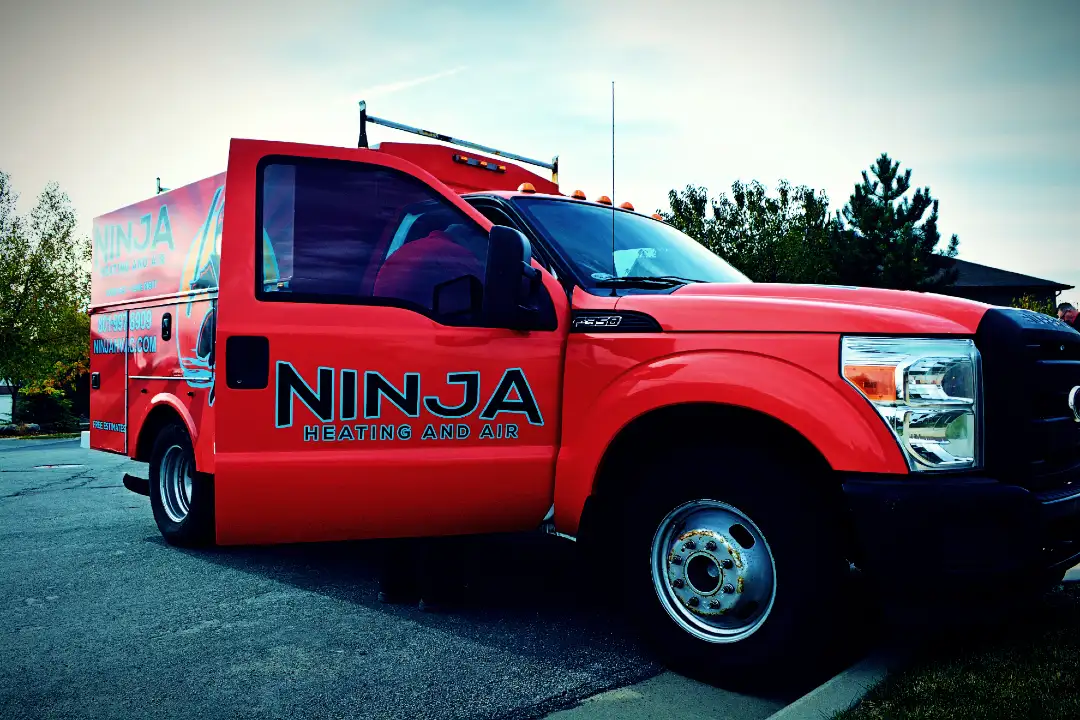
We service every major residential brand: Lennox, Carrier, Trane, Bryant, Goodman, Rheem, York, American Standard, Amana, Mitsubishi, and Daikin. Most repairs finish same-visit with parts stocked on the truck. If a system is past its service life, we walk you through replacement with real numbers — never a pressure sale.
Good heater maintenance prevents most no-heat emergencies, so we also handle seasonal tune-ups before winter. As your local heating contractor, we serve Salt Lake, Utah, Davis, Summit, Wasatch, and Tooele counties, with emergency dispatch, including after hours, and a 120-minute response during business hours on true no-heat calls across Salt Lake, Utah & Davis counties.
COMPLETE HEATING REPAIR
COVERAGE IN UTAH
OUR HEATING REPAIR
PROCESS
SIGNS YOUR HEATING SYSTEM
NEEDS REPAIR
ZERO SURPRISES.
CALL NOW FOR 120-MIN RESPONSE
WHY UTAH
HOMEOWNERS CHOOSE NINJA
- Utah state licensed technicians on every call
- Upfront flat-rate pricing before any work starts
- Family-owned — we treat your home like our own
- After-hours emergency service for urgent repairs
- Parts stocked on trucks for same-visit repairs
- 100% satisfaction guarantee on all work
- Financing available
- Licensed & Insured Technicians
WHAT OUR
CUSTOMERS ARE SAYING
OTHER NINJA
SERVICES YOU MAY NEED
HEATING REPAIR —
FREQUENTLY ASKED QUESTIONS
How fast can you respond to a no-heat emergency in Utah?
We commit to a 120-minute response during business hours on true no-heat emergencies across Salt Lake, Utah and Davis counties. Real people answer your call during business hours, and we dispatch right away. Most metro customers see a technician within the hour.
How much does heating repair cost in Utah?
Our service call is $49 Monday through Friday and is applied to your repair. Dispatch after 5pm, on weekends, and on holidays is $149, and diagnostics start at $149. Once we know what failed, you get a flat-rate quote before any work begins. We do not give phone estimates or tiered price ranges, and we never call a repair free.
What heating systems do you repair?
We repair the full range of home heating: gas and electric furnaces, air-source heat pumps, ductless mini-split heat, hot-water and steam boilers, and the gas lines that feed them. If it makes heat, we service it.
Should I repair or replace my heating system?
As a rule, a newer system with a modest repair is worth fixing, while an aging or low-efficiency system that needs a major component often pays back faster as a replacement. We quote both options with real numbers so you can decide, and we never pressure you either way.
Do you repair heat pumps and mini-splits too?
Yes. We service air-source heat pumps and ductless mini-split heat alongside furnaces and boilers. You can read more on our heat pump repair and mini-split repair pages, and we bring the right parts to most calls.
How often should I service my heating system?
Once a year, ideally in the fall before the first hard freeze. A seasonal tune-up catches cracked heat exchangers, weak igniters, and carbon monoxide risks before they become a no-heat emergency. Our tune-up is $39, available Monday through Friday from 9 to 5.
Are your technicians licensed and insured?
Yes. Every technician is licensed through the Utah Division of Occupational and Professional Licensing (DOPL), and we carry full liability insurance and workers’ compensation. You will never have an unlicensed apprentice working alone on your system.
What heating brands do you service?
We service every major residential brand, including Lennox, Carrier, Trane, Bryant, Goodman, Rheem, York, and American Standard furnaces, plus Mitsubishi, Daikin, Fujitsu, and Bosch heat pumps and mini-splits.