Your air conditioner is making noise. You flip on the AC for the first time this spring and instead of quiet operation, there’s a buzz. A rattle. A screech.
Should I be worried? Do I need to call someone right now?
We’ve been answering those questions for 20 years here in Utah. When your air conditioner is making noise, it’s usually your system’s way of telling you something needs attention.
Some can wait for a scheduled service call. Others mean you should shut things down immediately.
We’re covering the six most common types of air conditioner making noise we encounter across the Wasatch Front as we head into summer 2026. We’ll explain what causes each one and which ones need immediate attention.
Hearing strange noises from your AC? Give us a call at (801) 997-8909 — we’ll diagnose it for you.
1. Buzzing or Humming (Most Common in Utah)

This is the one we hear about most often when an air conditioner is making noise. A persistent AC buzzing sound coming from your outdoor condenser unit.
Three main culprits here. First, electrical issues — a loose wire, a failing contactor, or a capacitor on its way out. That last one spikes every summer, since July heat is what pushes a weak capacitor over the edge. Second, loose fan blades inside the condenser.
Third, a compressor that’s struggling. At Utah’s altitude (we’re sitting at 4,300 feet in Salt Lake, higher in the mountains), compressors work harder because the air is thinner.
The dry climate also speeds up wear on electrical components. Dust gets into everything out here, and over time it can cause connections to loosen or corrode. That’s why proper condenser placement and clearance matters — a unit boxed in by shrubs or under a deck accumulates debris faster and runs hotter, which accelerates wear on electrical components.
Schedule service soon if you hear this type of noise. Not an immediate emergency unless you also smell something burning.
Walk outside and look at your condenser unit. Are any panels vibrating or loose?
Sometimes a simple tightening is all it takes. But if the buzz is coming from inside the unit, leave it to us.
Our annual AC tune-up catches these issues before they become expensive.
2. Rattling or Clanking

Air conditioner rattling is one of the most common types of air conditioner making noise we encounter. Usually it’s mechanical — something’s loose or something doesn’t belong there.
Mounting hardware may have worked itself free. Debris could have blown into the unit during one of our spring dust storms.
We swing from freezing winters to 100-degree summers. Metal expands and contracts, and over a few seasons, bolts loosen.
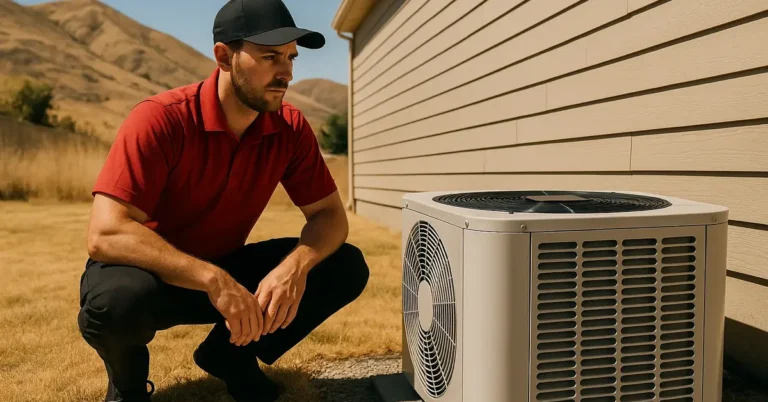
Start with a visual check. Turn off the AC, then go outside and look at your condenser.
Check for leaves, sticks, or anything else that might’ve gotten sucked into the fan. Look for loose panels.
Comfortable doing it? Check the mounting bolts — sometimes they just need a quarter-turn with a wrench.
An internal rattle needs professional attention. That could be a loose fan blade or a failing motor mount.
Spring is prime time for cleaning your AC condenser, and we can tighten everything up while we’re at it.
Monitor the situation. Minor rattling can wait for a scheduled service call.
Loud clanking or a sound that’s getting worse needs attention sooner. Metal-on-metal contact can cause real damage.
3. Squealing or Screeching
High-pitched, metallic, unmistakable. This type of air conditioner making noise usually means bearings — either in your fan motor or your blower motor.
Bearings need lubrication to spin smoothly. In Utah’s bone-dry climate (we’re talking 10-30% humidity most of the year), they dry out faster than in humid climates.
Old belt-driven systems can also squeal if the belt is worn, but most modern systems don’t use belts anymore. So if you’re hearing that screech, it’s probably bearings.
Catching it early means we can sometimes lubricate the bearings or replace them. Ignore it for weeks, and the motor seizes up.
Then you’re looking at a full motor replacement — typically several hundred dollars.
Schedule service soon when diagnosing an air conditioner making noise like this. It won’t cause immediate damage, but it will get worse fast.
4. Clicking (When to Worry)
Clicking is tricky because some clicking is normal. Your thermostat tells the AC to turn on, and you’ll hear a single click — that’s the relay engaging.
Totally fine. When it shuts off, another click. Also fine.
Rapid AC clicking noise is the problem when your air conditioner is making noise. Like tick-tick-tick-tick-tick in quick succession, or continuous clicking that doesn’t stop.
That usually points to an electrical relay that’s failing, a capacitor issue, or debris stuck in the fan.
Listen carefully. One click at startup, one at shutdown — you’re good.
Multiple rapid clicks, or clicking that keeps going while the unit tries to start — that’s a problem.
Single clicks? You’re fine. Rapid clicking and the AC won’t start? Schedule service this week.
Rapid clicking plus a burning smell? Shut it down at the thermostat and circuit breaker, then call us immediately.
5. Hissing (Shut It Down NOW)
Hissing is one of the most serious types of air conditioner making noise — it’s the sound of refrigerant escaping under pressure. It means there’s a crack or hole in your refrigerant lines.
This one is not a “wait and see” situation. Refrigerant is expensive, and your system keeps running, losing more and more.
Eventually, the compressor will try to run dry. When that happens, the compressor fails. A compressor replacement costs thousands. When repairs like this stack up on an older unit, it is worth knowing when an aging AC is worth replacing rather than patching.
Low humidity makes refrigerant leaks more audible than in humid climates. Our dry air causes gaskets and seals to crack over time, which is why leaks are fairly common in older systems out here.
Low humidity makes refrigerant leaks more audible than in humid climates. Our dry air causes gaskets and seals to crack over time, which is why leaks are fairly common in older systems out here. And when they happen, they’re about more than just lost cooling — especially at Utah’s altitude and during summer heat. For the full story on why refrigerant leaks cascade into bigger problems here, check out our guide on why a refrigerant leak is more than just a cooling problem.
Turn off your AC at the thermostat. Then go to your breaker panel and flip the AC breaker off.
Then call us. We guarantee a 120-minute emergency response during business hours across the Wasatch Front.
Learn more in our guide on signs of low refrigerant.
Hissing or grinding sounds? Turn off your AC immediately and call us at (801) 997-8909. We offer 120-minute emergency response during business hours across the Wasatch Front.
6. Grinding (The Expensive One)
Grinding is unmistakable. It’s a deep, rough, metal-on-metal sound that means your air conditioner is making noise you can’t ignore.
You don’t have to be an HVAC tech to know something’s wrong.
Usually it’s motor bearings — either your blower motor or your outdoor fan motor. The bearings have worn down to the point where metal is scraping against metal.
Keep running the system, and the motor will seize.
Cost-wise, catching it early means lubrication or bearing replacement for a fraction of the cost of a full motor replacement.
Grinding can also mean compressor failure. That’s the worst-case scenario.
A failing compressor sometimes makes a grinding noise before it locks up entirely.
Shut it down and call the same day. Don’t keep running it.
Every hour you run a grinding motor is an hour closer to catastrophic failure.
What’s a Normal Noise Level When Your Air Conditioner Is Making Noise?
Modern central AC systems should run at about 50 to 65 decibels indoors. That’s roughly the volume of a normal conversation.
Your outdoor condenser is louder — usually 60 to 75 decibels. About as loud as a dishwasher.
At altitude, AC systems work a bit harder. The thinner air means compressors have to work more to move the same amount of refrigerant, so your outdoor unit might be slightly louder than the same model would be at sea level.
Hearing your AC over a normal conversation inside your house means something’s wrong.
When to Call a Technician (and When to Wait)
Here’s how we break it down when an air conditioner is making noise. Three tiers.
Shut down and call NOW:
- Hissing (refrigerant leak)
- Grinding (motor or compressor failure imminent)
- Screaming or screeching that won’t stop
- Any noise accompanied by a burning smell
Turn it off at the thermostat and the breaker, then call us.
Schedule service this week:
- Buzzing or humming (electrical issue, failing contactor)
- Persistent squealing (bearings wearing out)
- Rapid clicking (relay or capacitor issue)
- Rattling that’s getting worse
These won’t cause immediate damage, but they’re trending in the wrong direction.
Monitor and mention at your next tune-up:
- Minor rattling that’s been consistent
- Single clicks at startup and shutdown
- Slightly louder operation than normal
Keep an ear on these situations. Mention them when we come out for your annual tune-up.
Not sure if your air conditioner making noise is urgent? Call us at (801) 997-8909 — we’re happy to talk you through it over the phone, no charge.
Preventing Your Air Conditioner Making Noise Starts with Annual Tune-Ups

During a tune-up, we tighten all the hardware, lubricate motors, check electrical connections, test capacitors, and clean the coils. Basically, we catch these issues before they turn into noises.
Filter changes matter more here than almost anywhere else. Our air is dusty. Pollen, dust storms, dry soil — it all ends up in your filter.
A clogged filter restricts airflow, which makes your fan work harder and run louder.
Change your filter every one to two months during cooling season. Not every three months like they tell you in humid climates.
Spring condenser cleaning is also key. After a winter, your outdoor unit has been collecting leaves and dirt. Clear the debris, hose down the coils. A clean condenser runs quieter.
According to the EPA ENERGY STAR program, regular maintenance can prevent most common HVAC issues and improve system efficiency by up to 15%.
Our $69 AC tune-up covers all of this. It’s scheduled Monday through Friday, 9 AM to 5 PM, and it’s one of the best investments you can make.
For more on what we check, see our spring AC startup checklist or our guide to regular HVAC maintenance.
Frequently Asked Questions
Why is my air conditioner making noise that’s so loud?
Usually it’s worn motor bearings, loose fan blades, a clogged filter restricting airflow, loose panels, or a failing compressor. A normal central AC should run at 50 to 65 decibels indoors.
Hearing it over a normal conversation means something’s wrong and you should have it checked.
Can I fix an air conditioner making noise myself?
You can handle the easy stuff — change the filter, clear debris from the outdoor unit, tighten visible mounting bolts. But leave electrical issues, refrigerant leaks, motor bearings, and anything inside the unit to a professional.
What does a bad AC compressor sound like?
A failing compressor usually makes a grinding or clanking sound. Sometimes you’ll hear a hard-start — a stuttering or rapid clicking when it tries to turn on. Other times it’s a loud, continuous humming that won’t stop.
Why does my AC make noise when it turns on?
A single click when it turns on is normal — that’s the relay engaging. A brief whoosh or the sound of the fan starting up is also normal. But grinding, clanking, or screaming at startup is not normal.
What causes AC buzzing sound?
Most commonly, it’s an electrical issue — loose wiring, a failing contactor, or a capacitor going bad. It can also be loose fan blades or a failing compressor. It’s not an emergency unless you also smell something burning, but it won’t get better on its own.
Final Thoughts
Your air conditioner making noise is your system’s way of telling you something’s wrong. Whether it’s an air conditioner making noise from buzzing, rattling, or grinding, most issues are fixable if you catch them early.
Ignore them, and they get expensive. That initial air conditioner making noise turns into a major repair.
The dry climate and temperature swings are hard on AC systems. This is why air conditioner making noise is so common out here. Bearings dry out faster, hardware loosens from expansion and contraction, and dust clogs filters twice as fast.
Regular maintenance keeps things running quietly all summer long and prevents most cases of an air conditioner making noise.
We’re based in Eagle Mountain and serve the entire Wasatch Front — Salt Lake, Utah, Davis, Weber, Tooele, Summit, and Wasatch counties. Call (801) 997-8909 or schedule online.
Need help? Learn more about our AC repair or call us at (801) 997-8909.
Homeowners in Salt Lake City can learn more about our Salt Lake City AC repair services.