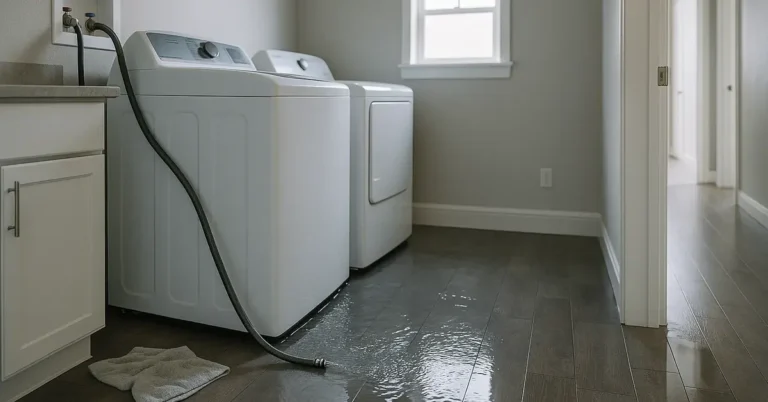
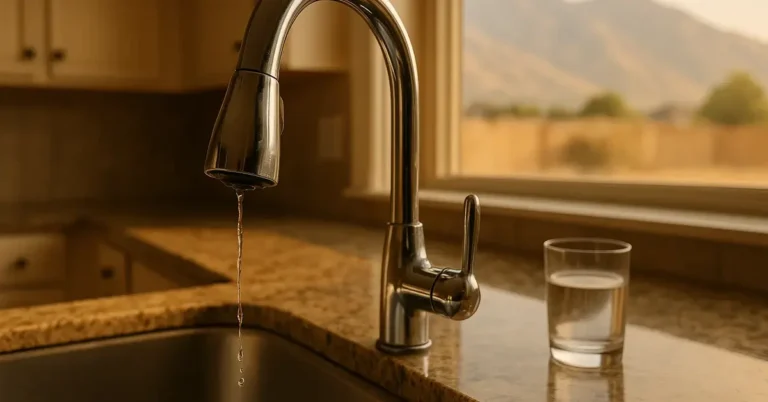
It happened last spring in Eagle Mountain. A homeowner turned on their outdoor faucet for the first time in April, heard a weird hissing sound from inside the wall, and within twenty minutes had water pooling in their garage. Beyond spring maintenance, another common question is about common summer water pressure problems at Utah homes.
The pipe didn’t burst during that January cold snap. It cracked then — a hairline fracture from ice expansion — but didn’t actually fail until spring thaw brought water pressure back. That’s how freeze-thaw damage works in Utah, and why every homeowner here needs a spring plumbing inspection checklist.
March and April are the wettest months along the Wasatch Front, and this spring (2026) we’re heading into spring with decent snowpack in the mountains. That means spring runoff, temperature swings, and all the stress that comes with transitioning from winter to summer. Your plumbing has been through a lot.
If you spot something that doesn’t look right during your inspection, give us a call at (801) 997-8909. We’re happy to take a look. And if you notice a mysterious sewer smell in your house during summer heat, that spring inspection will help you catch it before it becomes a bigger problem. Wondering how to find a trustworthy plumber when a problem does turn into an emergency? Our guide to choosing an emergency plumber in Utah covers what to look for.
Why Your Spring Plumbing Inspection Checklist Matters in Utah
The climate here creates a unique combination of plumbing stressors you don’t get in most other states. Freeze-thaw cycles from November through March. Hard water with 10 to 25 grains per gallon of dissolved minerals. Spring snowmelt that saturates soil and stresses drainage systems.
Pipes don’t usually burst while they’re frozen solid. They fail when ice thaws and pressure suddenly rebuilds inside the line. A micro-crack from winter freeze damage might sit there dormant for months, then open up the moment you turn the water back on in spring.
Here’s another thing most people don’t realize: the average household’s leaks waste over 9,300 gallons of water every year, and fixing those leaks saves about 10% on water bills. Spring is the perfect time to find them — right around EPA Fix a Leak Week (which runs March 16-22, 2026) — before summer irrigation season drives your water bill even higher.
Start Outside: Checking for Freeze-Thaw Damage
Outdoor plumbing takes the worst beating over winter. Start your inspection here.
Outdoor Faucets and Hose Bibs

When you check pipes after winter, turn on each outdoor faucet slowly and watch what happens. You’re looking for dripping when the handle is fully closed, reduced water pressure compared to last year, or any visible bulging or discoloration on the fixture itself. If the drop only shows up on hot afternoons, our breakdown of summer water pressure problems in Utah homes explains what is normal and what is not.
A slow drip from the spout usually means a worn washer — annoying but not urgent. A drip from behind the handle or from the wall connection means freeze damage, and that’s a bigger deal. If your outdoor faucet is actively leaking when you turn it on, our guide on fixing outdoor faucet leaks walks through diagnosis and DIY repair.
Don’t turn on outdoor faucets until late March or early April, after overnight lows are consistently above freezing. We still get surprise cold snaps through mid-March.
If you see bulging on the pipe or discoloration around the fixture, that pipe froze hard enough to expand the metal. Worth getting a professional assessment before it fails mid-summer. For a detailed walkthrough on how to inspect your outdoor faucets for freeze damage, check out our guide on checking outdoor faucets after Utah’s winter.
Sprinkler System Inspection
Before you fire up your sprinkler system for the season, walk the yard and visually inspect every sprinkler head. Look for cracks, especially around the base where freeze-thaw stress concentrates.
Hard water is a big factor in Utah sprinkler maintenance. Mineral deposits can block drip irrigation emitters over winter, and you won’t know until you turn the system on and half your garden beds aren’t getting water.
Don’t rush sprinkler startup. Late April or early May is usually safe. For the full step-by-step process, see our irrigation system startup guide for Utah homeowners.
Sump Pump Testing

This one’s critical if you have a basement. Spring snowmelt and rainstorms put extreme stress on sump pumps, and a pump that’s been sitting idle all winter can fail the first time you actually need it.
Testing is simple. Pour five gallons of water into the sump pit. The float should rise, the pump should kick on within a few seconds, and you should hear water discharging outside.
Check the discharge line outside, too. Ice or debris can block it early in spring, and a blocked discharge means water backs up into your basement instead of draining away.
We’ve got a full sump pump spring maintenance guide if you want the detailed walkthrough. But at minimum, test it before the first big storm hits.
Indoor Plumbing: What to Check Room by Room
Now move inside. You’re looking for visual signs of trouble, listening for unusual sounds, and testing functionality in every room where water flows.
Kitchen and Bathroom Faucets
Open the cabinet under every sink in your house. Look for moisture, water stains, discoloration on the cabinet floor, or white crusty buildup around pipe connections. That buildup is mineral deposits from Utah’s hard water — it’s a sign of slow dripping that’s been happening for a while.
Turn on each faucet and check the water pressure. If one faucet has noticeably lower pressure than the others, you might have a hidden leak in that line, or sediment buildup restricting flow.
Check the aerators on your faucets, too. Unscrew the little screen at the tip of the spout and rinse it off. Hard water clogs aerators with calcium and lime scale faster here than almost anywhere else.
Toilet Leak Detection

Toilets can leak for months without you noticing. The water just runs from the tank into the bowl, down the drain, and onto your water bill. The EPA estimates that 9% of homes waste 50 gallons or more per day from leaks, and silent toilet leaks are one of the biggest culprits.
Here’s the test: drop a few drops of food coloring into the toilet tank. Wait ten minutes without flushing. If color shows up in the bowl, you’ve got a leak. Usually it’s a worn flapper valve, which is a $10 part you can replace yourself in about fifteen minutes.
Also check the base of the toilet for water stains, discoloration, or soft spots in the flooring. If the wax ring is failing, water seeps out every time you flush. We cover this in detail in our guide on why toilets leak at the base. And if you’re wondering whether a toilet leak needs immediate attention or can wait, our emergency triage guide for toilet base leaks explains exactly when to call a plumber right away versus situations that can wait until business hours. Beyond leaks, hard water can also cause weak or incomplete toilet flushing when mineral deposits clog the rim jets.
Drain Performance Check
Run water in every sink, tub, and shower in your house. Watch how fast it drains. Slow drains mean buildup, and spring is a good time to address that before summer guests arrive.
Kitchen sinks slow down from grease and food particles. Bathroom sinks and showers clog with hair and soap scum. But if multiple drains are slow at once, or if you’re getting gurgling sounds from drains when you run water elsewhere in the house, that’s a sign of a deeper issue — possibly a partial blockage in your main line.
Don’t forget basement floor drains. Pour a bucket of water into each one and make sure it drains quickly. Floor drains can dry out over winter, and the trap seal evaporates. Another often-forgotten drain: your AC condensate line, which can quietly flood basements when clogged with Utah dust.
Summer laundry season is especially tough on basement drains — water usage can double when kids are home all day. For a detailed guide on prepping your basement floor drain before the summer rush, see our basement drain clog prevention checklist.
If your washing machine drain is backing up or running slow, that’s worth troubleshooting now before laundry season picks up. We’ve got a full breakdown in our washing machine drain backup guide.
Water Heater Spring Maintenance

Your water heater has been working overtime all winter, and if you’re anywhere in Northern Utah or Utah County, you’re dealing with some of the hardest water in the country. That means sediment buildup happens faster here than almost anywhere else. If you’re flushing your water heater twice a year and still seeing heavy sediment, it may be time to evaluate water softener installation cost for Utah homeowners as a long-term solution that prevents scale buildup at the source rather than treating symptoms after the fact.
Walk up to your water heater and just look at it. Check for discoloration or rust on the tank itself, corrosion around pipe connections, or any moisture around the base. A small puddle under the tank is not normal — it usually means the tank is leaking. If you notice corroded or bulging supply lines connecting the tank to your home’s water system, that’s a sign they may need replacement soon. Our water heater supply line replacement guide covers when to replace them and what to expect.
Now listen. If you hear popping, rumbling, or crackling sounds when the burner kicks on, that’s sediment buildup on the heating element. The Department of Energy says neglecting water heater maintenance can reduce efficiency by up to 25% and cut the lifespan nearly in half.
Spring flushing is essential. We recommend flushing your water heater at least once a year, and twice a year if you’re in a very hard water area. Our complete guide to flushing water heater sediment walks through the full process.
While you’re maintaining your water heater this spring, check the anode rod too. This sacrificial metal rod protects your tank from rust, but Utah’s hard water corrodes it in just 2-3 years instead of the typical 5+ years. Replacing this $30 part every few years can add 5-10 years to your water heater’s life.
If you found something during your inspection and you’re not sure what to do about it, we can help. Call us at (801) 997-8909 for a professional assessment.
How to Test for Hidden Water Leaks
Some leaks are obvious — dripping faucets, puddles under sinks, water stains on ceilings. Others hide in walls, under slabs, or in places you never look. A comprehensive spring plumbing inspection checklist helps you catch problems before they get expensive.
The water meter test is the simplest way to find hidden leaks. Turn off every water-using appliance in your house — faucets, toilets, dishwasher, washing machine, ice maker, everything. Then go check your water meter. If it’s still moving, you’ve got a leak somewhere.
Visual clues matter, too. Water stains on ceilings or walls that weren’t there last year. Unusual mold or mildew growth in places that should be dry. Soft spots in flooring near plumbing fixtures. Warm spots on floors can indicate a hot water line leaking beneath the slab.
Sound can give it away as well. Hissing from inside walls when no water is running. The sound of running water when every fixture is off. These are classic warning signs of hidden leaks that need investigation.
If your water meter test confirms a leak but you can’t locate it visually, you might be dealing with a slab leak — a leak in pipes running beneath your foundation. These are especially common in Utah homes due to our expansive clay soil and freeze-thaw cycles. For a complete guide on detecting slab leaks before they cause foundation damage, see our slab leak detection guide for Utah homeowners.
Fixing leaks isn’t just about avoiding water damage. It’s about money. Fixing easily corrected household leaks saves homeowners about 10% on their water bills.
What You Can Handle vs. When to Call a Pro
Most of this spring plumbing inspection checklist is DIY-friendly. You don’t need special tools or training to do a visual inspection, pour food coloring into a toilet tank, test your sump pump with a bucket of water, or check for leaks under sinks.
But there’s a line between “I can handle this” and “I should call someone who does this for a living.” Here’s where that line sits.
Call a professional if you find suspected freeze damage on pipes or fixtures — micro-cracks can be hard to assess. Persistent leaks you can’t locate are worth a pro’s time, too. We use acoustic leak detection and pressure testing to find leaks in walls and under slabs without tearing your house apart.
Water heaters older than 10 years deserve a professional inspection, especially if you’ve never flushed them. Reduced pressure throughout your whole house — not just one fixture — usually indicates a main line issue, a pressure regulator problem, or a hidden leak.
We provide professional plumbing inspection Utah homeowners rely on. We’re Utah state licensed, family-owned, and we’ve been doing this for 20+ years across the Wasatch Front. If you’d rather have us handle the inspection, or if you found something during your DIY walkthrough and want a second opinion, give us a call at (801) 997-8909. You can also check out our full plumbing services page to see everything we cover.
When to Do Your Spring Plumbing Inspection in Utah
Timing matters. Too early and you risk turning on outdoor plumbing before the last freeze. Too late and you miss problems that turn into emergencies.
Late March through early April is the sweet spot for most of the Wasatch Front. You’re past the worst of winter freeze risk, but you’re ahead of heavy spring runoff and summer irrigation demand. This window also lines up with EPA Fix a Leak Week and spring plumbing maintenance season, and it’s right when most Utah homeowners are thinking about spring AC startup and transitioning their HVAC systems from heat to cooling.
If you’re in the mountains or at higher elevations, push it to mid-April. If you’re in the valley and we’ve had a mild winter, late March is fine.
The goal is to catch problems before you’re relying on these systems daily. Better to find a leaky hose bib in April when you have time to fix it than in June when you’re trying to water your garden and the wall’s flooding.
Frequently Asked Questions
When should I do a spring plumbing inspection in Utah?
Late March through early April is ideal for most of the Wasatch Front. You’re past the worst freeze risk but ahead of heavy spring runoff and summer demand. This timing also aligns with EPA Fix a Leak Week, so you can knock out multiple home maintenance tasks at once.
What should I check first after winter?
Start with outdoor faucets and hose bibs. They’re the most vulnerable to freeze-thaw damage, and turning them on for the first time in spring is when you’ll discover problems.
How do I know if my pipes have freeze damage?
Look for dripping when the faucet is fully closed, noticeably reduced water pressure compared to last year, visible bulging or discoloration on exposed pipes, and water stains under sinks or around fixtures. Some micro-cracks only show up when water pressure returns in spring.
Do I need to check my sump pump if I didn’t have flooding last spring?
Yes. Sump pumps can fail suddenly after sitting idle, and spring snowmelt puts extreme stress on drainage systems. Test it with five gallons of water before you actually need it.
Why do I need to flush my water heater in Utah?
Utah’s extremely hard water — 10 to 25 grains per gallon in most areas — creates sediment buildup faster than the national average. That sediment insulates the heating element, forcing your water heater to work harder and waste energy. Spring flushing removes mineral deposits and extends the life of your tank.
Final Thoughts
Your spring plumbing inspection checklist isn’t glamorous, but it’s one of those things that saves you money and headaches later. You’re looking for the small problems — the slow drips, the worn washers, the sediment buildup — before they turn into flooded basements or emergency service calls on a Saturday night.
Our climate is hard on plumbing. Freeze-thaw cycles, hard water, spring snowmelt, and temperature swings that can hit 30 degrees in a single day all take their toll. The houses that make it through summer without plumbing emergencies are the ones that got attention in spring.
Most of this spring plumbing inspection checklist you can handle yourself. But if you found something that doesn’t look right, or if you’d rather have a professional run through everything, we’re here. Give us a call at (801) 997-8909 — we’re open 7 days a week, with 120-minute emergency response during business hours across the Wasatch Front. The $49 dispatch fee (weekdays 9 AM-5 PM) is applied to your repair, and we’ll always explain what we find before we do any work.