It’s 38°F when you leave for work in the morning. By lunchtime, it’s pushing 68°F. Welcome to spring on the Wasatch Front—and the eternal question: when should you switch from heat to AC?
You’re standing in front of your thermostat trying to figure out what to do when it’s time to switch from heat to AC. Run the heat so you don’t freeze when you wake up tomorrow? Switch to central air because the afternoon sun is already baking your living room? What if you damage something by switching back and forth?
Switching between heat and air conditioning won’t hurt your system—as long as you do it right. Heating and cooling account for nearly 50% of your home’s energy use (according to ENERGY STAR). That’s why this HVAC seasonal transition matters for both your comfort and your wallet.
In this guide, we’ll walk you through exactly when to turn on AC spring and the proper heating to cooling changeover procedure to protect your equipment. We’ll also cover what mistakes to avoid. If you’ve got questions about whether your HVAC system is ready to switch from heat to AC, give us a call at (801) 997-8909—we’re happy to help.
When Should You Switch from Heat to AC in Utah?
Let’s start with timing, because Utah’s spring weather doesn’t follow anyone’s schedule.
The Utah Spring Temperature Challenge
March through May along the Wasatch Front is a rollercoaster. You’ll see mornings in the 30s and afternoons in the 70s—sometimes on the same day. Davis County might wake up to frost while Utah Valley is already hitting 65°F by noon.
These wild swings mean you might need both your furnace and your air conditioning in the same week. That’s normal. Your HVAC system is built to handle it.
The problem? Switching too quickly or going back and forth multiple times in one day. Sometimes you can just open a window instead.
Test Your AC Before You Need It
The best advice for when to turn on AC spring: test it in mid-to-late April, before you actually need it.
Why April? Outdoor temperatures are hitting the 60s and 70s—warm enough to safely run your central air. And it’s before cottonwood season.
Anywhere near Liberty Park, the Jordan River, or the Salt Lake Valley, you know what happens in May and June. That fluffy white stuff clogs condensers. You want your outdoor unit cleaned and running before the fluff arrives.
Testing early gives you time to schedule repairs before the summer rush. Figuring out when to turn on AC spring means doing it before the 95°F days hit. You don’t want to find out your AC is dead on the first hot day in June. That’s when every HVAC technician is slammed. For a complete walkthrough, see our spring AC startup checklist.
How to Switch from Heat to AC: The Right Way
Now let’s get into the actual heating to cooling changeover procedure. This is where most homeowners either do it right or accidentally put stress on their HVAC system.
Step 1: Turn Off Heat and Wait
First things first: turn off your heating system.
Set your thermostat to OFF, or adjust the temperature setting so the furnace won’t call for heat. Then—and this is the critical part—wait at least 5 minutes before you switch from heat to AC mode.
Why the wait? Your system needs time for refrigerant pressure to equalize. The compressor can lock up when pressure isn’t balanced. Five minutes protects equipment that costs thousands of dollars to replace.

Step 2: Switch to Cooling Mode
After your 5-minute wait, switch your thermostat to COOL mode when you’re ready to switch from heat to AC. Set the temperature 3 to 5 degrees below the current room temperature so you can verify everything’s working properly.
Make sure your fan is set to AUTO mode, not ON. In AUTO mode, the fan only runs when the system is actively heating or cooling. In ON mode, the fan runs constantly, which wastes energy and can circulate unconditioned air.
Need help figuring out the right temperature settings for Utah’s spring weather? Check out our guide to spring thermostat settings.
Step 3: Verify System Startup
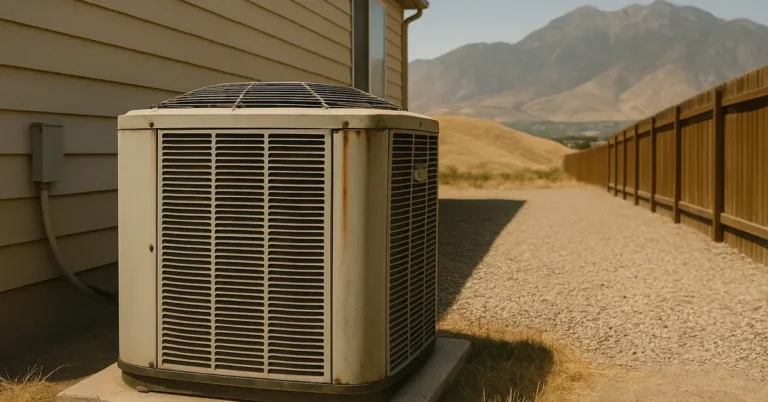
Once you’ve completed the heating to cooling changeover, walk outside and check your condenser unit (that big box sitting outside your house).
Within a minute or two, you should hear the unit start up. The fan will spin, and the compressor will kick on with a low hum. When nothing happens after a few minutes, something’s wrong—head to the troubleshooting section below.
Go back inside and check the air from your vents. It should feel noticeably cooler within 10 to 15 minutes.
Listen for unusual sounds. Grinding, squealing, or loud buzzing are warning signs. A gentle hum is normal. Metal-on-metal screeching is not.

Heat Pump Owners: Your System Works Differently
Heat pump owners have a simpler process when you switch from heat to AC—but you still need that 5-minute wait for pressure equalization.
Heat pumps are the same machine running in reverse. In winter, they pull heat from outside and bring it inside.
In summer, they pull heat from inside and dump it outside. The refrigerant is reversing direction, so the HVAC system needs a moment to settle.
Not sure whether you have a heat pump or a traditional furnace/AC setup? Take a look at our comparison guide: heat pump vs AC for Utah homes.
Got questions about your specific system? We’re here to help. Give us a call at (801) 997-8909 and we’ll walk you through it.
3 Common Mistakes That Damage Your System
Now let’s talk about what not to do when you switch from heat to AC. These three mistakes are the ones I see most often, and they’re all completely avoidable.
Mistake #1: Switching Too Quickly
Going straight from heat to AC without waiting is the easiest way to stress your compressor.
Without time to equalize, you create pressure imbalances that can lock up the compressor. Over time, this shortens your equipment’s lifespan.
The fix is simple: wait 5 minutes. Set a timer. It’s a small habit that protects a big investment.
Mistake #2: Running AC When It’s Too Cold Outside
Remember this rule: don’t run your air conditioning when the outdoor temperature is below 60°F.
Why? Refrigerant doesn’t flow properly at low temperatures. This strains the compressor and can lead to damage.
On a cool 55°F day in early April, open your windows instead. Natural ventilation is free, effective, and won’t hurt your system.
This is especially important in Utah, where spring mornings can dip into the 40s even when afternoons hit the 70s. Wait until it’s above 60°F before running your central air for the first time.
Mistake #3: Cranking the Temperature Down
Setting your thermostat to 60°F won’t cool your house any faster. It’ll just make your system run longer and waste energy.
Your air conditioning moves heat at a fixed rate. Setting it super low forces the system to overcool and cycle on and off repeatedly. That’s called short cycling, and it’s hard on your equipment while driving up energy bills.
As of 2026, the Department of Energy recommends 78°F for summer cooling. Adjust gradually from your winter settings over a few days. Your system (and your utility bill) will thank you.
Spring Maintenance Before AC Season
Before you flip that switch to cooling mode for the first time, there are a few seasonal maintenance tasks worth doing.
DIY Tasks You Can Handle
You can take care of these yourself:
- Change your air filter. A clogged filter reduces airflow and forces your system to work harder.
- Clear debris from around your outdoor unit. Leaves, dirt, and cottonwood fluff can block airflow and reduce efficiency.
- Clean your condenser coils. Winter dirt and debris can reduce efficiency. For step-by-step instructions, see our guide on how to clean your AC condenser unit after winter.
- Check your thermostat batteries. Swap them out now to avoid surprises mid-summer.
For a full list of DIY spring tasks, check out our spring AC startup checklist. Spring is also the ideal time to inspect your plumbing system — our complete spring plumbing inspection guide for Utah homeowners walks you through checking outdoor faucets for freeze damage, testing sump pumps, and catching water heater problems before summer demand hits.
Why Professional Tune-Ups Matter
Some tasks require a trained HVAC technician. Cleaning coils, checking refrigerant levels, and inspecting electrical connections aren’t DIY jobs. Here’s what to expect during a professional AC tune-up so you know exactly what the tech checks.
Dirty coils can increase electricity usage by 39 to 47%. Neglected systems fail years earlier than maintained ones.
Quality workmanship means checking every connection, and we take pride in doing it right the first time.
We offer AC tune-ups for $69 (weekdays 9 AM-5 PM). Our techs are Utah state licensed and will check everything from refrigerant charge—critical at our altitude—to electrical connections and airflow. Want to schedule a tune-up? Give us a call at (801) 997-8909.
What to Do When Your AC Won’t Start
You’ve followed all the steps, waited your 5 minutes, completed the HVAC seasonal transition to cooling mode, and? nothing. The AC won’t turn on.
Don’t panic. Start with these basics.
Check These First
- Thermostat settings and batteries. Make sure it’s set to COOL, the temperature is below the current room temp, and the batteries aren’t dead.
- Circuit breaker and disconnect switch. Check your electrical panel for a tripped breaker. Also check the disconnect switch on the outdoor unit—it might have been turned off by mistake.
- Outdoor unit cover. Remove the cover before trying to run the system.
- Air filter. A completely clogged filter can prevent the system from starting. Check it.
When all of those check out and your central air still won’t start, you’re likely dealing with a mechanical or electrical issue that needs professional attention.
Signs You Need Professional Help
Red flags that mean it’s time to call us:
- System won’t turn on at all, even after checking breakers and thermostat settings
- Outdoor unit hums but the fan doesn’t spin
- Ice forming on the refrigerant lines
- System runs but only blows warm air
- Strange sounds like grinding, squealing, or buzzing
System running but not cooling properly? You might have a refrigerant issue. Check out our guide to signs your AC is low on refrigerant.
We offer a 120-minute emergency response across the Wasatch Front during business hours, and we handle emergency calls after hours, too. Dispatch is $49 from 9am to 5pm (Monday through Friday), and that fee is applied to your repair. After 5pm, on weekends, and on holidays, dispatch is $149 ($99 for Home Health Plan members).
Frequently Asked Questions
Is it bad to switch from heat to AC?
No—as long as you wait 5 minutes between modes. Modern HVAC systems are designed for this heating to cooling changeover. The problem is switching too quickly or multiple times in the same day. Give your system time to equalize.
How long should I wait between switching from heat to AC?
Wait at least 5 minutes. This allows refrigerant pressure to equalize, which prevents compressor lock and reduces wear. It’s a small pause that protects expensive equipment.
Does switching between heat and AC cost more money?
Frequent same-day switching does increase wear and energy use. Use a programmable thermostat to minimize mode changes (which also cuts your energy bills year-round), and rely on natural ventilation during those in-between days when it’s 55 to 65°F outside.
Can I run heat and AC on the same day?
Yes, but try to minimize how often you do it. Utah’s spring temperature swings often require running heat in the morning and air conditioning in the afternoon—that’s just reality on the Wasatch Front. The key is to wait 5 minutes when you switch from heat to AC and avoid aggressive temperature changes.
What temperature should I set my thermostat in spring?
Use natural ventilation when outdoor temps are between 55°F and 75°F—just open your windows. Run heat when it’s below 60°F outside. Run central air when it’s above 75°F and rising. For more detailed guidance on navigating Utah’s spring temperature swings, check out our spring thermostat settings guide.
Why won’t my AC turn on after winter?
Start by checking your circuit breaker, thermostat batteries, and outdoor disconnect switch. Common issues after winter include refrigerant recharge or capacitor replacement. When troubleshooting doesn’t resolve it, give us a call at (801) 997-8909.
Ready to Switch from Heat to AC?
Knowing when and how to switch from heat to AC is simple when you follow the right steps. Wait 5 minutes between modes, don’t run your air conditioning when it’s too cold outside, and test your system in mid-to-late April before you need it.
Utah’s wild temperature swings mean both systems need to be ready to go. With proper preparation and technique, your HVAC system will handle this seasonal transition without issues.
Your air conditioning didn’t start up, or you want a professional to make sure everything’s ready for summer? We’re here to help.
Ninja Plumbing, Heating & Air has been serving Utah families for 20+ years. We’re Utah state licensed, family-owned, and we guarantee a 120-minute emergency response during business hours across the Wasatch Front. We’re passionate about helping Utah families stay comfortable year-round, and we genuinely care about your home comfort.
Give us a call at (801) 997-8909. We’ll get your system checked out, answer any questions you have, and make sure you’re ready for whatever Utah weather throws at you next. Proper installation protects your investment, and we’ll make sure your ductwork and air conditioning are ready for the season ahead. If you haven’t had your ductwork inspected recently, see our spring ductwork inspection guide to understand what a professional check includes and why it matters for Utah homes.
Need help? Learn more about our HVAC services or call us at (801) 997-8909.