School’s almost out. Summer’s coming, and if you have kids, you know what that means ? laundry. A lot of it.
The average family washes about 5 loads of laundry a week during the school year, according to the National Park Service. But when the kids are home all day in June, July, and August? That number can easily double.
Your basement floor drain handles water from your washing machine, utility sinks, and sometimes even your furnace condensate line. During summer when water usage spikes by up to 50%, basement drain clog prevention becomes essential. Add in Utah’s hard water and our dry climate, and you’ve got a recipe for basement drain clogs right when you can least afford them. That’s why basement drain clog prevention should be on your spring to-do list ? right alongside AC tune-ups and gutter cleaning.
If your basement drain is already backing up, we’ve got a troubleshooting guide that walks you through what to do. But if you’re reading this in spring and want to prevent the mess before summer hits, keep reading. We’re going to show you six simple steps to prep your basement drain now.
Not sure if your basement drain needs attention? Give us a call at (801) 997-8909.
Why Spring Is the Time to Prep Your Basement Drain
Most people don’t think about their basement drain until water starts pooling around the washing machine. By then, you’re already dealing with a problem instead of preventing one. Spring basement drain maintenance and clog prevention save you from summer headaches.
Summer water usage jumps up to 50% in most homes. Traditional washing machines use 27 to 54 gallons per load, according to the EPA. Multiply that by 10 or 12 loads a week, and your basement drain is handling hundreds of gallons of wastewater every few days.
Older homes, especially those built before 2000, often have galvanized or cast iron drain lines that narrow over time. When summer hits and you’re suddenly pushing twice the normal water volume through an already-compromised drain, that’s when backups happen.
It’s a lot cheaper to spend $15 on a lint trap and an hour on maintenance now than to pay $150?$350 for an emergency drain cleaning in the middle of summer. Want more spring plumbing prep ideas? Check out our full Spring Plumbing Inspection Checklist for Utah Homeowners.
What Makes Utah Basement Drains Different
If you’ve lived in Utah for any length of time, you’ve heard about our hard water. We’re talking extremely hard ? some of the highest mineral content in the country. That calcium and magnesium builds up inside your pipes and drains, creating a rough surface that soap scum and lint cling to.
In soft-water states, a little hot water and vinegar flush might be enough.
Here in Utah? The buildup happens faster. Soap doesn’t lather as well in hard water, so people use more of it. More soap means more residue going down the drain.
Then there’s the dry climate. Utah’s average humidity in July hovers around 36%. P-traps ? those U-shaped bends under your drains designed to hold water and block sewer gases ? dry out faster here than in humid climates.
A dry P-trap doesn’t just smell bad. It also means there’s no water barrier, so clogs can form more easily.
Finally, we’ve got expansive clay soil across much of the Wasatch Front ? from Lehi and Eagle Mountain up through South Jordan, Sandy, and Draper. That constant movement puts stress on drain connections, especially older ones.
Bottom line: Utah’s water, climate, and soil all work against your basement drain. That’s why basement drain clog prevention here isn’t optional ? it’s essential. If you’re dealing with chronic hard water issues beyond just drains, read our deep dive on how Utah’s hard water destroys plumbing and what to do about it.
6 Basement Drain Clog Prevention Steps for Summer
These are the DIY steps you can do right now to prep your basement drain for summer. Most take less than 30 minutes and cost less than $30 in supplies.
1. Check and Clean the P-Trap
The P-trap is that U-shaped pipe section under your basement floor drain. Its job is simple: hold a small pool of water that blocks sewer gases. In Utah’s dry air, that water evaporates faster than you’d think.
Walk over to your basement floor drain right now. Smell anything? If you catch even a faint sewer odor, your P-trap is probably dry.
The fix is easy. Pour about a gallon of water slowly down the drain. That refills the P-trap and restores the water seal.
If you’ve got a utility sink or floor drain that doesn’t get used much, make it a habit to pour a gallon of water down it once a month.
If you’re comfortable with basic plumbing, you can also remove and clean the P-trap. Place a bucket underneath, unscrew the slip nuts on both sides, pull the trap off, dump out any gunk, rinse it, and screw it back on. Takes about 10 minutes.
2. Flush Drains with Hot Water and Baking Soda
This is the simplest, cheapest floor drain cleaning step you can do. Once a month, flush your basement drains with hot water, baking soda, and vinegar.
Here’s how: Boil a kettle of water. Pour half a cup of baking soda down the drain. Follow it with half a cup of white vinegar. You’ll hear fizzing ? that’s the reaction breaking down soap scum and organic buildup. Let it sit for 10?15 minutes, then flush with the boiling water.
Baking soda is mildly abrasive and helps scrub the inside of the pipe. Vinegar is acidic and dissolves mineral deposits. The hot water melts any grease or waxy soap residue. Together, they keep the drain clear before buildup turns into a clog.
Utah’s hard water creates extra soap scum, so this step is even more important here. Total cost: under $5. Total time: maybe 20 minutes for all your basement drains.
3. Install a Lint Trap on Your Washing Machine Drain
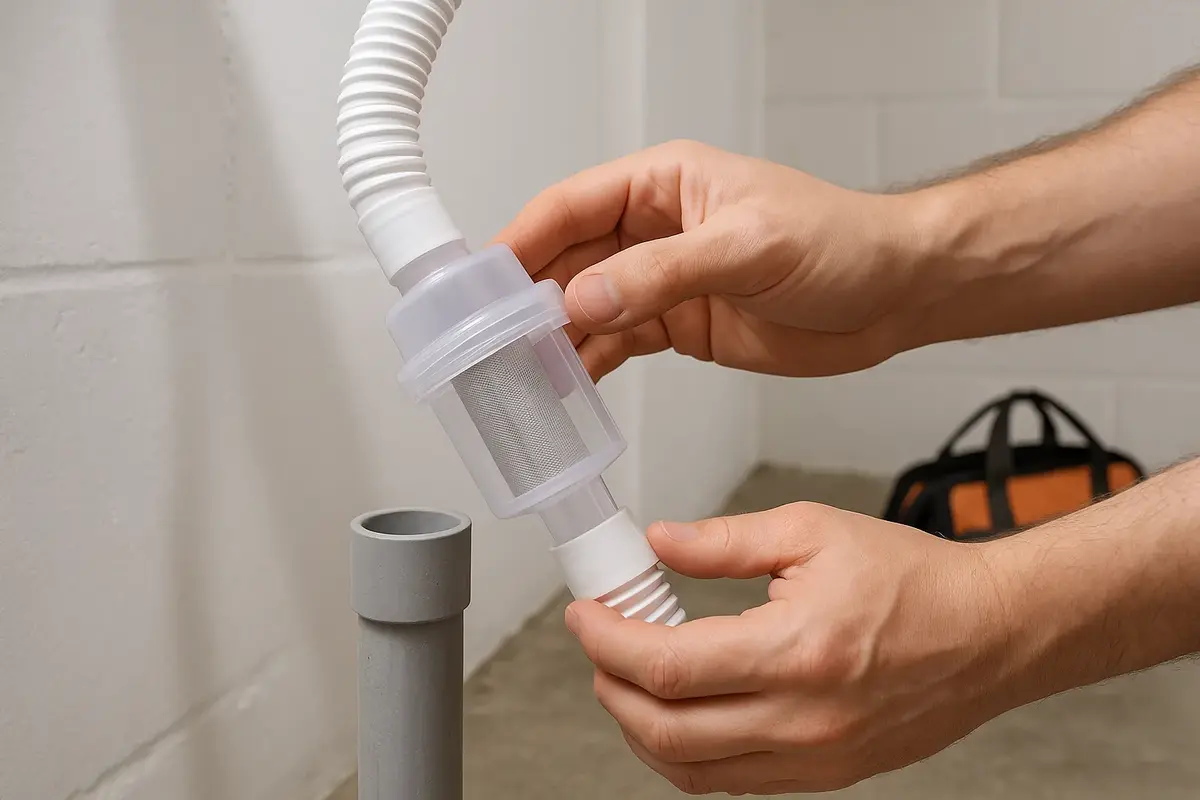
Washing machine lint is one of the top causes of basement drain clogs. Your washer doesn’t filter out lint the way your dryer does. That lint goes straight down the drain with the wastewater. Over time, it clumps together with soap scum and hardens into a clog. If your drain already backs up when the washing machine runs, lint buildup is likely the culprit.
A lint trap costs $10?$30 and installs in about five minutes. You attach it inline between your washing machine discharge hose and the standpipe.
It catches the lint before it enters your drain system and helps prevent drain backup during laundry cycles.
Step-by-step install: Pull the washing machine hose out of the standpipe. Slide the lint trap onto the end of the hose. Push the lint trap assembly back into the standpipe. Done.
The trap fills up over time, so you’ll need to clean it once a month during heavy laundry season. Just pull it out, remove the mesh screen, rinse it under the sink, and put it back. Takes two minutes.
4. Inspect for Slow Draining or Odors
Early warning signs are your friend. Catch a problem when it’s small, and you can fix it yourself.
Here’s a quick test: Grab a 5-gallon bucket, fill it with water, and pour it quickly into your basement floor drain. The water should disappear in seconds. If it pools, drains slowly, or you hear gurgling sounds, you’ve got a partial clog forming.
Gurgling means air is trapped somewhere in the line, usually because water is backing up and forcing air bubbles through. It’s not an emergency yet, but it’s a sign something’s building up.
Same with odors. A dry P-trap smells like sewer gas. A partial clog smells musty or sour, like old standing water. Either way, don’t ignore it.
If you notice slow draining, gurgling, or odors now in April or May, fix it before summer. Come July when you’re doing 10 loads of laundry a week, that partial clog will turn into a full backup.
5. Schedule a Professional Drain Inspection
If your home is more than 15 years old, or if you’ve had basement drain issues in the past, it’s worth having a professional take a look. We use a small camera that goes down into the drain line and shows us exactly what’s happening inside.
A camera inspection costs between $150 and $350. For that price, you get a clear diagnosis and a plan. If we do find buildup that DIY methods can’t reach ? similar to what happens with a clog deep in the pipe ? hydro-jetting is the next step.
That’s a high-pressure water jet that scours the inside of the pipe.
$200 for an inspection and cleaning now is a lot cheaper than $2,000 for water damage cleanup and mold remediation after a summer backup.
Want a professional to check your basement drains before summer? Call us at (801) 997-8909. We’re Utah state licensed, family-owned, and we’ve been doing this for over 20 years.
6. Consider a Water Softener for Long-Term Prevention
If you’re dealing with recurring drain issues ? clogs that come back every six months, slow drains throughout the house ? hard water is probably the root cause.
Water softeners remove the calcium and magnesium that cause hard water. Without those minerals, soap lathers better, soap scum doesn’t form as quickly, and mineral deposits stop building up inside your pipes and drains.
Water softeners aren’t cheap ? installation runs $2,200 to $6,300. But if you’re spending $300 every year on drain cleanings, a softener starts paying for itself in about 8?10 years. We’ve got a full breakdown in our guide: Do Utah Homes Need a Water Softener? What the Data Says.
When to Call a Professional
DIY maintenance works great for prevention. But there are times when you need a professional.
Call us if you see any of these red flags:
- Water backing up out of the basement floor drain, especially during or after laundry
- Multiple drains in the house draining slowly at the same time
- Sewage odor that doesn’t go away after refilling the P-trap
- Visible water damage, staining, or moisture on basement walls or floors
- Recurring clogs ? you clear the drain, it works for a week or two, then clogs again
Recurring backups usually mean there’s a bigger issue ? tree roots in the sewer line, a collapsed pipe, or a main line clog that DIY tools can’t reach. Those problems don’t get better on their own.
Water damage and mold are the other big concerns. Mold can develop in 24 to 48 hours after water exposure, according to the CDC. If you’ve had standing water in your basement, check for damp spots on drywall, carpet, or insulation. Mold doesn’t always show up right away, but once it takes hold, you’re looking at remediation costs in the thousands.
We’re available 24/7. If your basement drain backs up at 2 AM on a Saturday, we’ll be there within 120 minutes. That’s our guarantee. Dispatch is $49 during business hours, and the fee is waived if you go ahead with the repair. After hours, weekends, and holidays, dispatch is $149 ($99 if you’re a Home Health Plan member).
Already dealing with a backup? Read our guide on what to do when your basement drain is backing up during laundry. Need help fast? Call (801) 997-8909 or visit our service area page to see if we cover your city.
Frequently Asked Questions
How often should you clean a basement drain?
Regular basement drain clog prevention starts with flushing your basement floor drain with hot water and baking soda once a month. For drains that don’t get used often, pour a gallon of water down them monthly to keep the P-trap full. If your home is older or you have hard water, consider a professional cleaning once a year. The same goes for shower drains that clog frequently ? regular maintenance prevents bigger problems.
Why does my basement drain smell?
Most of the time, a smelly basement drain means the P-trap is dry. Utah’s low humidity causes water to evaporate faster than in other climates. Pour a gallon of water down the drain to refill the trap. If the smell doesn’t go away, you might have a partial clog that needs cleaning.
Can a clogged basement drain cause mold?
Yes. When a basement drain backs up, it leaves standing water on your floor. Mold can start growing within 24?48 hours of water exposure. If you’ve had a backup, clean it up fast, dry everything thoroughly, and check for moisture in walls, carpet, and insulation.
Do I need a lint trap on my washing machine drain?
Yes, especially in Utah. Washing machine lint combines with soap scum and clogs drains. A lint trap costs $10?$30, installs in five minutes, and can prevent a $150?$350 emergency drain cleaning.
How much does it cost to unclog a basement drain?
Professional drain cleaning typically runs $150?$350, depending on the severity of the clog. Compare that to prevention ? a $15 lint trap, $5 in baking soda and vinegar, and an hour of your time costs under $30 a year.
Do This Now, Enjoy a Stress-Free Summer
Summer laundry season is coming. Kids home all day means twice the laundry, twice the water, and twice the stress on your basement drain. But you’ve got time right now to check, clean, and prep.
Most of these basement drain clog prevention steps cost less than $30 and take less than an hour. Install a lint trap. Flush your drains with baking soda and vinegar. Check for slow drainage or odors. Refill dry P-traps.
An hour of prevention now can save you hundreds of dollars and a lot of frustration in July. Don’t let 2026 be the summer your basement drain fails. Want a professional to check your basement drains before summer? Call Ninja at (801) 997-8909 or schedule online. We’ve been serving Utah families for over 20 years, and we’re here to help.
Need help? Learn more about our professional drain cleaning or call us at (801) 997-8909.