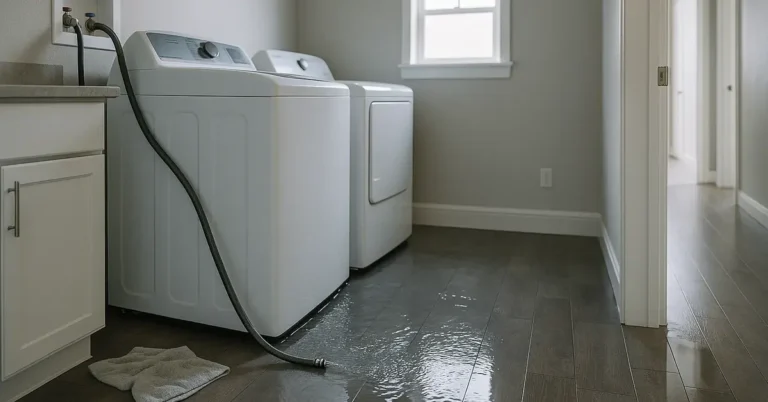
You walk into the bathroom and there’s water on the floor. Not a lot at first — just a small puddle around the base of your toilet. You grab a towel, wipe it up, and hope that’s the end of it.
Then it happens again. And again.
Now you’re standing here wondering: is toilet leaking at base an emergency? Do I need to call someone right now, or can this wait until Monday? Will my floor be ruined by tomorrow morning?
We’ve been fixing toilets across the Wasatch Front since 2006. After 20+ years of experience heading into 2026, I can tell you that not every toilet leak needs a plumber at 2 AM — but some absolutely do. The trick is knowing the difference.
Is Toilet Leaking at Base an Emergency? The Quick Answer
Here’s how to decide if you need to call right now or if you can safely wait.
Call immediately if you see:
- Active pooling water that keeps spreading
- A sewer gas smell (like rotten eggs)
- Water spreading beyond the bathroom into carpet, wood floors, or other rooms
- Your bathroom is on a second floor with living space below
- Soft or spongy flooring near the toilet
Call today (within business hours) if:
- You see a small puddle after each flush
- The leak is intermittent — there one hour, dry the next
- Your home was built before 1980 (older cast iron flanges corrode faster)
- The toilet rocks or feels unstable when you sit down
You can monitor it yourself if:
- It’s just slight dampness, not standing water
- The area stays dry between uses
- You’re in a single-story home
- There’s no smell
If you’re seeing active pooling or smell sewer gas, call us now at (801) 997-8909. We guarantee a 120-minute response across the Wasatch Front during business hours, including weekends, and emergency calls are handled after hours. Not sure who to call? Our guide to choosing an emergency plumber in Utah walks you through what to look for.
Why Is Water Leaking from the Bottom of My Toilet?
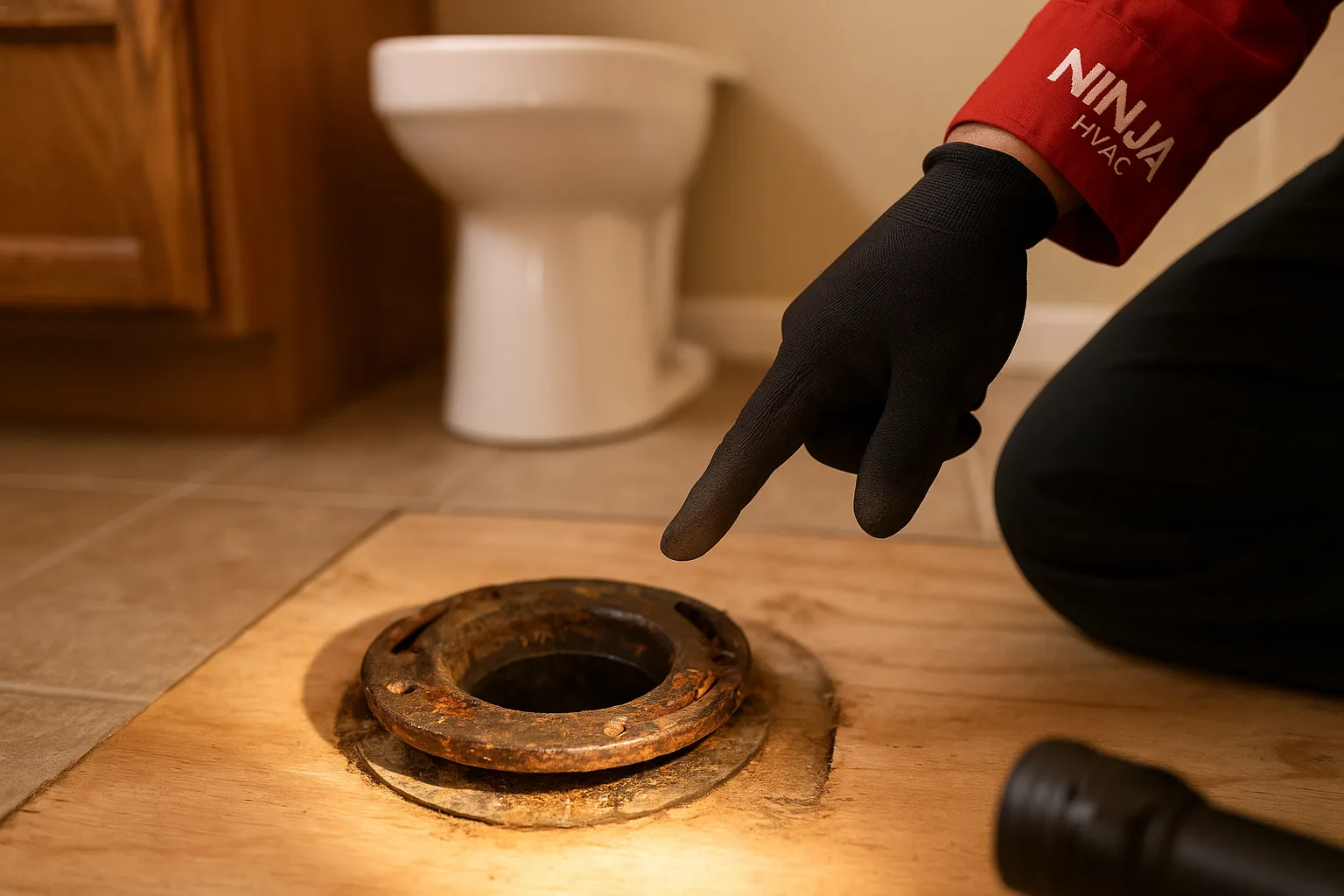
Most cases of a toilet leaking from the bottom come down to one of four problems. The good news is that three of them are fixable without replacing the whole toilet. If your toilet has a different issue like weak or incomplete flushing, the cause is usually mineral buildup in the rim jets rather than a base leak.
Wax Ring Failure (The Most Common Culprit)
The wax ring creates a watertight seal between your toilet and the drain pipe. Over time — usually 10 to 15 years — that wax compresses, cracks, or shifts. When it fails, you’ll see water around the toilet base every time you flush.
In Utah, hard water speeds up this process. Mineral deposits eat away at the wax faster than in other parts of the country. As of 2026, we see wax ring failures in 8- to 10-year-old toilets here pretty regularly.
Corroded Toilet Flange
The flange is the fitting that connects your toilet to the sewer pipe. In older Utah homes — especially those built before 1980 — these flanges are cast iron. Cast iron corrodes over time, especially when exposed to moisture and minerals.
A corroded flange won’t hold the toilet mounting bolts securely. The toilet shifts, the wax ring breaks, and water leaks out. If you’re in an older neighborhood in Salt Lake, Ogden, or Provo, this is something we check for on every call.
Loose Mounting Bolts
Foundation settling is common in Utah. As your house settles, the toilet can shift slightly. The mounting bolts loosen, the toilet rocks, and the wax seal breaks.
If your toilet feels wobbly when you sit down, loose bolts are likely the problem. Tightening them might fix a minor leak — but be careful. Overtightening can crack the toilet base.
Cracked Toilet Base
This one’s less common, but it happens. A crack in the porcelain base means water leaks out no matter how good the wax ring is. If the base is cracked, the toilet needs to be replaced. There’s no repair for this.
For more detail on what causes these leaks and how to spot them, check out our full guide on why toilets leak at the base.
How Do I Know If My Wax Ring Is Failing?
Wax ring failure doesn’t always announce itself with a puddle. Sometimes the signs are subtler.
Watch for these warning signs:
- Pooling around the base right after you flush
- Discoloration or mineral rings around the toilet base
- A faint sewer smell near the toilet (even if you don’t see water)
- A rocking motion when you sit down — even a tiny wobble
- Dampness on the floor that you can’t explain
That sewer smell is your biggest red flag. If you smell it, the wax seal is compromised. Sewer gas isn’t just unpleasant — it contains methane and other gases that shouldn’t be in your home.
Utah’s dry climate can hide early leaks. A small amount might evaporate between flushes, making it seem like the problem comes and goes. Don’t let that fool you. If it’s leaking sometimes, it’s leaking all the time — you just can’t always see it.
How Long Before a Toilet Leak Causes Damage?
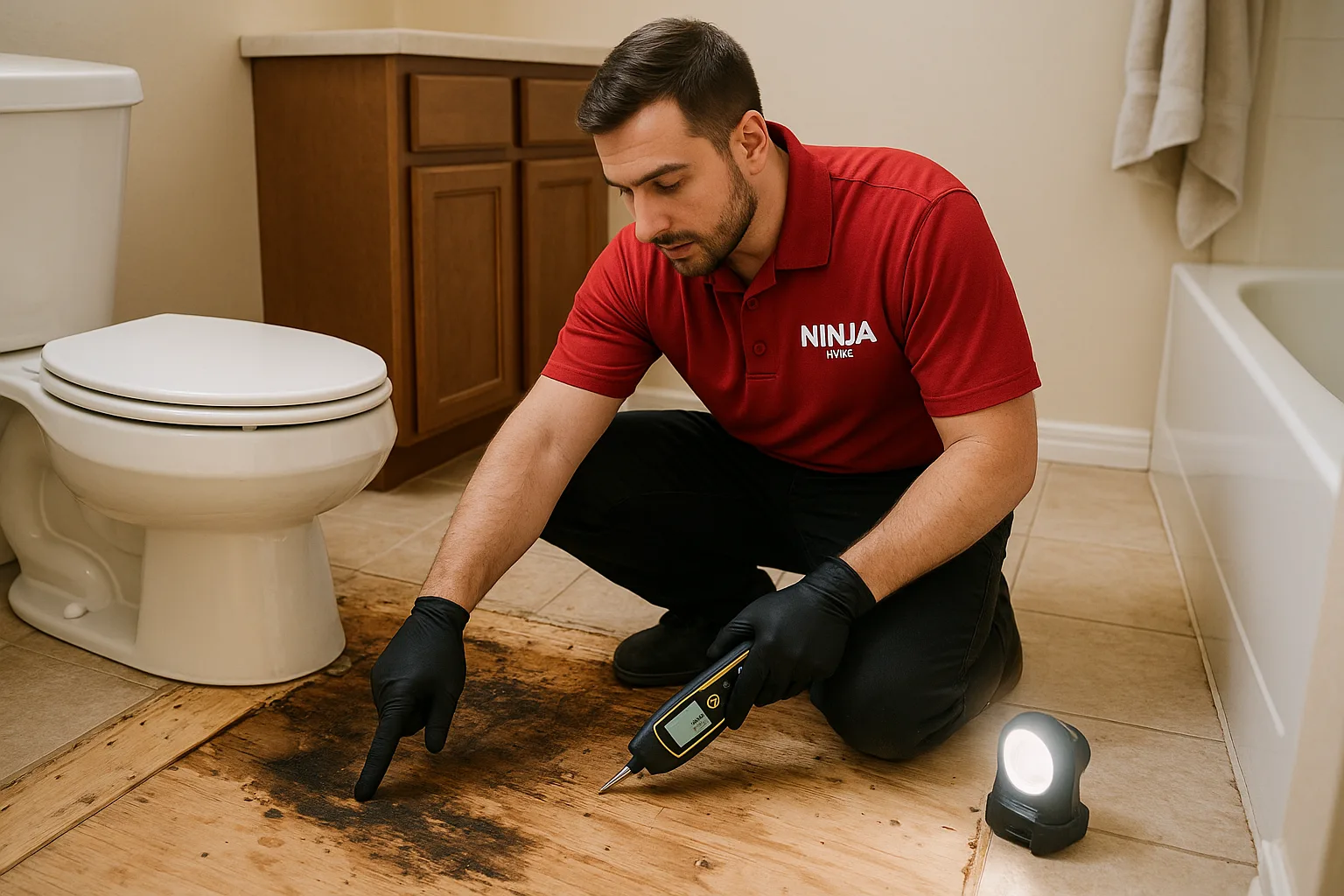
Damage to subflooring can start within 24 to 48 hours. Mold starts growing within 24 to 72 hours in damp conditions. Once it takes hold in your subfloor, you’re looking at remediation costs that run anywhere from $500 to $6,000 depending on severity.
Subfloor and Structural Damage
Wood subflooring weakens and warps when exposed to water. Over time, it rots. Once the subfloor is compromised, you may need to replace sections in addition to the toilet and wax ring. That’s a $1,500 to $3,000 repair instead of a $200 one.
Older Utah homes with original wood floors are especially vulnerable. If your home was built in the 1960s or 70s, the subflooring wasn’t treated for moisture resistance the way modern materials are.
Mold and Health Risks
Mold thrives in the damp, enclosed space under a toilet. You won’t see it until it’s already spread. Exposure can cause respiratory issues, allergic reactions, and ongoing health problems — especially for kids, elderly family members, or anyone with asthma.
Professional mold remediation isn’t cheap. According to 2025-2026 insurance industry data, the average water damage claim is $15,400.
Pooling around your toilet base? Give us a call at (801) 997-8909 or schedule online.
How Much Does It Cost to Fix a Toilet Leaking at the Base?
Let’s talk numbers. We believe in transparent pricing — no surprises, no hidden fees.
Our dispatch and service structure:
- Dispatch fee: $49 (weekdays 9 AM-5 PM). This fee is applied to your repair.
- After-hours dispatch: $149 (after 5 PM, weekends, holidays). For Home Health Plan members, it’s $99.
- Wax ring replacement and flange repair: Priced after assessment based on the specific issue, parts needed, and accessibility. We’ll diagnose the problem and provide a flat-rate quote before we start any work.
Compare that to waiting and dealing with subfloor damage later. A subfloor replacement can run $1,500 to $3,000 or more if the damage spreads. A repair now beats a rebuild later.
We carry wax rings, reinforced wax rings, PVC flanges, and cast iron flange repair kits on every truck. That means we can usually fix it the first visit — no waiting for parts, no repeat service calls.
Can I Fix a Toilet Base Leak Myself?
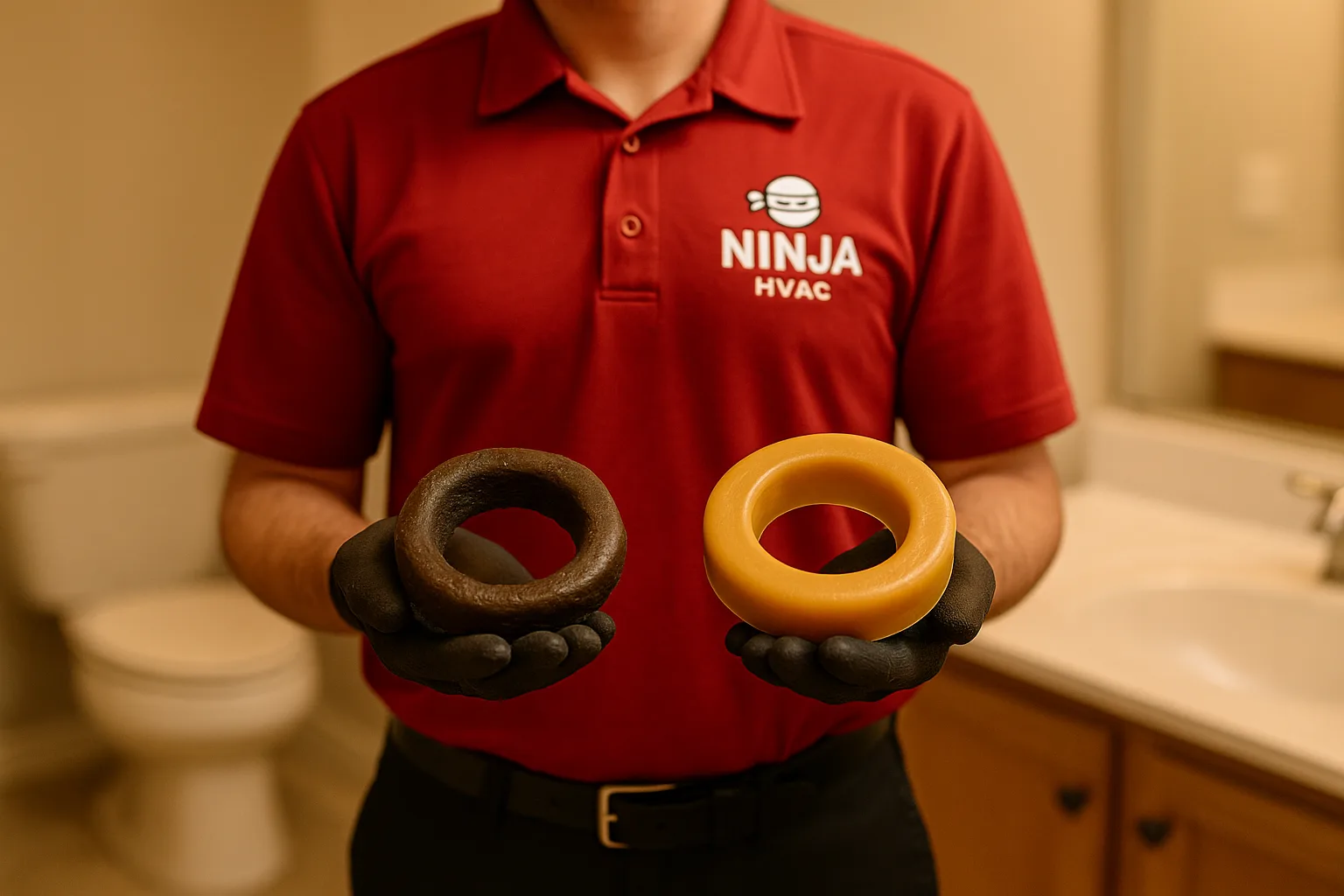
Honest answer? If you’re handy and comfortable with plumbing, replacing a wax ring is a DIY-friendly job.
The process involves:
- Turning off the water supply and draining the tank
- Removing the toilet (which weighs 60 to 80 pounds when empty)
- Scraping off the old wax ring completely
- Installing a new wax ring and reseating the toilet perfectly level
- Reconnecting the water supply and checking for leaks
The risk is in the details. Scraping all the old wax off is critical — if you miss any, the new seal won’t hold. Setting the toilet level matters too.
Uneven compression causes leaks to continue. Overtightening the mounting bolts can crack the porcelain base.
Contact a pro if:
- You suspect a corroded flange (common in pre-1980s Utah homes)
- The toilet base is cracked
- Your bathroom is on a second floor
- You’ve never done this before and don’t want to risk making it worse
Utah’s hard water can hide corrosion issues that aren’t obvious until you pull the toilet. What looks like a simple wax ring swap can turn into a flange repair once you see what’s underneath.
If you want to try the repair yourself, our detailed guide on fixing toilet base leaks walks through the steps. If you’d rather not risk it, we’re happy to handle it — reach us at (801) 997-8909.
Step-by-Step Guide: How to Fix a Toilet Leaking at the Base
Fixing a leaking toilet base requires patience and a few key steps. First, turn off the water supply to prevent further leakage. Drain the toilet tank by flushing and using a sponge to remove any excess water.
With the water off, disconnect the supply line from the tank. Use a wrench to loosen and remove the bolts that secure the toilet to the floor. Carefully lift the toilet and set it aside to access the base.
Inspect the old wax ring for wear and tear. Scrape off the worn wax entirely from the toilet and flange. Ensure the area is clean and dry before proceeding.
Install a new wax ring by centering it on the toilet outlet. Realign the toilet over the flange and carefully lower it onto the wax ring. Press down gently to create a secure seal.
Reattach the toilet bolts and tighten them evenly. Avoid over-tightening to prevent cracking the porcelain. Reconnect the water supply line and turn the water back on.
Finally, check for leaks by flushing the toilet several times. If no water appears around the base, the repair is successful.
Here’s a quick overview to fix toilet leak:
- Turn off water and drain the tank
- Disconnect water line and remove toilet
- Replace wax ring and reset the toilet
- Bolt down toilet and reconnect water
- Test for leaks
Tools and Materials Needed
Before starting, gather all necessary tools and materials. Having everything ready will make the process smoother. Here’s what you’ll need:
- Adjustable wrench
- Sponge or towel
- Scraper for removing old wax
- New wax ring
- Replacement bolts, if needed
- Bucket or container
Safety Precautions Before You Start
Safety should be your top priority when repairing leaks. Follow these precautions to minimize risks:
- Wear gloves to protect your hands from sharp edges
- Ensure the floor is dry to prevent slipping
- Handle the toilet carefully to avoid injury
Why Toilet Base Leaks Are More Common in Utah Homes
Utah isn’t like other places. Our water is harder, and our climate creates conditions that speed up plumbing failures.
Hard water is the biggest factor. Utah has some of the hardest water in the nation. Mineral deposits corrode flanges and mounting hardware. What lasts 15 years elsewhere might only last 8 to 10 years here.
Older homes with cast iron flanges. Pre-1980s homes across the Wasatch Front were built with cast iron sewer flanges. Cast iron rusts when exposed to moisture and minerals.
Foundation settling. As houses settle over decades, toilets shift position. Even a quarter-inch shift can break a wax seal.
For more on how Utah’s water affects your plumbing, read our guide on hard water damage.
How to Prevent Toilet Base Leaks
Check for rocking or movement. A few times a year, sit on the toilet and gently rock side to side. If it moves, tighten the bolts — but don’t crank them down.
Inspect the base quarterly. Look for dampness or mineral buildup. Wipe it down and see if the dampness returns.
Replace the wax ring proactively. If your toilet is 10 to 15 years old, consider replacing the wax ring even if you don’t see a leak yet. In hard water areas, 8 to 10 years is a safer interval.
These inspections are part of a broader seasonal maintenance routine. For a complete spring plumbing checklist covering toilets, water heaters, drains, and outdoor fixtures, check out our spring plumbing inspection guide for Utah homeowners.
According to the EPA WaterSense program, toilets account for nearly 30% of indoor water use. A toilet leaking at the base doesn’t just damage your home — it wastes thousands of gallons of water per year.
What to Do Right Now If Your Toilet Is Leaking
Seeing water on the floor? Here’s what to do next.
Start by placing towels around the base to contain the water and prevent it from spreading.
Next, turn off the water supply. Look for the shutoff valve behind the toilet, near the floor. Turn it clockwise until it stops.
Avoid flushing the toilet. Every flush adds more water. Leave the toilet alone until you’ve assessed the situation or called for help.
Now assess the urgency. Use the triage framework from the beginning of this post. Do you need to call now, or can it wait until morning?
Finally, reach out if needed. If it’s urgent — or if you’re just not sure — give us a call. We’ll walk you through it and help you decide if you need emergency service or if it can wait.
Not sure if is toilet leaking at base an emergency in your situation? Reach us at (801) 997-8909. We’ll help you figure it out. We’re open 7 days a week, and we’re not going to pressure you into a service call you don’t need.
Frequently Asked Questions
Is a toilet leaking at the base always an emergency?
No. It depends on the volume of water, whether you smell sewer gas, and your home’s layout. Contact us immediately if you see active pooling, smell sewer odor, or have a bathroom above living space. You can wait for business hours if it’s just slight dampness with no smell.
Should I turn off the water if my toilet is leaking at the base?
Yes. Turn off the shutoff valve behind the toilet and stop flushing until the problem is assessed or repaired. This prevents additional water from damaging your floor and subfloor.
Can a leaking toilet damage my floor?
Yes. Subfloor damage can start within 24 to 48 hours of continuous exposure. Prolonged leaking causes wood rot, mold growth, and structural issues that cost thousands of dollars to repair.
How often should I replace my toilet wax ring?
Every 10 to 15 years as preventative maintenance. In Utah’s hard water areas, consider replacing it every 8 to 10 years. If you notice rocking, dampness, or odors, replace it immediately.
Why does my toilet only leak sometimes?
Partial wax ring failure or loose mounting bolts. The leak appears during or after flushing when water pressure is highest. It still needs repair — the problem will only get worse over time.
What to Do Next
Now you have the framework to decide if is toilet leaking at base an emergency or something you can handle during business hours. You know the warning signs, the causes, and the costs. You know when to call and when it’s safe to wait.
We’re here when you need us. Family-owned, Utah state licensed, and backed by 20+ years of experience fixing plumbing across the Wasatch Front. Every technician on our team is background-checked and arrives with 200+ parts on the truck — including wax rings, flanges, and mounting hardware for every type of toilet we encounter.
Seeing a leak around your toilet base? Give us a call at (801) 997-8909. We’re open 7 days a week with a guaranteed 120-minute response time during business hours across Salt Lake, Utah, Davis, Weber, Tooele, Summit, and Wasatch counties. The $49 dispatch fee (M-F 9am-5pm) is waived when you proceed with the repair; after 5pm, weekends, and holidays the dispatch fee is $149.
Need help? Learn more about our plumbing repair service or call us at (801) 997-8909.
Need a plumber in the Salt Lake City area? See our Salt Lake City plumbing services.
Ninja HVAC also serves Lake Point and surrounding communities.
Ninja HVAC also serves Pleasant View and surrounding communities.