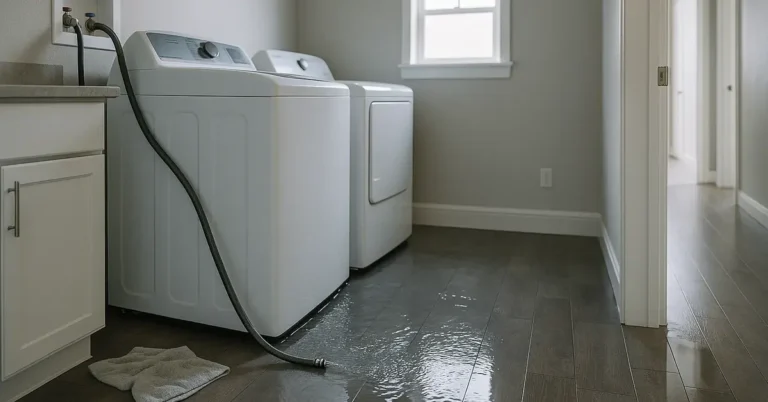
You’re in your Lehi garage staring at a nine-year-old water heater that just quit. Your tech hands you a repair quote. Replacement runs $2,089-$4,357 depending on size and fuel type. Quick math says maybe repair — but something feels off. Your neighbor replaced theirs at eight years, your brother said his lasted twelve, and now you’re stuck with a cold shower waiting.
Most guides skip this part: standard repair-vs-replace rules ignore Utah’s brutal hard water and wild temps. A water heater lasting twelve years in Seattle dies at nine in Salt Lake City. That 50% rule everyone quotes? It needs a Utah fix.
This guide breaks down the real cost math — Utah pricing, how Utah’s hard water damages plumbing, and seasonal urgency.
Not sure whether to repair or replace? Call us at (801) 997-8909. We’ll review your unit’s age, condition, and what hard water has done. Dispatch is $49 weekdays 9 AM-5 PM, applied to your repair.
The 50% Rule (Adjusted for Utah Hard Water)
Standard industry rule: if repair cost tops 50% of replacement cost AND the unit passed two-thirds of life, replace it. A repair quote hitting half of what replacement would cost on a unit that’s eight years old and expected to last twelve? You’re at 67% of life. Time to replace.
Utah changes this math.
National guides assume 10-12 years for tank heaters. Water heating efficiency cuts that to 8-10 years — less if never flushed or without a softener. Calcium and magnesium split when heated, sink to the tank bottom, and form a cement layer. Your heater works 30-40% harder. Rust speeds up.
So that repair quote on a nine-year-old unit? National math says “repair — three years left.” Utah math says “90% of hard-water life, buying maybe twelve months.”
Apply the Utah fix when you see popping noises, live without a softener, never flush the tank, or notice rusty water. Shave two years off expected life. A seven-year Utah unit equals a nine-year national one.
When to Repair: Cost-Effective Fixes in Utah
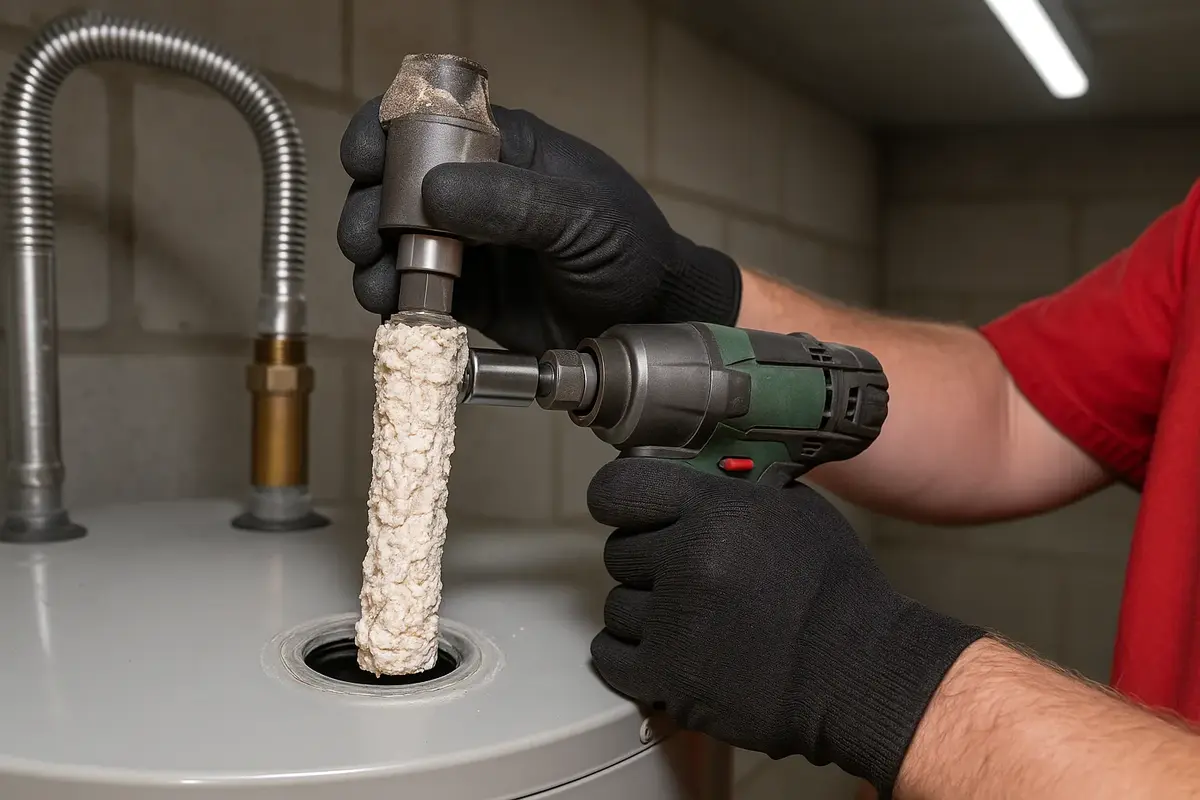
Some repairs make sense. Young unit, minor problem? Fix it.
Units under five years: Almost always repair unless the tank itself is leaking. A three-year heater with a failed element costs $387 and buys you five to seven more years of hot water.
Minor fixes: Thermocouple swaps, T&P valves, pilot relights — these are basic fixes that make sense even on older units if you need another year or two before budgeting for replacement.
Element replacement (3-6 year units): We charge $387 for this repair. On kept-up heaters, new elements restore full power and give you several more years. With a softener and annual flushes, this repair is worth it.
Anode rod swap (4-6 years): Underrated fix. Anode rods rust instead of your tank. Utah hard water means replace every 2-3 years (national: 3-5). Young tank, healthy condition? New rod adds three to five years and we see this work well on units that got a water softener mid-life.
Sediment flush (under seven years): Popping sounds mean sediment. Caught early, flushing brings back power and quiets the unit. Never flushed your seven-year unit? This buys several more years and costs way less than replacement.
Utah note: water softener plus annual flushing means 10-12 year life, which changes the repair math. Repairs make sense longer because you’re not fighting hard water.
Water heater showing trouble but still young? Our water heater repair technicians will check it and give straight answers. Call (801) 997-8909.
When to Replace: Clear Signs in Utah Homes
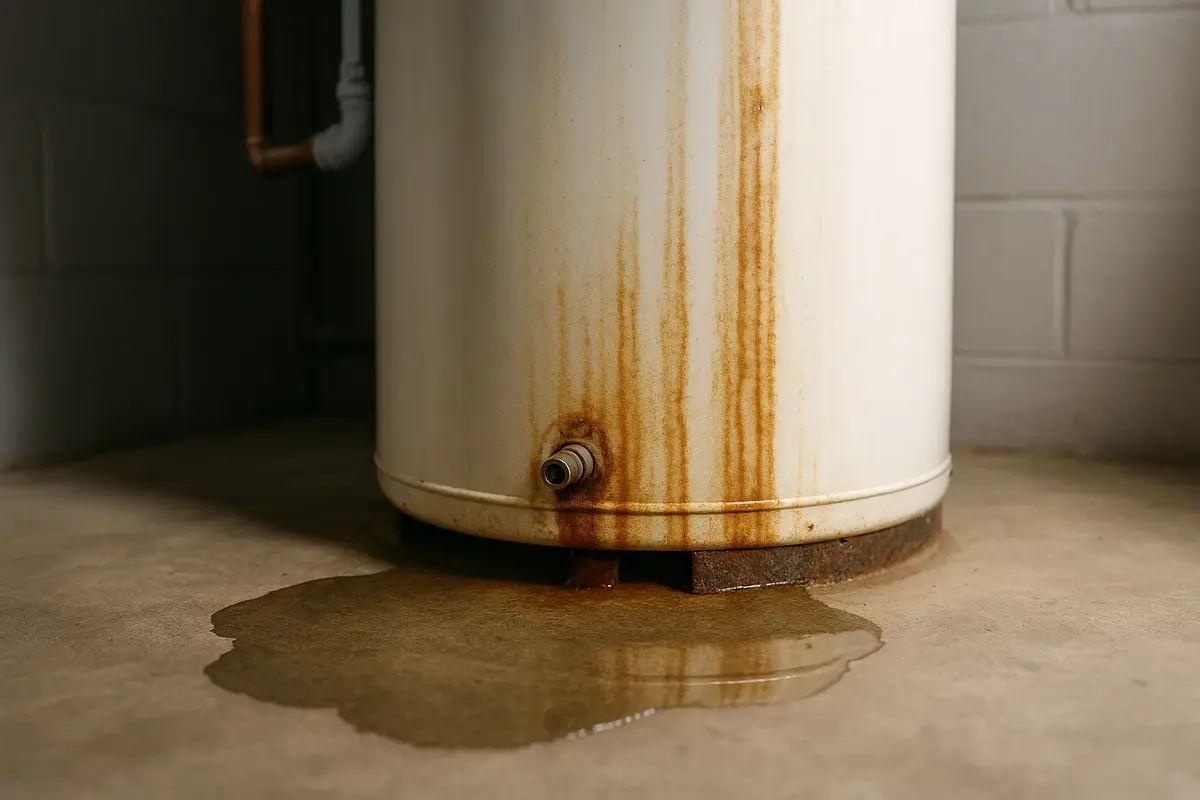
Some cases skip repair.
Leak at the base: Water pools around the heater? The tank itself has failed — steel rusted through, and there’s no repair option. Waiting risks damage to floors, walls, and storage. In basements or closets, these leaks cause thousands in damage.
Age 9+ with major repair: You’re looking at a substantial repair quote on a nine-year unit in hard water. Math might say “repair,” but you’re buying time on a dying system where the next break hits in six to twelve months. Replace now on your schedule, not mid-winter crisis.
Multiple repairs in twelve months: Second service call this year? That’s a pattern. Parts fail in order as the system ages out. Stop chasing problems and replace.
Rusty water, sediment, age 7+: Rusty water signals deep rust inside the tank. Add sediment noises and age, and you’re looking at a tank breaking down from the inside where replacement is coming — question is your timeline or 2 AM Saturday.
Noise despite flushing: Flushed but still noisy? Sediment hardened and won’t drain. The layer now shields elements, forces harder work, and speeds up failure. Common in Utah. The tank won’t recover.
Energy upgrade chance: Old weak unit? Replacement cuts bills through better wrapping and power use. The DOE says heat pump water heaters save $1,800 over life vs old electric tanks. Even newer wrapped tanks cut costs 10-20%.
Winter urgency: When it’s 5°F outside and your heater dies, you’re dealing with cold showers plus frozen pipe risk. Weak unit in November? Replace before January failure and crisis rates kick in.
Tankless math differs. Repairs are priced after assessment and can run far more than tank repairs. Seven-year tankless facing major repair in hard water? Scale buildup keeps going without treatment, so water heater replacement cost.
Real Utah Scenarios: The Cost Math
Let’s walk through four real Wasatch Front cases.
Lehi: 9 years, element failure, no softener, sediment noise
Element repair costs $387, replacement runs $2,089-$4,357 depending on size and fuel type. That’s well under 50% of replacement cost. National math says repair. But look deeper: nine years in hard water with no softener and sediment noise means 12-18 months life left. You’re spending $387 to delay a multi-thousand-dollar bill by one year.
Best move: Replace now and add a softener ($2,257-$6,304 depending on model). You’ll stretch the new heater life to 10-12 years instead of 8-9, and protect pipes, taps, and gear at the same time.
Sandy: 5 years, thermocouple failure, kept up, annual flushes
Minor fix, priced after assessment — replacement runs $2,089-$4,357. This is a small percentage on a five-year well-kept unit halfway through expected life.
The answer: Repair this minor fix on a healthy unit and keep up annual flushing.
South Jordan: 11 years, tank leak
A tank leak equals tank failure with no repair option. Eleven years is solid for Utah without a softener.
Act fast: Quick replacement before the leak gets worse and causes water damage.
Eagle Mountain: 7-year tankless, heat exchanger scale damage, extreme hard water
Repair priced after assessment, replacement runs $6,415-$7,825. But this tankless unit in extreme hard water has scale damage to the exchanger. The same issue returns in 18-24 months without treatment. You’re looking at repeated repairs later.
Smart play: Replace with softener, fixing the root cause and protecting the new unit instead of resetting the clock on the same failure.
Every case differs. We’ll walk the math — no pressure, just numbers. Call (801) 997-8909.
Utah-Specific Factors That Change the Decision
National guides skip Wasatch Front conditions that change the equation.
Hard water sediment: Utah ranks among the hardest water in the country. Minerals heat up, split off, and form thick tank layers that cut power 30-40%, create noise, and shorten life 20-30%. No softener and never flushed means your heater ages faster than maker specs.
Extreme inlet temps: Winter inlet water hits 35-40°F. Heaters must raise that to 120°F+ — an 85-degree lift compared to 50-60°F inlet in mild areas. That gap speeds wear on elements, burners, and tank linings. And it’s not just cold that causes problems — summer heat damage to pipes and water heaters is equally common as thermal expansion stresses joints and tanks when temperatures swing from 40°F nights to 95°F+ days.
Altitude (gas units): Above 4,500-5,000 feet, gas heaters need altitude-rated parts or tuning for good burn. Wrong setup means bad burn, carbon buildup, and early failure — standard in Utah, rare elsewhere.
Permits and code: Utah follows the International Plumbing Code, which requires T&P valves, quake strapping, proper venting, and permits priced by area. These aren’t optional and they’re built into our replacement pricing.
Seasonal timing: July failure is a hassle. January at -5°F is a crisis with frozen pipes, crisis rates, and limited slots. Eight-year unit in late fall? Replace before winter vs breakdown risk. Spring is the ideal time to catch water heater problems early — a thorough spring plumbing maintenance inspection helps you spot sediment buildup, supply line corrosion, and early signs of tank failure before they turn into mid-season emergencies.
Frequently Asked Questions
Is it worth fixing a 10 year old water heater in Utah?
Probably not, unless it’s a very minor repair on a well-kept unit with a softener. At ten years in Utah hard water, you’re at or past expected life. Most repairs just delay replacement by a few months. Replace now on your schedule instead of waiting for a crisis.
What is the 50% rule for water heater repair?
If repair cost tops 50% of replacement cost AND the unit passed two-thirds of expected life, replace instead of repair. Utah fix: use 8-10 year life vs national 10-12 due to hard water. When the repair quote hits half of replacement cost on a nine-year-old unit, you’re at 90% of Utah-adjusted life, so replace.
Why is my water heater making popping noises?
Sediment buildup at the tank bottom traps water under the layer. That water boils and makes popping sounds. Utah hard water causes this within 2-3 years without regular flushing. Noise after flushing means hardened sediment won’t drain — a sign the tank is nearing failure.
How long do water heaters last in Utah hard water?
Tanks last 8-10 years without care or softener. With a softener and annual flushing, expect 10-12 years. Tankless units last 15-20 years nationally, but hard water scale buildup shortens that without proper water treatment and annual descaling service.
When should you replace your water heater instead of repairing it?
Replace when the tank is leaking (no repair option), the unit is 9+ years with a major repair quote, you’ve had multiple repairs this year, you’re seeing rusty water combined with age 7+, or noise stays after flushing. Also think about replacement in late fall with a weak unit since winter failures cost more.
How much does water heater replacement cost in Utah?
Tank replacement runs $2,089-$4,357 depending on size, fuel type, and power tier. A basic 40-gallon gas tank starts around $2,249. A 50-gallon gas tank runs $2,983-$4,357. Tankless units cost $6,415-$7,825 installed. These prices include the unit, labor, permits, and code work.
Making the Decision
The repair-vs-replace choice isn’t just about the 50% rule. It’s about knowing how Utah’s hard water and weather change the equation. A water heater lasting twelve years in a mild area dies at nine here. A repair looking smart on paper buys twelve months instead of three years.
Framework is clear: minor repairs on young units work, major repairs on old hard-water units don’t. Leaks mean quick replacement. Multiple yearly repairs mean the whole system is aging out.
Call (801) 997-8909 — after-hours emergency service, 120-minute response during business hours, and honest advice from techs who’ve seen every Wasatch Front water heater case. We’ll tell you whether repair or replace makes sense and show the math so you can make the call yourself.