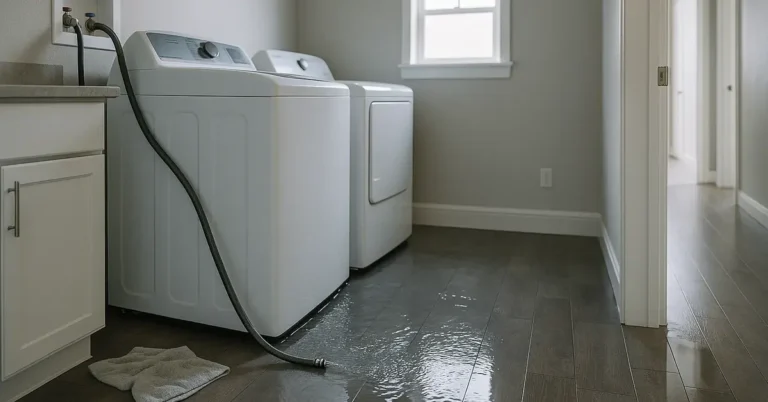
You’re halfway through a load of towels when water starts overflowing from the washing machine drain pooling around the washer and creeping across your laundry room floor. If your drain backs up when washing machine drains, you’re not alone. We see this all the time in Utah homes, especially older places in Sugar House, the Avenues, and established neighborhoods across the Salt Lake Valley.
The good news? Most of these issues are fixable. Once you understand what’s happening, you can figure out whether you’re dealing with a simple clog, an undersized pipe problem, or something that needs professional attention. A drain backup is a different beast from a supply hose bursting behind the washer under full pressure, which floods far faster.
If your drain backs up when washing machine drains right now and you need help, give us a call at (801) 997-8909. We’re happy to help you figure it out.
Why Your Drain Backs Up When Washing Machine Drains
Your washing machine pumps out between 15 and 25 gallons of water per minute during the drain cycle. That’s a lot of water moving fast. It flows through a hose into a standpipe or laundry tub, then into your home’s drain system.
When everything’s working right, that water disappears without issue. But when something’s wrong a clog, an undersized pipe, or a main line problem the water has nowhere to go.
So it backs up. Sometimes it comes out of the floor drain. Sometimes it overflows the standpipe. Either way, it’s not supposed to happen.
In Utah, we deal with a unique combination that makes this worse: hard water, older home infrastructure, and modern high-efficiency washers that pump water faster than older machines ever did. Our hard water leaves behind mineral deposits that combine with lint and soap scum to create stubborn clogs faster than you’d see in soft-water areas. That’s why preventing basement drain clogs before summer laundry season is essential for Utah homeowners.
There are three main reasons your drain backs up when washing machine drains. Let’s break them down so you can figure out which one you’re dealing with.
The 3 Most Common Causes (And How to Tell Which One You Have)
Think of this as a diagnostic framework. The symptoms you’re seeing will tell you what’s actually happening behind the scenes.
1. A Clog in the Washing Machine Drain Line
This is the most common culprit. Every load of laundry sends lint, soap scum, fabric fibers, and other debris into your drain. Over time, this stuff builds up on the inside of the pipes. Add Utah’s hard water to the mix with its high mineral content and you’ve got the perfect recipe for a stubborn clog.
The average family washes about 300 loads of laundry per year. That’s 300 opportunities for lint and gunk to stick to your pipes. Eventually, the buildup narrows the pipe enough that water can’t flow through fast enough.
What to look for if your drain backs up when washing machine drains:
- The backup is isolated to the laundry area your kitchen sink and bathroom drains work fine
- You hear gurgling sounds from the standpipe or floor drain when the washer drains
- The drain is slow, but it does eventually drain
- You might notice a soap or mildew smell near the drain
If this sounds like what you’re dealing with, you’ve probably got a clog somewhere between the washing machine and the main sewer line. Good news this is usually the easiest laundry drain clog fix.
2. Undersized Drain Pipes (Common in Older Utah Homes)
Something most people don’t know: older homes were built with 1.5-inch washing machine drain lines. Modern building codes require 2-inch lines. That half-inch difference matters a lot when you’ve got 15 to 25 gallons per minute trying to move through the pipe.
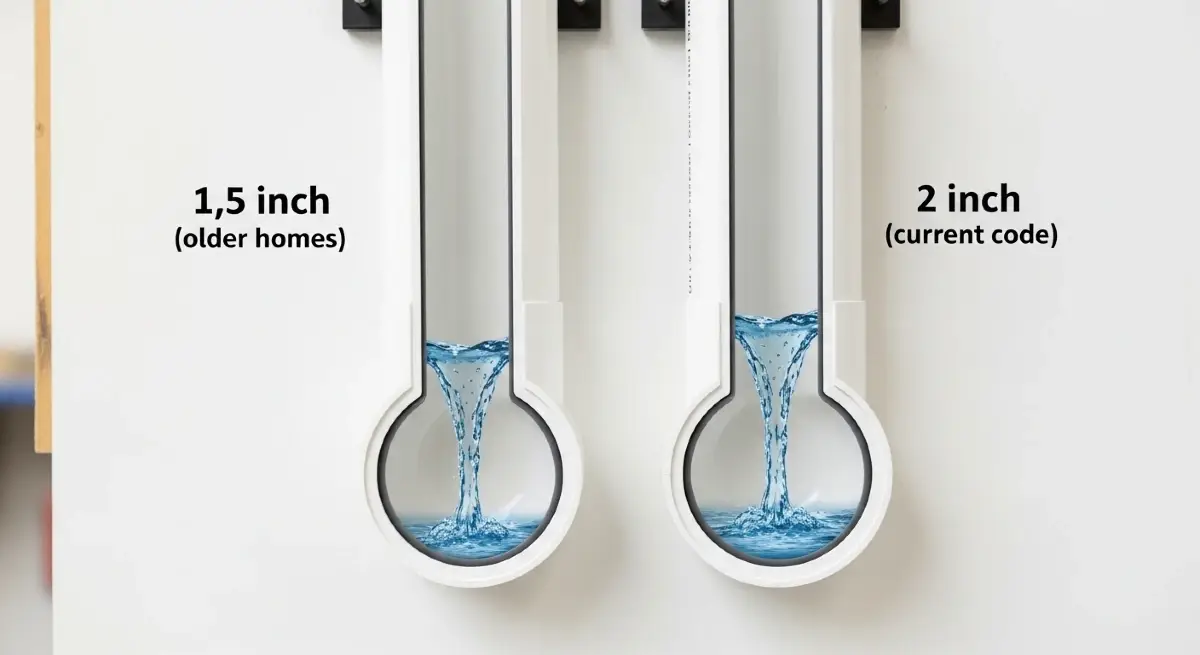
We see this constantly in older Utah neighborhoods homes built in the ’60s, ’70s, and ’80s in Sugar House, Murray, Sandy, and the Avenues. These homes were built to code at the time, so the smaller pipes are grandfathered in. They’re not illegal. They’re just not big enough for modern high-efficiency washing machines.
Signs that pipe size is your issue:
- The problem started after you upgraded to a new, high-efficiency washer
- Large loads back up, but small loads drain fine
- The pipes aren’t clogged water does drain, just not fast enough
- Your home was built before the 1990s
If you’re nodding along to these symptoms, you’ve probably got an undersized pipe. This doesn’t necessarily mean you need to replace all your plumbing sometimes there are workarounds but it’s worth understanding what you’re working with.
3. A Main Sewer Line Problem
This is the scenario you don’t want, but it’s important to recognize the signs. If your main sewer line is partially blocked or damaged, the washing machine drain can be the first place you notice it. That’s because it dumps so much water so fast.
Indicators you’ve got a main line issue:
- Multiple drains are affected not just the laundry. Your kitchen sink backs up when the washer drains, or your toilet gurgles, or your basement floor drain overflows
- You hear gurgling from drains throughout the house
- The problem gets worse over time
- You notice sewage smells near floor drains
Main sewer line problems can be caused by tree root intrusion (especially common during Utah summers), deteriorating cast iron pipes (common in older Utah homes), or a blockage farther down the line. This is the most serious of the three scenarios, and it needs professional attention.
If you’re seeing these symptoms, give us a call at (801) 997-8909. A camera inspection can pinpoint exactly where the problem is, and we can walk you through your options. For more on how we handle clogged drain pipes, check out our guide.
What to Do Right Now
First things first: stop using the washing machine. Running another load will only make the problem worse and increase the risk of water damage.
What to do next:
Check for standing water and clean it up. Water sitting on your floor can damage flooring, drywall, and create mold problems. Use towels, a wet vac, or a mop to get it up quickly. While washing machine drains are a common culprit, AC condensate drain clogs can also flood Utah basements, especially during cooling season.
Look at other drains in your home. Run water in your kitchen sink, flush the toilet, check the bathroom drains. Are they draining normally? This tells you whether the problem is isolated or affects your whole house.
If you can access the P-trap under the standpipe, check it. Sometimes lint and debris collect right there. Put a bucket underneath, unscrew the trap, and clear out any visible gunk.
Decide on urgency. Is this a “fix it this week” problem or a “need help now” problem? If water is actively flooding your basement or multiple drains are backing up, that’s urgent. If the drain eventually clears and you can avoid using the washer for a few days, you can schedule a regular service call.
The honest answer on urgency: if the problem is isolated to the washing machine drain and it’s not actively flooding, it can usually wait until regular business hours. If you’re seeing backups in other areas or water damage is a concern, call us we’re available 24/7 and guarantee a 120-minute response time across the Wasatch Front.
Professional Solutions and What They Cost
Let’s talk about what it actually costs to fix this, because that’s what everyone wants to know.
Simple clogs the most common scenario are typically priced after assessment. Professional drain clearing includes a service call, clearing the clog with a drain snake or auger, and testing to make sure water flows freely afterward. For recurring backups, our breakdown of when hydro jetting beats a drain snake explains why. Most of these jobs get done the same day.
Main sewer line issues usually require a camera inspection first. That shows us exactly where the problem is a clog, tree roots, a collapsed pipe and what it’ll take to fix it. Once we know what we’re dealing with, we can give you a real number. Main line clearing is more involved, and costs vary depending on what we find.
Undersized pipe problems depend on your situation. Sometimes we can work around it by adjusting how the washing machine drains or spreading out the water flow. Other times, you might need to upsize a section of pipe. We’ll walk you through the options and give you a flat-rate quote before we do any work.
The $49 business-hours dispatch fee (applied to your repair) covers the diagnostic visit. After-hours, weekends, and holidays are $149 ($99 for Home Health Plan members). No hidden fees, no surprises.
Need help figuring out what’s going on with your drains? We’re a local plumbing and heating company with 20+ years serving Utah homes. Give us a call at (801) 997-8909 we’ll get it sorted out. If the issue is specifically your basement drain backing up, we’ve got a detailed guide on that too.
How to Prevent Future Backups
Once you’ve got your drain working again, follow these steps to keep it that way. If your drain backs up when washing machine drains, these prevention measures can save you from repeat problems.
Install a lint trap on your washing machine drain hose. These are inexpensive and catch a surprising amount of debris before it ever gets into your pipes. Clean it out every few weeks.
Use a mesh strainer or hair catcher if your washer drains into a utility sink. Same idea catch the junk before it goes down the drain. Hair catchers work for more than just washing machines they’re essential for preventing shower drain clogs too.
Run an enzyme-based drain treatment monthly. These products break down organic buildup (soap scum, lint, grease) without damaging your pipes. They’re safe, effective, and way cheaper than a drain call. Skip the harsh chemical drain cleaners they can damage pipes over time, especially older ones.
Use less detergent. High-efficiency washers need way less soap than you think. Too much detergent creates excess suds and leaves residue in your pipes. Check your washer’s manual for the actual recommended amount it’s probably less than you’re using.
Keep your garbage disposal clean if you have one. A neglected disposal can send grease and food particles into drain lines that connect to your washing machine drain. Proper maintenance prevents clogs from starting at the source. If you’re dealing with summer heat and disposal odors, check out our guide on summer garbage disposal maintenance.
Schedule professional drain cleaning every 12 to 18 months if you’ve got an older home. Think of it like changing the oil in your car. It’s preventative maintenance that keeps small problems from turning into big ones. Spring is the best time to tackle this kind of preventative plumbing work — a thorough seasonal plumbing system inspection for Utah homes catches drain issues, water heater problems, and outdoor fixture damage before they escalate.
Consider Utah’s hard water. Our mineral-heavy water accelerates buildup in pipes. A whole-home water softener won’t just help your drains it’ll extend the life of your appliances, water heater, and fixtures. We’ve got a whole article on how Utah’s hard water damages plumbing if you want to go deeper on that.
None of these steps are expensive or complicated, but together they’ll save you from most washing machine drain problems.
Frequently Asked Questions
Why does my kitchen sink back up when the washing machine drains?
This usually means your kitchen sink and washing machine share the same drain line, and there’s a clog or blockage somewhere downstream of both fixtures. When the washing machine dumps a large volume of water, it has nowhere to go, so it backs up into the kitchen sink (or whichever drain is lower or closer to the blockage).
This is a sign you’ve got a main line issue, not just a laundry drain clog. According to the EPA WaterSense program, modern high-efficiency washers use significantly less water per load but discharge it much faster, which can overwhelm partially blocked drain systems.
Is a 1.5-inch drain big enough for a washing machine?
Technically yes, but barely. Older homes were built with 1.5-inch washing machine drains, and they worked fine with older, slower-draining machines.
Modern high-efficiency washers pump out 15 to 25 gallons per minute, which can overwhelm a 1.5-inch pipe. Current building codes require 2-inch drains for a reason they handle the flow better.
If you’ve got a 1.5-inch line and a new washer, that’s likely why your drain backs up when washing machine drains. In 2026, most Utah homes still have these older 1.5-inch drain lines installed decades ago.
Can a clogged vent cause washing machine drain backup?
Yes. Every drain line needs a vent to allow air into the system as water flows out. If the vent is clogged or blocked (by a bird’s nest, leaves, ice in winter, etc.), your drain backs up when washing machine drains because the system can’t drain properly. You’ll often hear gurgling sounds or notice slow drainage. A clogged vent won’t stop water from draining entirely, but it’ll slow things down enough to cause backups.
Why does my basement floor drain overflow when doing laundry?
Basement floor drains are usually the lowest point in your home’s plumbing system. When there’s a clog or blockage in the main sewer line, water backs up to the lowest available opening which is often the basement floor drain. If this is happening, you’ve almost certainly got a main line issue, not just a clog in the washing machine drain. This basement drain backup laundry problem needs professional attention.
How much does it cost to fix a washing machine drain clog?
Professional drain clearing is priced after assessment and varies based on the location and severity of the clog. The service includes a diagnostic visit, clearing the clog with the appropriate equipment, and testing to ensure everything drains properly. We always give you a flat-rate quote before we start the work.
What causes the washing machine drain backup?
The three most common causes are: (1) a clog in the drain line from lint, soap scum, and debris buildup; (2) undersized drain pipes (1.5-inch instead of 2-inch) that can’t handle modern washer flow rates; and (3) a main sewer line problem affecting multiple drains in your home. Utah’s hard water makes the first issue worse by accelerating mineral buildup in pipes.
Conclusion
Understanding why your drain backs up when washing machine drains is the first step to fixing it. Whether it’s a simple clog, an undersized pipe, or a main line issue, addressing it now will save you from bigger headaches (and bigger messes) down the road.
If your drain backs up when washing machine drains, give us a call at (801) 997-8909 when you’re ready to fix it. We’re available 24/7, and we guarantee a 120-minute response time across the Wasatch Front. The $49 dispatch fee during business hours is applied to your repair, and we’ll give you a flat-rate quote before we start any work.
We’re a family-owned company with 20+ years serving Utah homes. We’ve seen just about every drain problem there is, and we’ll help you figure out the right fix for your situation.
Need help? Learn more about our drain cleaning service or call us at (801) 997-8909.