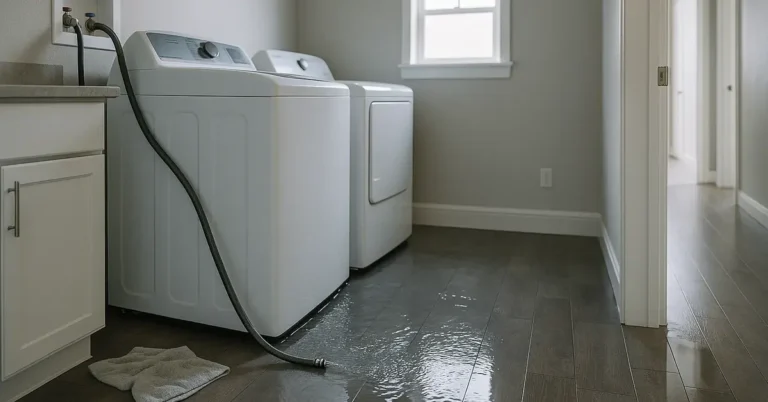
You walk into the utility room and spot water pooling under your water heater. Your first thought? The tank’s leaking and needs replacement. But before you start budgeting for a $2,000+ replacement, check the connections at the top.
There’s a good chance it’s just the supply lines — those flexible pipes that bring cold water in and carry hot water out. Water heater supply line replacement cost is a fraction of what a new water heater does — typically $170 to $460 versus $2,000+.
While you’re evaluating your water heater’s condition, our repair vs replace calculator can help you decide if a supply line fix is worth the investment.
If you’re dealing with an active leak right now, give us a call at (801) 997-8909. We guarantee a 120-minute emergency response during business hours across the Wasatch Front, and we’re open 7 days a week — including after hours for emergencies. Need help choosing a reliable emergency plumber? Our guide to picking an emergency plumber in Utah walks through what to ask and red flags to avoid.
Why Water Heater Supply Lines Fail (And Why It Happens Faster in Utah)
Supply lines work hard. They handle constant pressure, temperature swings, and — if you live anywhere along the Wasatch Front — some of the hardest water in the country.
Utah water averages 13 to 18 grains per gallon of hardness. That’s more than double the “hard water” threshold.
Every gallon that flows through those lines carries dissolved minerals that corrode connections, build up inside valves, and eat away at rubber washers.
Then there’s the temperature cycling. Summer highs regularly hit 100°F in the Salt Lake Valley. Winter drops below zero.
Your water heater sits in a garage or basement where temperatures swing 60 degrees or more between seasons. All that expansion and contraction loosens fittings, stresses threads, and cracks rubber seals.
At elevations above 5,000 feet — common across Utah County, Summit County, and parts of Wasatch County — pressure cycling adds another layer of stress.
We’ve seen it play out: homes in untreated hard water areas replace supply lines 40 to 60 percent sooner than homes in soft water regions. A line rated for 10 years? Count on replacing it at year 5 or 6 if you’re not running a water softener. Learn more about how Utah’s hard water damages plumbing and what you can do to protect your system.
7 Signs Your Water Heater Supply Lines Need Replacement
Here’s what to watch for.
1. Active leak at the connection point. Water dripping from where the supply line connects to the water heater or shutoff valve. You can try tightening the fitting — but don’t over-tighten or you’ll crack it.
If the leak continues after a quarter-turn, the washer’s shot.
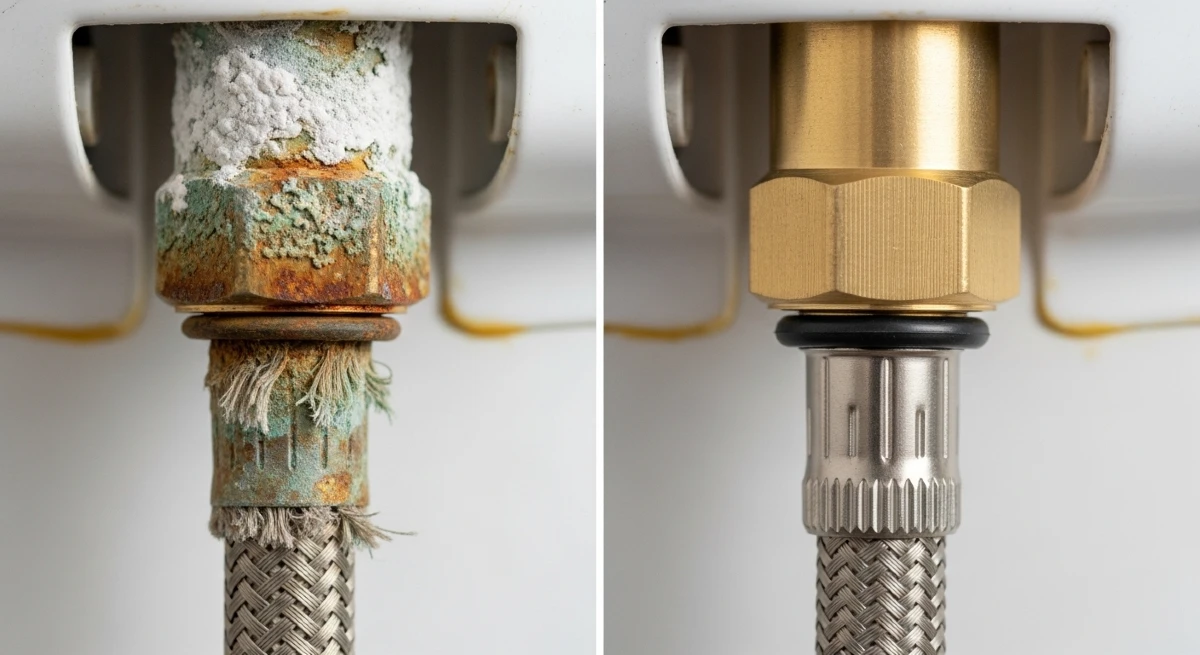
2. Visible corrosion on the connectors. White, green, or rust-colored buildup around the brass fittings. That’s mineral deposits from hard water, and it means the connection’s deteriorating from the outside in. These corroded water heater lines need replacement before they fail completely.
3. Bulging or bubbling on the flex line. If you see the braided steel exterior ballooning out, shut off the water immediately. The rubber core is failing, and that line could burst.
4. Discolored water from the hot side. Rusty or coppery-tinted water coming from your hot tap (but not the cold) suggests corrosion somewhere in the water heater system.
Could be the tank, could be the supply lines. Either way, it’s worth inspecting.
5. Reduced water pressure. Noticeable drop in flow from your hot water taps. Often caused by scale buildup inside the supply line or shutoff valve — very common in Utah.
6. Your supply lines are 5+ years old. Braided stainless steel and flex connectors are rated for 10 years under ideal conditions.
In hard water, replace them proactively at 5 to 7 years.
7. Frequent minor leaks that stop after you tighten the fitting. If you’re retightening the same connection every few months, the threads or washers are wearing out. Replace the line before it fails completely.
If you’re seeing any of these signs, it’s worth getting them checked. We inspect supply lines as part of our annual water heater flushing service — no extra charge. Spring is the ideal time to check your water heater and supply lines as part of a comprehensive Utah homeowner plumbing inspection that covers outdoor faucets, sump pumps, and indoor fixtures. Give us a call at (801) 997-8909 to schedule.
Types of Water Heater Supply Lines: Which Is Best for Utah Homes?
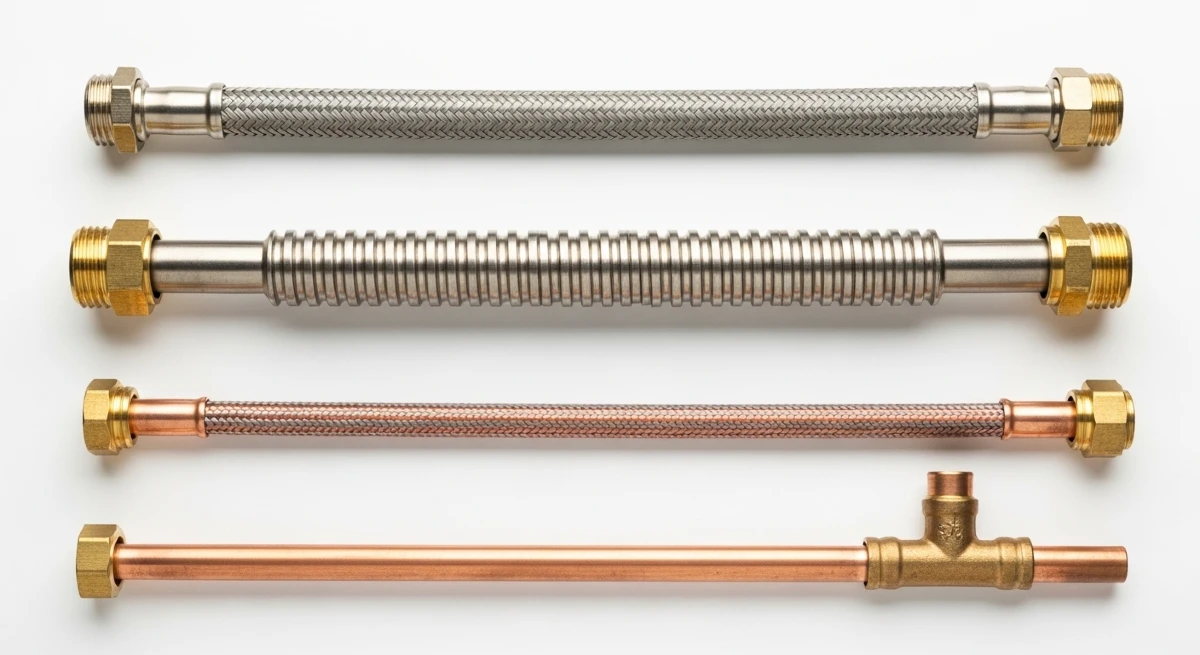
Not all supply lines are created equal. Here’s what works best in Utah’s hard water environment.
Braided Stainless Steel
Most common option. Rubber hose core wrapped in stainless steel braided sleeve. Flexible, easy to install, forgiving if connections aren’t perfectly aligned.
Lifespan: 10 years under normal conditions. In Utah? Plan on 5 to 7. Cost: $15 to $35 per line.
The catch: that rubber core can degrade over time, especially with temperature swings. The rubber washers at each end dry out, crack, and start leaking.
Corrugated Stainless Steel
Corrugated stainless throughout — no rubber core. More flexible, less likely to kink, and the professional-grade option most plumbers prefer.
Lifespan: 10+ years. Cost: $25 to $45 per line.
Still relies on rubber washers at the connections. But the line itself holds up better.
Copper Flex
Corrugated copper tubing with threaded brass ends. Cheaper than stainless, proven track record — 20 to 30 years in many cases. Cost: $10 to $25 per line.
The downside: they get brittle with age. Bump one with a box in the garage and it might snap. Don’t try to bend or reposition them once installed.
In hard water, copper corrodes faster than stainless. We see pinhole leaks in older copper flex lines fairly often in Lehi, Eagle Mountain, and other high-hardness areas.
Our take for Utah homes: Corrugated stainless steel if your budget allows. Braided stainless if you’re replacing on a timeline and plan to swap them out proactively every 5 years. Skip copper flex unless you’re on a water softener.
Water Heater Supply Line Replacement Cost Breakdown
Here’s what it actually costs in 2026.
Parts only: $20 to $60 for a pair of 18- to 24-inch braided stainless steel flex connectors. You’ll find them at any hardware store.
Professional installation: At Ninja, water heater hose replacement runs $209 for standard supply line service. That includes both lines, fittings, and labor.
If you need additional work — shutoff valve replacement, dielectric unions, or expansion tank service — expect $150 to $400 depending on complexity and accessibility.
Most plumbers include new supply lines when they replace a water heater, so you rarely pay this as a standalone charge during a full replacement. But if your tank’s in good shape and it’s just the connections leaking, replacing the lines is a minor repair compared to a $2,000+ water heater replacement.
We charge a $49 dispatch fee from 9 AM to 5 PM (Monday through Friday) — and that fee is applied to your repair. After 5 PM, weekends, and holidays, the dispatch fee is $149 ($99 for Home Health Plan members).
For more details on what other water heater repairs typically cost, check out our guide to water heater repair costs.
Give us a call at (801) 997-8909 for a flat-rate quote. No surprises, no hidden fees.
DIY vs Professional Installation: What’s Right for You?
Can you do this yourself? Maybe.
DIY makes sense if:
- The water heater is accessible and the connections are easy to see
- The shutoff valves work (turn them and they actually stop the water)
- You’re comfortable with basic plumbing
- This isn’t an emergency leak situation
You’ll spend $30 to $80 on parts and about 1 to 2 hours of your time. Straightforward job if nothing goes wrong.
Here’s where it gets tricky:
Over-tighten the fitting and you’ll crack the brass or strip the threads. Under-tighten it and you’ve got a slow leak that turns into a flood while you’re at work.
If the shutoff valve is corroded or the nipples (the short threaded pipes coming out of the tank) are rusted, you’re into a bigger job.
Plus, if you’re in Utah and the original install didn’t include shutoff valves — which the Utah Plumbing Code requires — you’re not code-compliant. That can be an issue for insurance claims or resale.
Call a pro if:
- There’s an active leak and you need it fixed fast
- You have a gas water heater (gas line work requires a licensed plumber in Utah)
- The fittings are corroded and might break off
- The shutoff valves don’t work and need replacement
Professional install gives you a warranty on the work, code-compliant installation, and a tech who’ll spot other issues — like a failing anode rod or sediment buildup — before they become expensive problems.
We carry 200+ parts on every truck. Most supply line replacements get done same-visit.
How to Replace Water Heater Supply Lines (DIY Overview)
If you’re going the DIY route, here’s how to replace water heater supply lines. This is an overview, not a step-by-step tutorial — if you’re not confident, call a pro.
Turn off the water and power (or gas). Find the cold water shutoff valve above the water heater and turn it clockwise. If you have an electric water heater, flip the breaker. Gas water heater? Turn the gas valve to “pilot” or “off.”
Drain a few gallons to relieve pressure. Attach a hose to the drain valve at the bottom of the tank and let a couple gallons out. You don’t need to drain the whole tank — just enough to drop the pressure so water doesn’t spray everywhere.
Remove the old supply lines. Use two adjustable wrenches — one to hold the fitting steady, one to turn the connector nut. Expect some water to drip out. Have a bucket ready.
Install the new lines with proper torque. Hand-tighten first, then give it about a half-turn to three-quarters-turn with a wrench. Don’t crank it. You’re compressing a rubber washer, not welding steel.
Turn the water back on and check for leaks. Open the shutoff valve slowly. Watch the connections. Any drips? Tighten another quarter-turn.
Still leaking? You’ve got a bad washer or cross-threaded the fitting. Take it apart and start over.
Again — this is the short version. If anything feels stuck, corroded, or uncertain, stop and call a plumber. A $300 service call beats a flooded basement.
When to Replace Supply Lines vs When to Replace Your Entire Water Heater
Here’s the decision framework.
Replace just the supply lines if:
- Your water heater is less than 8 years old
- Water heater connections leaking only at the fittings, not from the tank itself
- The unit heats water fine and you have no other issues
Water heater supply line replacement cost: $170 to $460. Easy call.
Replace the entire unit if:
- Water heater leak supply line coming from the tank itself (bottom, sides, or seams)
- The water heater is 10+ years old
- You’re dealing with frequent repairs (third or fourth fix in two years)
Once a tank starts leaking, you can’t fix it. The steel’s compromised.
Time for a replacement.
Full water heater replacement runs $2,000 to $4,000 depending on the type and size. We cover that in detail in our guide to water heater replacement cost.
If you’re not sure which way to go, we’re happy to take a look and give you an honest assessment. No pressure, no upselling — just the facts.
Frequently Asked Questions
Is a leaking water heater dangerous?
It can be. The immediate danger is water damage — a slow leak can cause mold, rot floor joists, and ruin drywall over time. If it’s a gas water heater and the leak is near electrical components or the gas valve, you’ve got a potential safety hazard.
And if the tank itself is leaking (not just the connections), the unit could fail suddenly and flood your basement or garage. Turn off the water and call a plumber if you see an active leak.
Why is my water heater leaking from the top?
Most often, it’s the supply line connections. The cold water inlet and hot water outlet are both at the top of the tank, and those fittings can corrode, loosen, or develop leaks from worn washers.
Sometimes it’s the temperature and pressure relief valve, which also sits near the top. Check the connections first — if they’re wet or corroded, that’s your culprit.
If the tank itself is leaking from the top seam, the unit needs replacement.
How long do water heater supply lines last?
Braided stainless steel flex lines are rated for 10 years under ideal conditions. In Utah’s hard water, expect 5 to 7 years. Corrugated stainless lasts a bit longer — 10+ years.
Copper flex lines can go 20 to 30 years, but they get brittle with age and are more prone to corrosion in hard water.
If you’re on a water softener, you’ll get closer to the rated lifespan. If not, plan on proactive replacement at the lower end of the range.
Can you replace water heater supply lines yourself?
Yes, if you’re comfortable with basic plumbing and the water heater is accessible. You’ll need two adjustable wrenches, a bucket, and new flex connectors. The job takes 1 to 2 hours.
The main risks: over-tightening and cracking the fitting, under-tightening and causing a leak, or discovering that the shutoff valves don’t work and you can’t stop the water.
If it’s a gas water heater, a licensed plumber is required in Utah for any work involving the gas line. If you’re not confident, hire a pro — a $300 service call beats a flooded room.
Should I replace both hot and cold supply lines?
Yes. If one is leaking, the other is the same age and subject to the same conditions. It’ll fail soon.
Replace them as a pair. You’re already shutting off the water and draining the tank — you might as well do both while you’re at it.
The cost difference is minimal (one extra $20 flex line), and you avoid having to do the same job again in six months when the other one starts dripping.
Conclusion
Supply line leaks are one of the most common water heater issues we see — and one of the easiest to fix. If your tank’s in good shape and the only problem is a drip from the connections, you’re looking at a minor repair, not a major replacement.
Don’t wait for a puddle to turn into a flood.
Give us a call at (801) 997-8909 to schedule a water heater inspection or supply line replacement. We’re open 7 days a week with a guaranteed 120-minute emergency response during business hours across the Wasatch Front. Utah state licensed, family-owned, and we’ve been doing this for 20+ years.
For more information on water heater maintenance and efficiency, visit the U.S. Department of Energy’s water heating guide.
Need help? Learn more about our water heater repair or call us at (801) 997-8909.