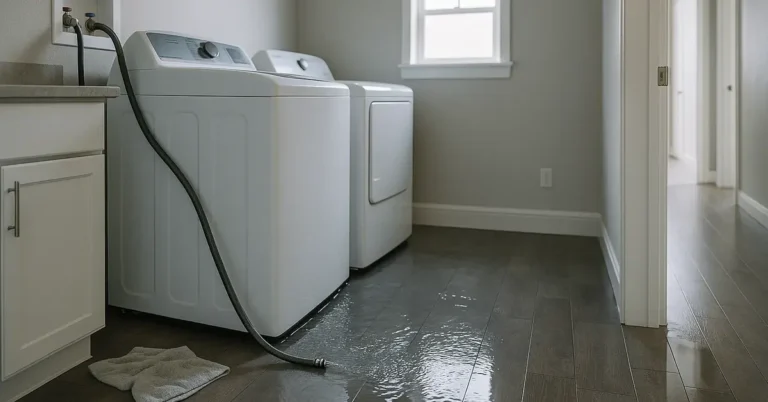
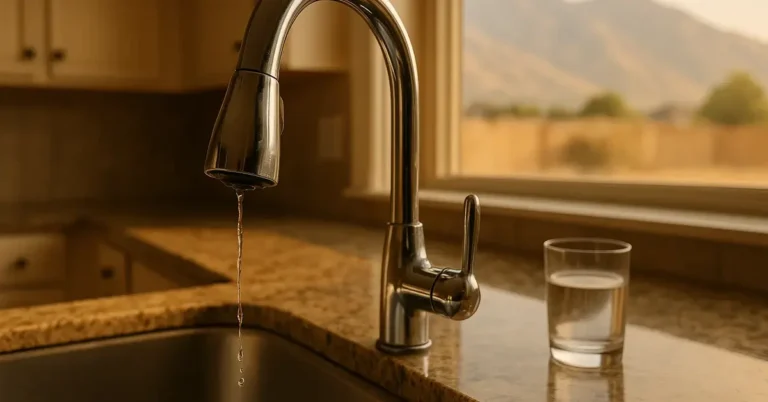
You walk out to water the garden on a late April morning in Lehi, turn on the outdoor faucet for the first time since October, and there it is — water spraying from the handle, dripping from the spout, or pooling around the base. The faucet worked fine when you shut it down last fall. What changed?
An outdoor faucet leaking when turned on is one of the most common plumbing problems Utah homeowners discover during spring irrigation startup. It’s frustrating, wasteful, and sometimes expensive. But the good news? Most of the time, it’s fixable — often without calling a plumber. Along with faucet issues, many notice low water pressure on hot summer afternoons in Utah.
We’ll walk you through the most common causes, how to diagnose where your leak is coming from, and which fixes you can handle yourself. By the end, you’ll know whether to grab a wrench or pick up the phone.
If your outdoor spigot is already causing problems and you’d rather skip the DIY route, give us a call at (801) 997-8909. We’re happy to take a look.
Why Your Outdoor Faucet Is Leaking When Turned On (4 Common Causes)
Outdoor faucets — also called hose bibs or outdoor spigots — are simple devices. When an outdoor spigot leaking problem occurs, it’s usually because one of those parts failed.
Worn Washer or O-Ring
This is the #1 cause. The rubber washer inside the valve presses down every time you turn the faucet on or off. After a few hundred cycles, it wears down, cracks, or hardens. When that happens, it can’t seal properly — and water escapes.
Utah’s hard water speeds up this wear. Many Wasatch Front areas have 15 to 20+ grains of minerals per gallon. That calcium and lime build up on the washer and valve seat, scratching the rubber and cutting its lifespan short.
Freeze-Thaw Damage
Ice takes up about 9% more space than liquid water. If water was trapped inside your faucet when temps dropped, that force can crack the valve body, damage the stem, or split internal parts.
Even frost-proof faucets aren’t immune. If you left a hose attached last fall, water couldn’t drain out. A freeze event could’ve damaged the valve seat deep inside the wall. You won’t see the damage from the outside, but you’ll see the leak when you turn the water back on.
This is extremely common in Utah. Our winters hit sub-zero, but homeowners sometimes skip proper winterization because the weather was mild in November. Then January hits, and the damage is done.
Mineral Buildup from Hard Water
Utah’s hard water doesn’t just leave white spots on your dishes. It leaves deposits inside your outdoor faucets. Over time, minerals build up around the valve seat, the washer, and the threads. That buildup stops the washer from seating right — causing leaks even when the faucet is turned off.
If you’ve noticed white crusty deposits around the faucet spout or handle, that’s a sign mineral buildup is already happening. When it’s visible on the outside, it’s worse on the inside. According to the EPA, hard water is a common issue in many regions and can accelerate wear on plumbing fixtures. Learn more about how Utah’s hard water damages plumbing.
High Water Pressure
Pressure over 80 PSI can stress outdoor faucets and cause faster wear. In Utah, homes with secondary irrigation systems sometimes get a pressure spike when the secondary water turns on in mid-April. This is common in Utah County, Eagle Mountain, and parts of Salt Lake Valley, and the same seasonal swings drive the afternoon water pressure dips Utah homeowners notice in July.
High pressure doesn’t always cause an immediate leak, but it can push water past a washer that’s already worn.
Quick Diagnostic: Where Is the Leak Coming From?
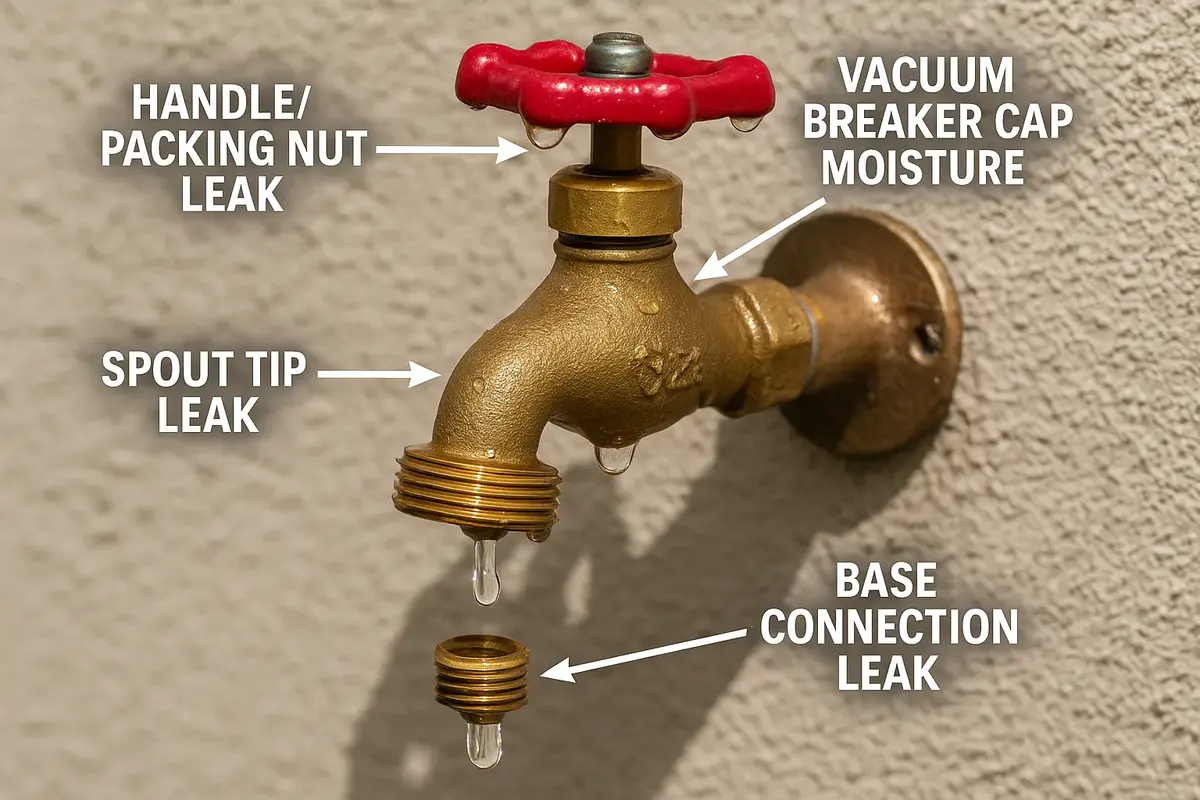
Where the water is coming from tells you what’s broken and how to fix it. Here’s how to identify the leak source in under a minute.
Open the faucet and watch closely. Use a dry towel to wipe down the faucet, then observe.
Water from the handle (around the packing nut): The packing washer or O-ring inside the handle assembly has failed. Water is escaping around the stem as it moves.
Spout drips while the faucet is running: This usually points to a worn washer at the valve seat. Water is bypassing the seal and leaking out instead of flowing cleanly through the spout.
Dripping from the spout when the faucet is off: The valve seat itself is probably scored or damaged. Even with a new washer, the valve won’t seal because the metal seat has grooves or pitting.
Leaking from the vacuum breaker (the cap on top): The vacuum breaker prevents backflow into your home’s water supply. If it’s leaking, the internal rubber seal has likely failed. These are cheap to replace but require removing the cap.
Knowing which type you have makes the repair much faster.
The 5-Minute Fix Most Utah Homeowners Can Do
If water is leaking from the handle area, there’s a simple fix you can try before replacing any parts: tighten the packing nut.
The packing nut is the hexagonal piece just below the handle. It holds the stem in place and presses down on the packing washer that seals around the stem. Over time, it can loosen — especially if the faucet gets bumped by hoses, tools, or kids playing in the yard.
Here’s how to do it:
Shut off the water supply to the faucet. Most outdoor faucets have a shutoff valve inside the house — usually in the basement, crawl space, or utility room.
Use an adjustable wrench to gently tighten the packing nut. Turn it clockwise, just a quarter to half turn. Don’t crank it down hard — brass fittings can crack if over-tightened.
Restore the water and test the faucet. If the leak stopped, you’re done. If it’s still leaking, the packing washer or O-ring needs to be replaced.
This fix works about 30% of the time. It won’t solve washer problems or freeze damage, but it’s worth trying before you disassemble anything.
Faucet Washer Replacement: When and How to Do It Right

If tightening the packing nut didn’t work, or if the leak is coming from the spout, it’s time to replace the washer. This hose bib leak repair is a straightforward DIY job if you’re comfortable with basic tools.
What you’ll need:
- Adjustable wrench
- Flathead screwdriver
- Replacement washer kit (available at any hardware store for $5–$10)
- Plumber’s grease (optional but helpful)
First, shut off the water supply inside your home. Make sure the faucet is completely off at the shutoff valve.
Next, remove the handle. Unscrew the handle screw (usually under a decorative cap) and pull the handle off the stem.
Then remove the packing nut. Use your wrench to unscrew the packing nut, then pull the stem assembly out of the faucet body.
Inspect the washer and O-rings. At the base of the stem, you’ll see a rubber washer held in place by a brass screw. Replace it if the washer is cracked, flattened, or hard. Check the O-rings along the stem too — if they’re damaged, replace them.
Install the new washer. Remove the old washer, clean the threads, and install the new one. Tighten the brass screw snugly, but don’t overtighten. Apply a thin coat of plumber’s grease to the washer and O-rings.
Reassemble and test. Put the stem back in, tighten the packing nut, reattach the handle, and turn the water back on. Open the faucet and check for leaks.
Utah-specific tip: Because of our hard water, brass washers last longer than rubber in outdoor faucets. They resist mineral buildup better and can extend the life of your repair by a year or more.
If the leak persists after faucet washer replacement, the valve seat itself is probably scored or corroded. At that point, replacement is usually more cost-effective than repair.
Rather skip the DIY route? We handle washer replacements all the time. Give us a call at (801) 997-8909 and we’ll get it fixed.
Frost-Proof Faucets: Why They Still Leak After Winter
Frost-proof faucets are designed to prevent freeze damage. Unlike standard faucets, the valve seat is located 6 to 12 inches inside the wall, where it’s warmer. When you turn the faucet off, water drains out of the pipe, so there’s nothing left to freeze.
In practice, they fail for one simple reason: a hose was left attached.
When a hose is connected, water can’t drain out of the faucet body. It stays trapped inside. If temperatures drop below freezing, that water turns to ice — and the expanding ice cracks the valve seat or the pipe inside the wall.
The symptom? A leak that appears at the exterior spout, or worse, inside the wall where you can’t see it. You might notice water stains on drywall, a musty smell, or water pooling in the basement near the faucet location.
Fixing a frost-proof faucet leak is harder than a standard hose bib. You can’t just replace the washer — you have to reach the valve seat inside the wall. That often means cutting into drywall or working in a crawl space.
In most cases, replacing the whole frost-proof faucet is faster and more reliable than fixing the internal valve. Cost runs $386 to $729 depending on access and whether we need to patch the wall afterward.
Want to avoid this problem next year? Disconnect all hoses before the first hard freeze. It’s the single most effective thing you can do to protect outdoor faucets in Utah. Check out our winterization guide for a full checklist.
Repair vs. Replace: What Makes Sense for Your Situation
Here’s how to decide.
Repair if:
- The faucet is less than 10 years old
- The leak is caused by a simple washer or O-ring failure
- There’s no visible corrosion, cracks, or freeze damage to the faucet body
- You’re comfortable doing the repair yourself
Replace if:
- The faucet is more than 15 years old and showing signs of corrosion
- The faucet body is cracked or leaking from multiple points
- You’ve already repaired it once and it’s leaking again
- It’s a standard faucet and you’d like to upgrade to a frost-proof model
DIY washer repair costs $5 to $10 in parts. Professional repair runs $100 to $200. Full faucet replacement costs $386 to $729 installed.
When to Call a Plumber Instead of DIY
Some outdoor faucet problems are beyond a DIY fix. Here’s when to call a professional.
The leak is inside the wall. If you have a frost-proof faucet and water is leaking behind the drywall or in the basement near the faucet location, the problem is inside the wall. This requires accessing the valve seat or replacing the entire faucet.
You can’t access the shutoff valve, or it won’t close. If the indoor shutoff valve is stuck, corroded, or missing entirely, you can’t safely work on the outdoor faucet. A plumber can replace the shutoff valve and fix the faucet in one visit.
The faucet body is cracked or the pipe connections are leaking. Cracks in the brass body or leaks at the threaded connection to the house usually mean the faucet needs to be replaced. These aren’t washer problems — they’re structural failures.
You’ve replaced the washer and it’s still leaking. A new washer didn’t solve the problem? The valve seat is probably damaged. Reseating or replacing the valve seat requires specialized tools and experience.
You’re not comfortable working with plumbing tools. There’s no shame in calling a pro. A faucet repair typically costs $100 to $200, and you’ll know it’s done right the first time.
We’ve been fixing outdoor faucet leaks across the Wasatch Front for 20+ years. If you’d rather have a professional handle it, give us a call at (801) 997-8909. We’re open 7 days a week, and the $49 dispatch fee (M-F 9am-5pm) is applied to your repair (after 5pm, weekends, and holidays it is $149).
Need professional help with outdoor faucet repairs? Learn more about our faucet and fixture repair services or call (801) 997-8909.
Frequently Asked Questions
Why is my outdoor faucet leaking when I turn it on?
The most common cause is a worn rubber washer inside the valve. Over time, the washer hardens, cracks, or gets damaged by mineral buildup from hard water. When it can’t seal properly, water leaks out. Freeze damage and a scored valve seat are other common culprits in Utah homes.
How much does it cost to fix an outdoor faucet leak?
DIY washer replacement costs $5 to $10. Professional repairs run $100 to $200 depending on the problem. Full faucet replacement costs $386 to $729 installed. Frost-proof faucets are on the higher end of that range.
Can I fix an outdoor faucet leak myself?
Yes, if the problem is a worn washer or loose packing nut. These are straightforward repairs that most homeowners can handle with basic tools. Call a plumber if the faucet body is cracked, the leak is inside the wall, or you’ve already replaced the washer and it’s still leaking.
Why does my frost-proof faucet still leak?
Frost-proof faucets leak when water gets trapped inside and freezes, usually because a hose was left attached. The expanding ice damages the valve seat deep inside the wall. The faucet only works if water can drain out completely.
Should I repair or replace a leaking outdoor faucet?
Repair if the faucet is less than 10 years old and the leak is a simple washer issue. Replace if it’s over 15 years old, visibly corroded, cracked, or has failed multiple times. Upgrading to a frost-proof model during replacement is a smart move in Utah’s climate.
Want a full list of plumbing tasks to check this season? See our spring plumbing checklist.
Conclusion
Most outdoor faucet leaks are caused by worn washers, freeze damage, or mineral buildup from Utah’s hard water. Many of these problems are simple DIY fixes — a $10 washer kit and 20 minutes of your time can solve a leak that’s been wasting water all season.
But if the faucet is old, cracked, or leaking inside the wall, replacement is usually the smarter choice. And if you’d rather skip the DIY route entirely, we’re here to help.
Give us a call at (801) 997-8909 — we’re open 7 days a week, and we’ll get your outdoor faucet fixed right the first time. The $49 dispatch fee (M-F 9am-5pm) is applied to your repair (after 5pm, weekends, and holidays it is $149).