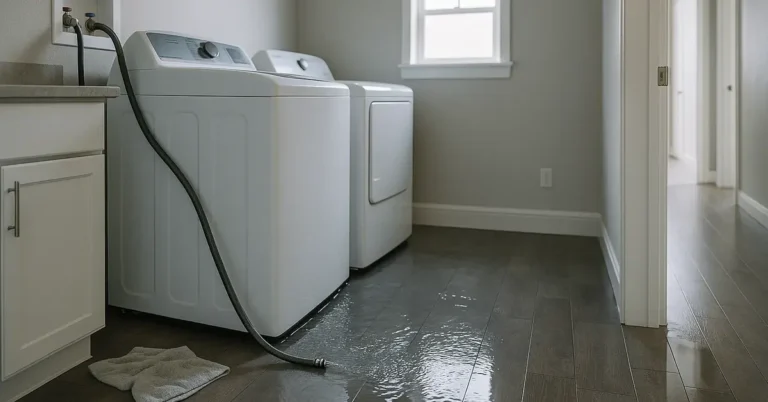
It’s 11 PM on a Friday. You walk downstairs and hear it that sound of running water that shouldn’t be running. Water’s pooling under your water heater, spreading across the basement floor. You grab your phone and search “emergency plumber near me.”
And that’s where a lot of Utah homeowners make a very expensive mistake. Learning how to choose emergency plumber service matters especially when water’s actively damaging your home.
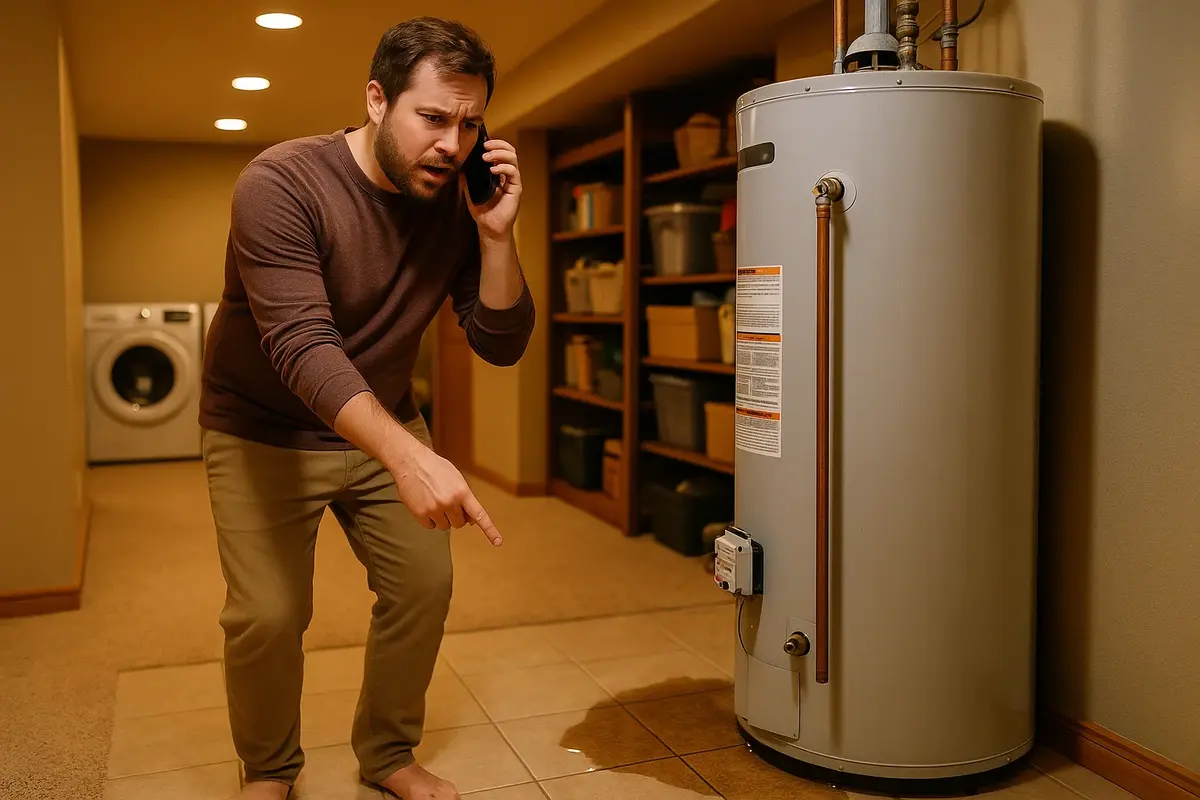
When you’re stressed and watching water damage happen in real time, it’s tempting to call the first number you see. But picking the wrong plumber can turn a $400 repair into a $2,000 nightmare.
This guide shows you how to choose emergency plumber service in Utah you can trust. We’ll cover license checks, the questions you should ask before anyone shows up, and the red flags Utah’s Better Business Bureau sees over and over again.
Facing a plumbing emergency right now? Call Ninja at (801) 997-8909 we guarantee 120-minute response across the Wasatch Front, 24/7. We’ll talk you through it, no pressure.
Do You Actually Need an Emergency Plumber?

Before we talk about how to pick one, let’s be honest: not every plumbing problem needs emergency service. The after-hours charge is real typically $100 to $300 in Utah and you shouldn’t pay it unless you have to.
Call right now if you’re seeing:
- Burst pipes actively flooding your home
- Sewer backup coming up through drains (or even just that sewer smell telling you something is wrong)
- Gas smell anywhere near plumbing fixtures
- Water heater leaking heavily (including supply line failures)
- No water at all when overnight temps are below freezing (frozen pipes get worse fast in Utah winters)
- Major water damage in progress that’s threatening structure or electrical systems
These situations get worse by the hour.
What can wait until morning:
- Slow drains that have been slow for weeks
- Dripping faucets you can catch with a bucket
- Running toilets (annoying, but not destructive)
- Minor leaks you’ve contained with towels and a shutoff valve
Winters in Utah complicate this. A slow drip at 7 PM can become a frozen, burst pipe by 3 AM when temps drop below zero. If you’re seeing any water issue and the forecast shows sub-freezing overnight temps, call soon. Frozen pipes are one of the most common and most expensive winter plumbing emergencies on the Wasatch Front.
Still not sure? Most good plumbers will talk you through it on the phone. If they pressure you to call them out immediately for a problem that can clearly wait, that’s your first red flag.
How to Choose Emergency Plumber: Are They Licensed in Utah?
Utah doesn’t mess around with plumbing licensing. Every plumber working in this state must hold a license through the Division of Occupational and Professional Licensing (DOPL). No exceptions.
You need to know this.
Utah recognizes four types of plumbing licenses:
- Apprentice Plumber: Learning the trade, must work under supervision
- Home Journeyman Plumber: Can handle most home work on their own
- Journeyman Plumber: Broader scope, can handle larger projects
- Master Plumber: Highest credential, supervises other plumbers, handles complex systems
For a typical emergency burst pipe, water heater failure, sewer backup you want at least a Home Journeyman or Journeyman license.
An apprentice shouldn’t be handling your emergency alone.
Verify their license in about 60 seconds:
- Ask the plumber for their license number when you call
- Go to dopl.utah.gov
- Search for their name or license number
- Verify the license is active, current, and matches the name of the person or company you’re calling
If they hesitate, dodge the question, or refuse to provide a license number, hang up.
Real plumbers expect this question and answer it immediately.
Every plumber must also carry general insurance $100,000 per incident, $300,000 total.
Ask for proof. A licensed, insured plumber protects you if something goes wrong during the repair.
10 Questions to Ask When You Choose Emergency Plumber Service
You’re on the phone with a plumber. Water’s still leaking. You’re stressed. Here are the questions to ask plumber before you agree to anything.
1. What’s your response time?
On the Wasatch Front, 1 to 2 hours is standard for emergency calls. Geography matters if you’re in Eagle Mountain and they’re based in Park City, expect longer. We guarantee 120-minute response across our service area.
2. What’s the dispatch fee?
Most Utah plumbers charge $100 to $300 for after-hours dispatch (nights, weekends, holidays). Some waive it if you proceed with the repair. Get this number upfront so there are no surprises.
3. Do you guarantee your work?
A one-year warranty on repairs is standard in Utah. Six months for drain cleaning. If they don’t offer a warranty in writing, keep looking.
4. What’s your license number?
If they hesitate, hang up. Seriously.
5. Will I get a written estimate before work starts?
Flat-rate quotes protect you from surprise bills. Hourly billing can spiral, especially during a middle-of-the-night emergency when you’re not watching the clock. Insist on knowing the exact cost before they start.
6. Are you insured?
Utah law requires $100,000/$300,000 insurance. Ask for proof. If they damage your home during the repair, you want to know they’re covered.
7. Do you have parts on the truck?

When you choose emergency plumber service, ask this: do they stock 200+ common parts? You want a first-visit fix, not a “we’ll order the part and come back next week” situation. Every Ninja truck carries enough inventory to handle most repairs the same night because we know getting it right the first time matters.
8. What payment methods do you accept?
Red flag: cash only. Another red flag: demanding full payment upfront before any work is done. Real companies accept credit cards and invoicing, and they don’t ask for 100% payment until the job’s complete.
9. Who will do the work employee or subcontractor?
Company employees mean accountability. If the plumber is a random subcontractor, you lose that direct line of responsibility if something goes wrong.
10. What happens if the repair doesn’t fix the problem?
This is where warranty terms matter. BBB complaints in Utah often involve plumbers who charge for repairs that don’t work, then refuse follow-up service. Get the warranty policy in writing before they start.
When you call Ninja at (801) 997-8909, we answer all 10 of these upfront no dodging, no pressure. Just honest answers so you can make the right call.
Red Flags When You Choose Emergency Plumber
Learning how to choose emergency plumber service means knowing scam patterns. Utah’s Better Business Bureau tracks complaints against home service companies. These are the patterns they see over and over and how to protect yourself.
Scam 1: The Repair Company Referral Kickback
A plumber responds to your water heater leak. After a quick look, they tell you the damage is extensive and recommend a specific repair company to handle demolition and rebuild. Weeks later, you’re stuck with a $10,000+ bill and your insurance only covers part of it.
What happened? Some plumbers get referral fees from repair companies. They have a financial reason to make the damage look worse.
What to do: Get an independent repair inspection not a referral from the plumber. Your insurance company can recommend certified specialists.
Scam 2: The Pressure Tactic Upsell
The plumber shows up for a clogged drain. Suddenly they’re recommending $900 in additional parts and services. You agree because you’re stressed and want the problem solved. The parts don’t fix the issue. You ask for a refund. They refuse.
BBB complaints in Utah document this exact scenario multiple times.
Your move: For any repair over $500, get a second opinion. Ask what happens if the proposed fix doesn’t work. Get warranty terms in writing before agreeing to anything.
Scam 3: The Warranty Dodge
You pay $1,500 for drain cleaning. Two weeks later, the drain backs up again. You call the plumber back. They say the warranty doesn’t cover “new” clogs only the original one. Or they simply don’t return your calls.
What you need: Before the plumber starts, ask exactly what the warranty covers and for how long. Get it in writing. If they’re vague or dismissive, that’s a red flag.
Scam 4: Full Payment Upfront
The plumber demands full payment before starting work or worse, before finishing. You pay. The work is incomplete or sloppy. They disappear.
Never do this: Never pay the full amount until the work is done and you’ve verified it’s complete. A deposit for materials is reasonable. Full payment upfront is not.
Before hiring any plumber, check their BBB profile at bbb.org/us/ut. Look for patterns in complaints one bad review might be a one-time thing, but multiple complaints about the same issue is a pattern you should avoid.
What You Should Expect to Pay in Utah
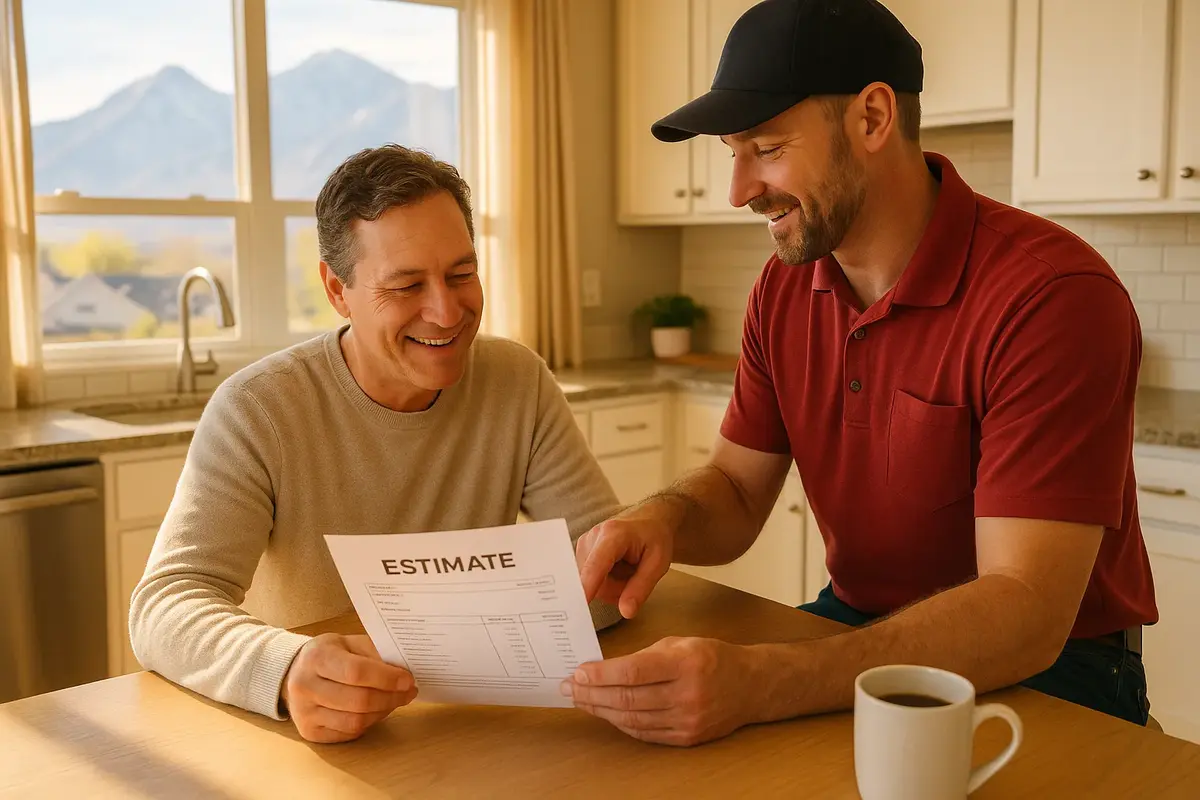
Emergency plumbing isn’t cheap, but knowing what’s fair helps you spot price gouging. Here are Utah market benchmarks for 2026:
- After-hours dispatch fee: $100 to $300 (nights, weekends, holidays)
- Emergency hourly rates: $100 to $200 per hour (vs. $80 to $130 during business hours)
- Typical emergency repair: $300 to $800 for common issues like leaking fixtures, clogged drains, or minor pipe repairs
- Complex repairs: $500 to $2,000+ for burst pipes, sewer line work, or water heater replacement
At Ninja, we’re transparent about pricing. Our after-hours dispatch is $149 ($99 for Home Health Plan members). During business hours (Monday through Friday, 9 AM to 5 PM), the dispatch fee is $49 and we waive it completely if you go ahead with the repair. We quote flat-rate pricing before we start, so you know exactly what you’ll pay. No surprise hourly charges at 2 AM.
Red flag pricing patterns to watch for:
- Refusing to provide any estimate until they “see the problem”
- Hourly rates above $250 for home emergency work
- Charging separately for “after-hours,” “weekend,” and “holiday” fees all at once (stacking fees)
- Demanding payment before explaining what the cost will be
If the pricing feels off, get a second opinion. For context on what emergency repairs typically cost, check out our guide on water heater repair costs.
What to Do While You Wait for the Plumber
You’ve called. Help is on the way. Here’s what to do in the meantime to keep the damage from getting worse.
Shut Off the Water
For a leak at a toilet, sink, or water heater, use the fixture shutoff valve usually a small knob or lever near the supply line. For a major leak or burst pipe, shut off the main water supply. In most Utah homes, that’s in the basement, crawl space, or outside near the meter.
Contain the Water
Grab towels, buckets, anything that can catch or soak up water. Move furniture, electronics, and anything valuable out of the wet zone. The faster you contain it, the less damage you’ll have to deal with later.
Turn Off the Water Heater (If That’s the Problem)
For a gas water heater, turn the gas valve to “off.” For electric, flip the breaker. A water heater that’s leaking and still heating can make the situation worse.
Document the Damage
Take photos and videos of the damage from multiple angles. Your insurance company will want this. It also creates a record of the starting point before the plumber begins work.
Utah Winter Note: Frozen Pipes
If you suspect frozen pipes, do NOT use an open flame or high-heat source like a propane torch. You’ll damage the pipes or start a fire.
If you want to try thawing it yourself, use a hair dryer on low heat. But honestly, frozen pipes in Utah’s sub-zero winters are best left to professionals. For tips on avoiding this problem in the first place, check out our outdoor faucet winterization guide.
Emergency Plumber FAQ
How quickly should an emergency plumber respond in Utah?
Standard response time is 1-2 hours on the Wasatch Front. Remote areas may take longer. Ninja guarantees 120-minute response, 24/7.
How much does an emergency plumber cost in Utah?
Dispatch fees run $100 to $300 for after-hours service. Typical repairs cost $300 to $800. Complex jobs like burst pipes or sewer work run $500 to $2,000+. Always ask for a flat-rate quote upfront.
What qualifies as a plumbing emergency?
True emergencies include burst pipes, sewer backup, gas leaks near plumbing, water heater flooding, and no water when temps are freezing. Basically, anything causing active damage or posing a safety risk. Slow drains, dripping faucets, and running toilets can usually wait until business hours. Same with toilets that won’t flush completely, which are typically caused by mineral buildup rather than an emergency plumbing failure.
How do I verify a plumber’s license in Utah?
Ask for their license number, then visit dopl.utah.gov. Search for their name or license number and verify the license is active and current. When you choose emergency plumber service, verify their DOPL license first no exceptions.
Should I call a plumber or wait until morning?
Call now if you have active flooding, sewer backup (especially from tree roots in sewer lines during summer), a gas smell, or frozen pipes when temps are below freezing. Wait until morning if you’re dealing with a slow drain, dripping faucet, running toilet, or minor leak you can contain. When in doubt, call and ask a good plumber will tell you honestly whether it’s worth the after-hours charge. Read more about when a toilet leak qualifies as an emergency.
How to Choose Emergency Plumber: Final Checklist
When water’s flooding your basement at midnight, taking five minutes to verify licensing and ask the right questions to ask plumber candidates can save you hundreds or thousands of dollars.
What matters most:
- Verify their Utah DOPL license at dopl.utah.gov before you hire them
- Ask for a written estimate and warranty terms before work starts
- Check their BBB profile for complaint patterns
- Get answers to all 10 questions upfront response time, dispatch fee, insurance, and guarantees
- Watch for red flags: hesitation about licensing, full payment upfront, vague pricing, or pressure tactics
And remember not every plumbing problem is an emergency. If it can wait until morning, you’ll save yourself the after-hours charge.
Our spring plumbing checklist walks you through annual tasks that catch small problems before they turn into 2 AM emergencies.
When you need to find reliable plumber Utah service you can trust, Ninja guarantees 120-minute response, transparent pricing, and Utah state licensed technicians. Our approach to how to choose emergency plumber service is simple: we do it right the first time. Every truck carries 200+ parts for first-visit fixes. Family-owned, no pressure, just honest work. We explain your options and walk you through what’s happening, because your comfort matters.
Call (801) 997-8909 we’re available 24/7, nights, weekends, and holidays. The $49 dispatch fee during business hours is waived if you go ahead with the repair. After hours it’s $149, or $99 if you’re a Home Health Plan member.
Need help? Learn more about our plumbing services or call us at (801) 997-8909.
Need a plumber in the Salt Lake City area? See our Salt Lake City plumbing services.