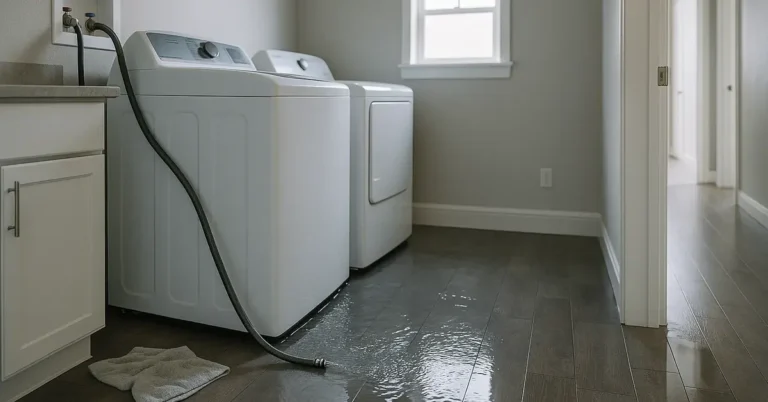
Last July, a homeowner in Sugar House called us at 9 PM with water backing up through the basement floor drain. Two mature cottonwoods in the front yard. A house built in 1987. And a sewer line that had finally given up. This wasn’t bad luck — it was Utah’s summer climate, aging pipes, and tree roots that had spent three months hunting for water in bone-dry soil.
Summer is peak season for tree root damage to sewer lines in Utah. There’s a scientific reason why. If you’re seeing slow drains, gurgling toilets, backups when you run laundry, or that sewer smell creeping into your house, give us a call at (801) 997-8909. A camera inspection now can save you from a messy emergency later.
Why Tree Roots Seek Out Sewer Lines
Tree roots don’t break into your sewer line because they’re bad. They’re just thirsty. Your sewer line is the best water source within fifty feet.
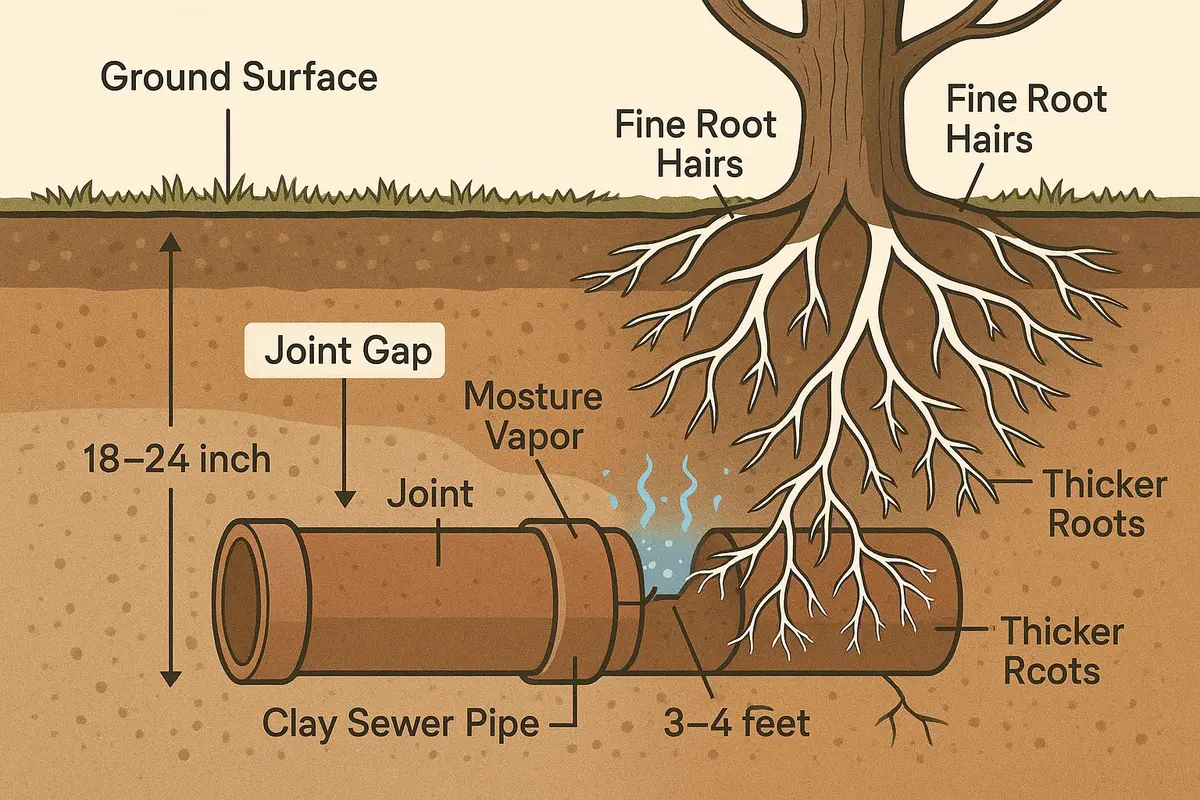
Sewer pipes leak tiny amounts of moisture vapor through joints and cracks. Roots smell that vapor and follow it like a map. Once they reach the pipe, they find water, nutrients from waste, and oxygen. Perfect for root growth.
A root hair enters through a hairline crack. Then it branches. Thickens. During peak growing season — June through August in Utah — roots can grow up to one foot per day. What starts as a minor problem becomes a full blockage in weeks. According to the U.S. Forest Service, tree roots cause more than 50% of all sewer blockages nationwide. In older Utah neighborhoods with clay pipes, that number is even higher.
The Summer Factor: Why July Is Peak Season in Utah
Homeowners usually think root problems are random. They’re not. Climate drives the timing — and Utah’s dry summer creates perfect conditions for roots to attack sewer lines.
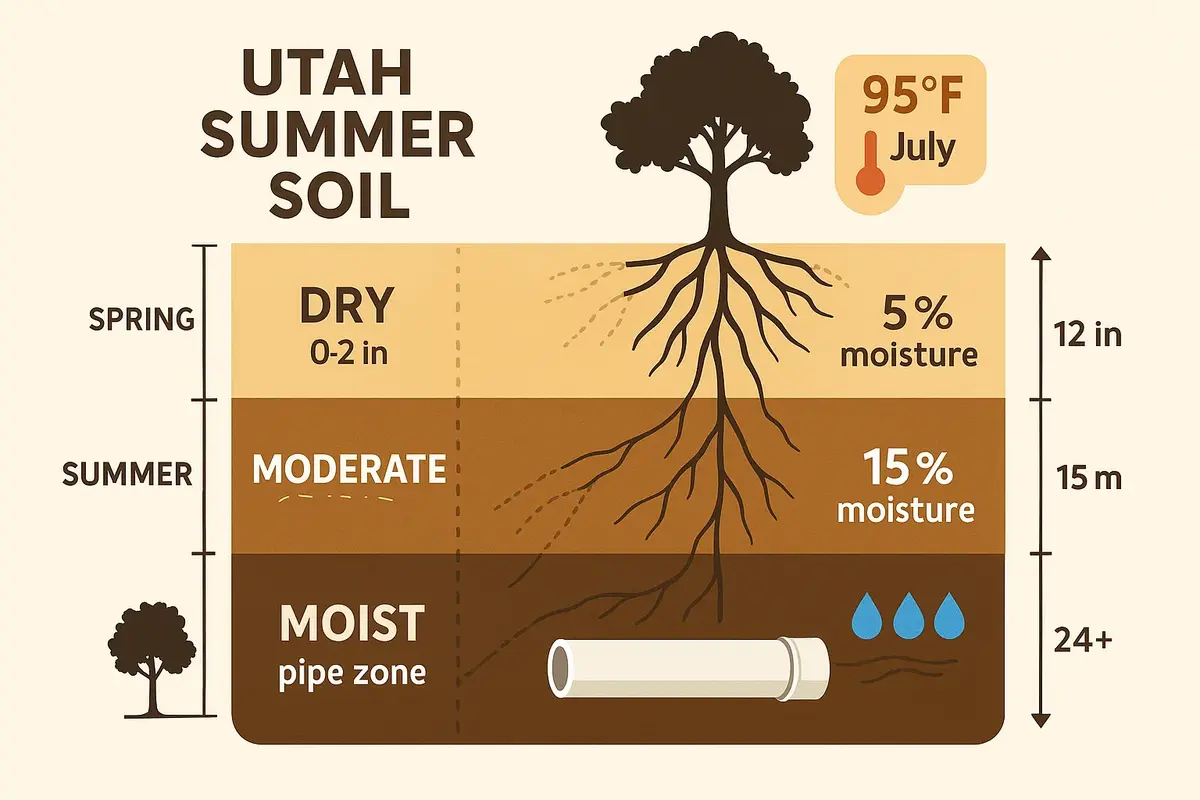
Here’s what happens. In April and May, trees pull water from the top foot of soil. Spring runoff keeps it moist. But by mid-June, temperatures hit the 90s. That top foot dries out completely. Trees shift their water-seeking behavior to access deeper sources. Your sewer line runs 18 to 24 inches underground. Exactly where desperate roots go looking.
Summer in Utah means 90 to 100-degree days with minimal rainfall. Surface soil moisture drops to single digits. Meanwhile, your sewer line stays moist because it carries water every time someone flushes a toilet or runs the washing machine. That contrast between dry topsoil and a wet pipe creates a powerful moisture pull. Roots follow it like a GPS.
Sewer backups typically happen in July and August. It’s not when roots grow fastest — it’s when they’re most motivated to find water. Once they get through a joint or crack, they multiply fast. What might take six months to become a problem in fall becomes a full blockage in six weeks during summer.
Noticing slow drains or gurgling sounds in June or July? Don’t wait until August when the backup happens. Schedule a camera inspection in April or May, before summer stress hits. Check out our spring plumbing inspection checklist for other preventive steps, then call us at (801) 997-8909.
Utah’s Aging Sewer Infrastructure Makes It Worse
Clay pipes were the standard for sewer lines in Utah until the late 1980s. If your home was built before 1990, there’s a strong chance your sewer line is clay. Clay pipes last 50 to 60 years before they start showing age through cracks and joint separation.
Do the math. A house built in 1985 has a sewer line pushing 40 years old. Many Wasatch Front neighborhoods are now at the end of that service life. Joint connections are leaking vapor and roots are finding entry points everywhere.
Clay pipes weren’t built in one piece. They were installed in short sections — usually three to four feet long — with joints between each section. Those joints were sealed with a rubber gasket or mortar. Over decades, settling soil and freeze-thaw cycles open tiny gaps. Roots smell the moisture vapor escaping from those gaps and follow it straight to the pipe.
In Utah County cities like Provo, Orem, and Alpine, tree roots are the #1 cause of failure in older clay pipes. Same pattern shows up in Salt Lake’s Sugar House, The Avenues, and Capitol Hill. Anywhere you have mature trees and pre-1990 construction. Modern PVC sewer lines have fewer joints and better seals, but even PVC isn’t safe. If there’s a crack from ground movement or a bad joint, roots will find it.
Warning Signs You Have Roots in Your Sewer Line
Homeowners usually don’t know they have a root problem until the line backs up completely. Roots give you warning signs — if you know what to look for.
Multiple slow drains at once. Not just the kitchen sink — the bathroom sink, the tub, and the basement drain, all draining slower than usual. When roots partly block a sewer line, the entire system struggles. A single slow drain is usually a local clog. Multiple slow drains mean something downstream is blocking flow.
Gurgling sounds when you flush the toilet or run water. That’s trapped air trying to escape past a blockage. Gurgling is your sewer line’s way of saying “something’s in the way.”
Backups during high water use. You run the washing machine and the basement floor drain backs up. You take a shower and the toilet gurgles. High water volume overwhelms a partly blocked line. Roots don’t block the pipe completely at first — they create a bottleneck that only shows up when you push a lot of water through at once.
Sewage smell in the yard or basement. Roots create slow spots where waste sits instead of flowing freely. If you’re noticing sewer odors near the foundation or above the buried line, roots are likely holding waste in place.
Lush green patches in the yard over the sewer line path. When roots break into a sewer line, they feed the soil around the pipe. You’ll see a strip of grass that’s greener and thicker than the lawn around it.
Symptoms start subtle in late spring. By mid-summer, they’re constant. By August, you’re dealing with a full backup. If you’re dealing with a backup right now, we guarantee 120-minute response. If you need to find a reliable emergency plumber, check out our guide on how to pick an emergency plumber in Utah you can actually trust. Call (801) 997-8909 — we’re available 24/7.
Utah Trees Most Likely to Attack Your Sewer Line
Not all trees are equally bad for sewer lines. Some species have shallow, spreading roots that seek water wherever they can find it.
Fremont cottonwood is the biggest problem in Utah. It’s native to the Wasatch Front and has an extremely aggressive root system. Cottonwoods are common in older neighborhoods because they were planted decades ago for shade. Their roots can extend two to three times the width of the canopy — a 40-foot cottonwood has roots reaching 80 feet or more. If there’s a cottonwood within 50 feet of your sewer line, it’s probably already in the pipe.
Silver maple is another common problem. These trees have shallow, fibrous roots that spread out near the surface. They seek out any water source, including sewer lines.
Willows are beautiful, fast-growing, and terrible for plumbing. They’re moisture-dependent trees with invasive roots. Whether you have a septic system or city sewer, willows will find it.
Here’s the rule: don’t plant water-seeking trees closer to a sewer line than the tree’s mature height. A tree that grows 40 feet tall should be planted at least 40 feet from the line. But if you have mature trees already in place — like most homeowners in established neighborhoods — you can only monitor and maintain.
How We Remove Tree Roots from Sewer Lines
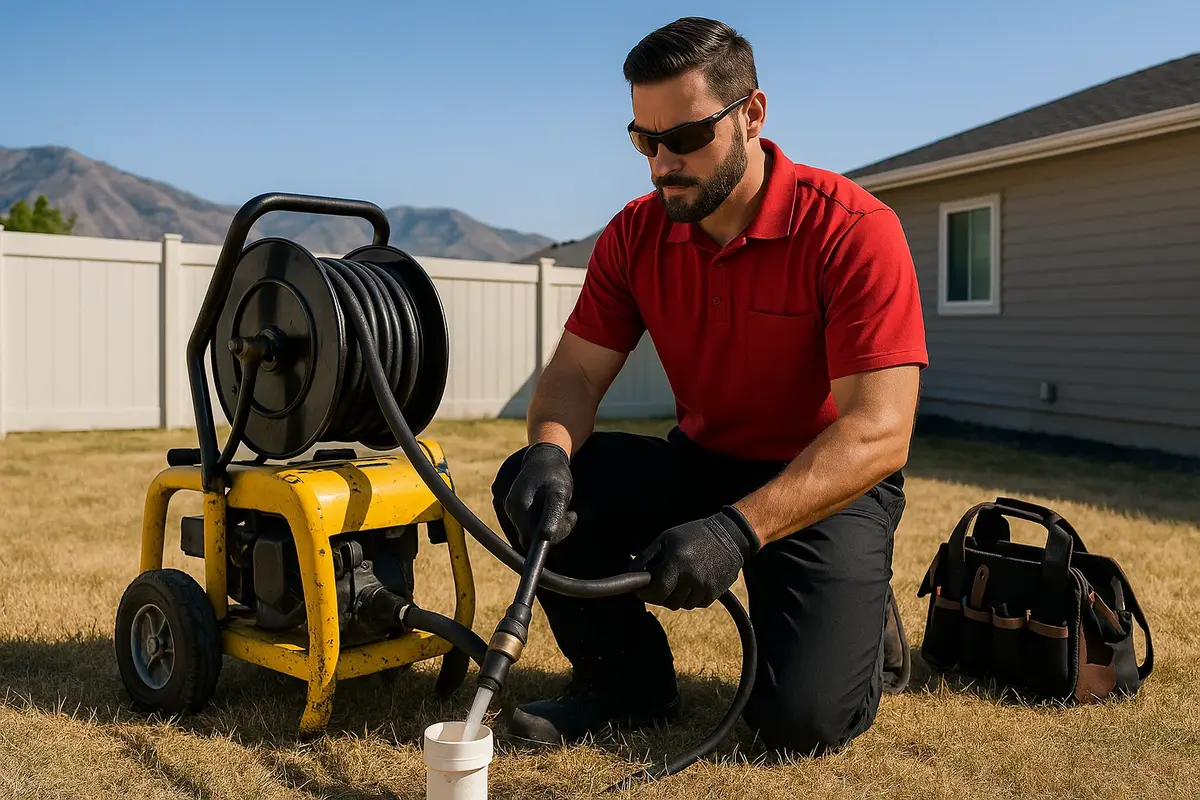
Root removal starts with knowing what you’re dealing with. We use a sewer camera to inspect the line from the inside. The camera shows us exactly where the roots are, how bad the problem is, and whether the pipe itself is damaged.
Camera Inspection (The First Step)
A camera inspection takes 20 to 30 minutes. We feed a flexible cable with a waterproof camera through a cleanout and record video as it travels through the pipe. You see what we see: the inside of your sewer line in real time. Roots show up as fibrous masses blocking part of the pipe. Cracks and joint separations show up as gaps where roots entered.
Hydro Jetting (Most Common Solution)
For minor to moderate root problems, hydro jetting clears the line completely. We use a high-pressure water jet — up to 4,000 PSI — to cut through roots and flush them out. As it moves forward, it sprays water in all directions, cutting roots and cleaning the pipe walls. Hydro jetting leaves the pipe clear and restores full flow, which is why we usually choose jetting over a snake for root-clogged lines. For standard drain and sewer work, costs range from $120 to $1,537 depending on severity.
Pipe Lining vs. Replacement
If the pipe is damaged — cracked, collapsed, or full of separated joints — clearing the roots doesn’t solve the problem. Roots will come back through the same entry points. At that stage, you need either pipe lining or full replacement. Pipe lining is a trenchless method where we insert a resin-coated liner into the existing pipe and inflate it. The resin hardens and creates a new pipe inside the old one, sealing cracks and joints without digging. Full replacement means digging up the old pipe and installing new PVC. Learn more about our sewer line repair and replacement services. Sewer line replacement costs range from $9,549 for up to 60 feet to $15,915 for up to 100 feet.
How to Prevent Root Intrusion
You can’t eliminate the risk completely if you have mature trees and an older sewer line, but you can reduce it.
Schedule an annual camera inspection in April or May, before summer stress drives roots deeper. A small root mass cleared in May doesn’t become a full blockage in August.
Avoid planting water-seeking trees near sewer lines. If you’re putting in new landscaping, choose species with less aggressive roots — ornamental pears, crabapples, or smaller ornamental trees. Save the cottonwoods and willows for areas far from underground pipes.
Consider replacing clay pipe sections ahead of time if a camera inspection shows widespread cracks. Replacing 20 feet of problem pipe now costs less than replacing 60 feet after a collapse.
Chemical root killers exist, but they’re a temporary fix. They kill the roots inside the pipe, but they don’t seal the entry points. New roots grow back through the same cracks within months.
Our Home Health Plan includes priority scheduling for preventive work like camera inspections. If you want to stay ahead of root problems instead of reacting to backups, it’s worth considering. Learn more about all our plumbing services.
Frequently Asked Questions
Why do tree roots grow into sewer lines?
Tree roots grow toward sewer lines because pipes leak moisture vapor through joints and cracks. Roots smell that vapor and follow it to the pipe, where they find water, nutrients, and oxygen. It’s survival. The sewer line is the best water source around, especially during Utah’s dry summer months when surface soil moisture drops to near zero.
How do tree roots get into sewer pipes?
Roots enter through joints, cracks, and connection points. Clay sewer lines, common in pre-1990 Utah homes, have rubber gaskets or mortar joints every three to four feet. Over decades, those joints open tiny gaps. A root hair enters through the gap, then branches and thickens until it creates a blockage. Even PVC pipes can be broken into if there’s a crack from ground movement or a bad joint.
What are the signs of tree roots in a sewer line?
Common signs are multiple slow drains, gurgling sounds when you flush or run water, backups during high water use, sewage odors in the yard or basement, and unusually green patches of grass over the sewer line path. Symptoms usually start subtle in late spring and get worse through summer as roots expand. If you’re seeing any of these signs, schedule a camera inspection before the line backs up completely.
What dissolves tree roots in sewer lines?
Chemical root killers with copper sulfate or foaming herbicides can kill roots inside the pipe. You flush the chemical down the toilet and it coats the roots, causing them to die and break down. But chemicals don’t seal the entry points — new roots grow back through the same cracks within months. Hydro jetting physically removes roots and clears the pipe, but if the pipe is damaged, roots will return. The only permanent solution is sealing the pipe through lining or replacement.
How much does sewer root removal cost in Utah?
Cost depends on severity and method. For hydro jetting and standard drain clearing, costs range from $120 to $1,537. If the pipe is damaged and needs replacement, sewer line replacement runs from $9,549 for up to 60 feet to $15,915 for up to 100 feet. A camera inspection identifies the problem and helps us give you an accurate quote. The $49 dispatch fee during business hours is applied to the work.
Root problems aren’t random — they’re a predictable mix of Utah’s dry summer climate, aging clay pipe infrastructure, and tree biology. Summer is peak season because surface soil dries out and roots shift to seeking water two feet deep, exactly where your sewer line runs. If you’re in an older neighborhood with mature trees, the question isn’t whether roots will find your line — it’s when.
Best defense is a preventive camera inspection in spring, before summer stress sends roots hunting. And if you’re already dealing with slow drains or backups, don’t wait for it to get worse. Give us a call at (801) 997-8909 — we’re available 24/7, and we guarantee 120-minute response for emergencies.