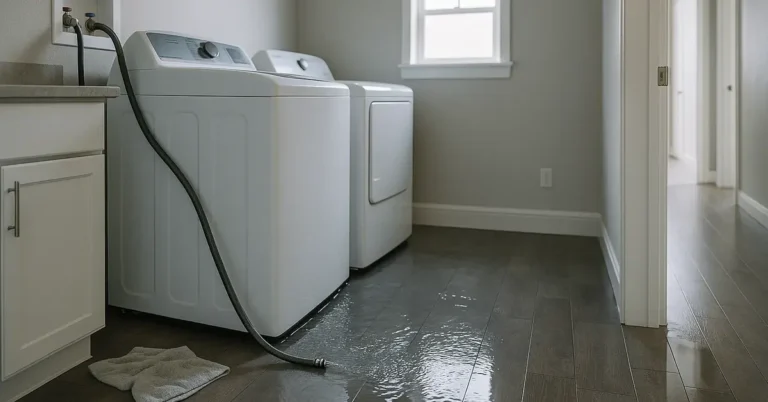
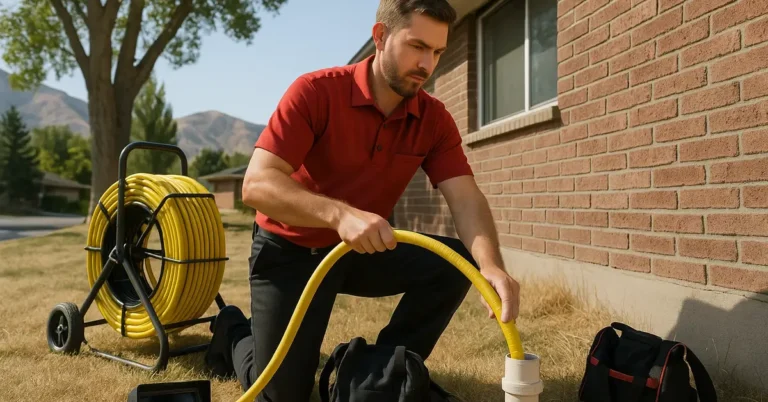
It’s 6 PM on a 100-degree day in Herriman. You’ve been sweating in the yard, you finally step into the shower — and the water comes out like a garden hose someone half-kinked. Weak. Sad. Barely enough to rinse the shampoo out. Then by the time you’re brushing your teeth before bed, it’s back to full strength like nothing happened. So what gives? Is your plumbing failing, or is this just how summer works?
We’re Wasatch Front plumbers, and we see this exact call every July: low water pressure in summer that only shows up in the afternoon. Here’s the honest answer most companies won’t give you: most afternoon pressure dips are completely normal. In the next few minutes you’ll get a five-minute test to prove it, the one Utah quirk that changes everything, and the warning signs that mean it’s time to pick up the phone. Summer brings its own set of home system challenges, which our HVAC seasonal transition guide for Utah addresses.
If your pressure never bounces back — even at night — that’s worth a look. Reach us at (801) 997-8909 and we’re happy to help.
The Short Answer: If It Recovers by Night, It’s Almost Always Demand — Not a Defect
Here’s the one rule to remember. Does your pressure come back to normal after dark? If yes, you’re almost certainly looking at neighborhood demand, not a broken system. Nothing’s wrong with your house. The whole street is just using water at the same time.
If it stays weak all day and all night, that’s a different story — low water pressure in Utah that never recovers points to something on your side of the meter worth chasing down. That single question does most of the diagnostic work for you. The rest of this post explains why the afternoon is the trouble window, the Utah water twist that trips up half our customers, how to put an actual number on your pressure, and when a dip crosses the line into a real problem.
Why 4-8 PM Is the Danger Window on the Wasatch Front
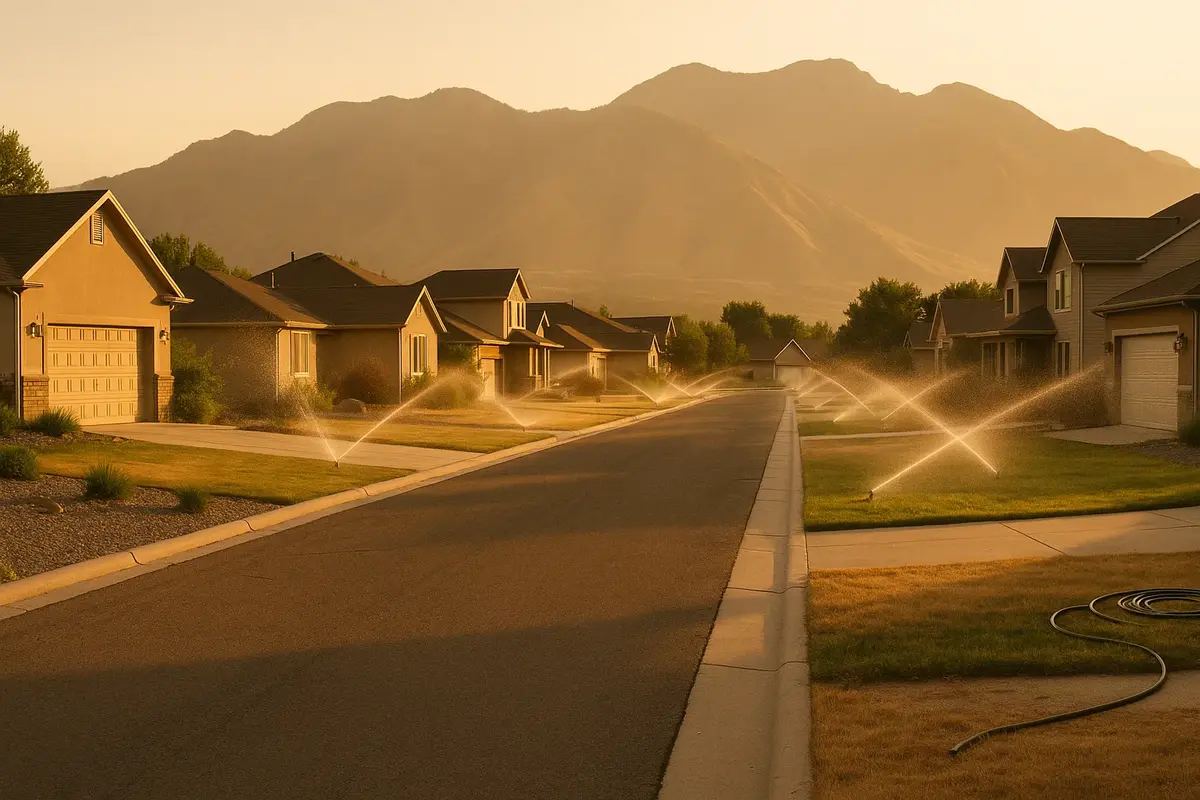
Think about what your whole neighborhood does around dinnertime in July. Sprinklers kick on. Everybody’s rinsing dishes, running a load of laundry, filling the dog’s bowl. All that demand lands on the same shared water main at once — and when demand spikes, pressure sags for everyone on the line. That’s not a failure. That’s just physics. Summer also drives up humidity indoors, which is why many Utah homeowners consider whole-house dehumidifier installation and costs.
Utah makes it worse than most places. We’re one of the driest states in the country, and summers here routinely cross 100°F. According to the EPA’s WaterSense program, outdoor watering runs about 30% of household use nationally — and in a dry climate like ours, summer irrigation can push that share far higher. Whole-house water use commonly runs two to four times higher in summer than winter, almost all of it lawns and gardens. And it all pours out in that late-day window when the sun stops baking the grass. Summer also strains your cooling system, which is why seasonal AC tune-ups and what to expect from them matter.
So your pressure sags at peak and recovers once the neighborhood taps shut off. Summer heat strains your plumbing in other ways too, which we cover in our guide to summer heat and pipe damage in Utah.
The Utah Twist Most Homeowners Miss: Secondary Water vs. Culinary Water
Now for the part no national plumbing blog will tell you, because it only matters here. A lot of Utah runs on two separate water systems, and which one you have completely changes your diagnosis.
Many cities across Salt Lake and Utah counties have what’s called secondary water — a second, untreated line built just for outdoor watering. It runs mid-April through mid-October and never touches your drinking or shower water. Herriman, Riverton, Bluffdale, Saratoga Springs, American Fork, Pleasant Grove, Holladay — they all run it. If your city does, your sprinklers pull from a totally different pipe than your tub. So that popular complaint — “my sprinklers killed my shower pressure” — is usually a myth in these towns. An afternoon drop in your indoor water points more toward a home-side issue than the neighborhood out watering.
But plenty of Utah cities are culinary-only. Same pipe feeds your shower and your sprinklers. In those places, the 4 PM neighborhood watering surge genuinely drags down the shared main — so the dip is real, normal, and recovers at night. The takeaway? Find out whether your city runs secondary irrigation water. That one fact reframes your whole diagnosis, and it’s why Utah’s 2022 secondary-metering law has cities paying closer attention to who uses what. We break it all down in our post on secondary water and sprinkler systems in Utah.
What “Normal” Water Pressure Actually Is (And a 5-Minute Hose-Bib Test)
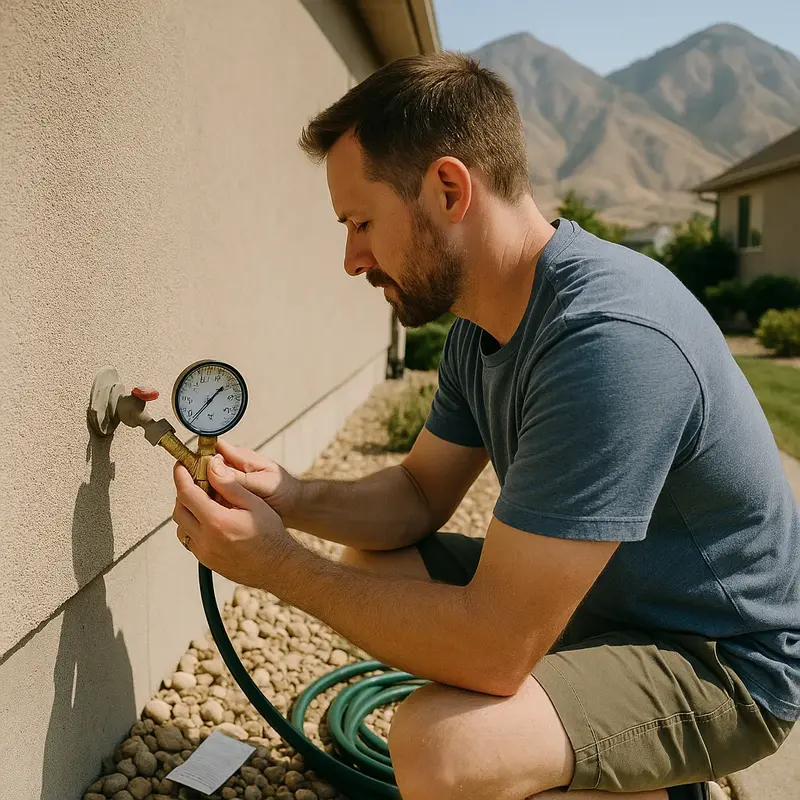
“Low pressure” is a feeling until you measure it. So let’s put a number on it. Normal residential water pressure sits between 40 and 60 PSI, with about 50 being the sweet spot. Below 40 feels noticeably weak. Above 80 is actually a problem — that much pressure chews up your pipes, fixtures, and water heater over time.
Here’s the test, and it costs you about twelve bucks for a gauge from any hardware store. Screw the pressure gauge onto an outdoor hose bib (and while you are out there, glance for any signs of a leaking outdoor faucet). Shut off every other water source in the house — no showers, no laundry, no ice maker running. Open the bib and read the dial. Do it once at the evening peak, then again late at night. A big swing between the two readings confirms it’s just demand. A number that sits low all day, every time you check, points at something on your side to fix.
No gauge, or the number just looks off? We’ll come test it, read your pressure regulator, and tell you straight what’s going on — (801) 997-8909. Our techs are Utah state licensed with 20+ years on Wasatch Front homes, and because we run local plumbing and heating under one roof, your water pressure and your water heater are the same phone call.
Whole-House Low vs. Just One Faucet: The Fork That Tells You Where to Look
Before you assume the worst, walk through the house. Is every fixture weak, or just one? That fork tells you almost everything.
One weak faucet means the trouble is local — a clogged aerator, a gunked-up showerhead, or a shutoff valve that got bumped half-closed. Usually a cheap, fast fix you can do yourself. Weak pressure everywhere points to a system-wide cause: your pressure regulator, sediment in the main line, or a hidden leak. And if only your hot water is weak? Look at the water heater or its shutoff valve, not the whole house — and if it turns out the tank is the culprit, we offer water heater repair with a free estimate. Let’s walk through the whole-house culprits we run into most.
The Four Home-Side Causes We See Most in Utah
Clogged Aerators and Showerheads
This is the most common fix, and the cheapest. Utah’s hard water leaves a chalky mineral crust that clogs the little screen inside your faucet tip — the same minerals that wear down a water heater’s anode rod. Unscrew the aerator, soak it in white vinegar overnight, rinse, and screw it back on. Pressure at that one fixture is often back in minutes. If you’d rather we just swap it, an aerator replacement runs $59.
Sediment and Mineral Buildup from Hard Water
The Wasatch Front has some of the hardest water in the country, and over the years it lays down scale inside your pipes and valves. That buildup is sneaky — it creeps in slowly and shows up first when the system is already strained at peak demand. A whole-house softener is the long-term fix, and it helps to know what a water softener installation costs in Utah before you commit. We dig into the full story in our guide on how Utah’s hard water damages plumbing and whether your home needs a water softener.
A Failing Pressure Regulator (PRV)
Your pressure regulator is the valve that keeps city pressure from overwhelming your home. In our experience out in the field, these last around 10 to 15 years. When one starts to fail, it throws pressure that’s low or erratic all day long — and homeowners often mistake that for a summer-demand issue. The tell is simple: it’s off around the clock and never recovers at night. That’s a real repair, not a DIY. A regulator adjustment runs $89, and a full valve replacement typically lands between $589 and $918 depending on the part. If the issue stems from your water heater rather than the regulator, we break down typical water heater repair costs in Utah.
A Hidden Leak
A persistent drop — not just afternoons — paired with a water meter that spins when everything’s off, or a bill that jumped for no reason, can mean a hidden leak — sometimes as simple as a worn water heater supply line, or as serious as a slab leak under the foundation. Another common source is a water heater leaking from the bottom. Catch this one early. Here’s how to spot a slab leak before it damages your home.
When an Afternoon Dip Is Actually a Real Problem
Most of the time, an afternoon dip is nothing. But a few signs mean it’s worth a plumber’s eyes. Call someone if:
- Pressure never recovers at night
- It dropped suddenly and stayed low
- Only your hot water is weak
- Pressure surges and drops erratically
- Your bill spiked, or the meter spins with everything shut off
- The water comes out discolored along with the drop
The bar is honest and simple. Recovers by night? Relax — it’s demand. Doesn’t recover? That’s a home-side defect worth chasing. If you’re not sure who to trust with it, here’s how to pick an emergency plumber in Utah.
What You Can Do Today (And When to Call Ninja)
A few things you can knock out this afternoon. Shift your watering to early morning instead of the evening peak, which is also the right time to set up your Utah irrigation system for the season — it protects your pressure and lines up with Utah’s off-peak watering guidance during the drought. Clean your aerators. Make sure your main shutoff valve is fully open, since they get bumped. And run that hose-bib PSI test so you’ve got real numbers. Our complete spring plumbing checklist for Utah homeowners covers these and other seasonal maintenance tasks.
One more tip: a WaterSense weather-based sprinkler controller can cut your irrigation use by up to 30% and move your watering off the crowded afternoon window. Just as smart irrigation controllers cut water waste, programmable thermostats deliver energy savings in Utah homes for your HVAC system. Most afternoon dips need no repair at all — but if your PSI stays low all day, the regulator looks suspect, or the bill jumped, that’s a call worth making. Because we handle HVAC and plumbing under one roof, one call covers your pressure diagnostics, your water heater, and the full range of our plumbing services in between.
Frequently Asked Questions
Why does my water pressure drop in the afternoon?
Because your whole neighborhood is watering lawns and running water at the same late-day window, straining the shared main. It sags at peak and recovers once those taps shut off. If it comes back after dark, nothing’s wrong with your house.
What is normal water pressure for a house?
Between 40 and 60 PSI, with about 50 being ideal. Below 40 feels weak. Above 80 can damage your pipes and fixtures over time. Screw a cheap gauge onto an outdoor hose bib to check yours.
How do I know if it’s my plumbing or the city’s water supply?
Test your pressure at the evening peak and again at night. A big swing means it’s neighborhood demand on the city supply. A flat-low reading all day points to something on your side — a regulator, buildup, or a leak.
Does watering the lawn lower my house water pressure in Utah?
It depends on your city. If you have secondary irrigation water — like in Herriman, Riverton, or Saratoga Springs — your sprinklers pull from a separate line and don’t touch your indoor pressure. In culinary-only cities, the same pipe feeds both, so watering does affect it. Our secondary water guide explains how to find out which you have.
Why is only my hot water pressure low?
That points at the water heater or its shutoff valve, not your whole system. Sediment buildup in the water heater tank or a partially closed valve on the hot side are the usual causes — and both are fixable. If your water heater is nearing the end of its lifespan, our guide explains when to repair versus replace a water heater in Utah.
Bottom line: recovers at night means normal demand, and stays low means it’s worth a look. You can settle it yourself in five minutes with a $12 gauge before spending a dime on a service call. But if your pressure won’t bounce back, give us a call at (801) 997-8909 — we’ll test it, find the cause, and tell you straight. Family-owned, Utah state licensed, 20+ years on the Wasatch Front, with 120-minute emergency response when you need us fast.