You flush. Water swirls. And then… nothing. Half the bowl empties, maybe less. Sound familiar? On the Wasatch Front, there’s a good chance the Wasatch Mountains’ mineral-rich runoff is to blame.
Utah’s water is some of the hardest in the western United States, clocking in at 13–15 grains per gallon in most areas. Some neighborhoods see 15–25 GPG. That calcium and magnesium doesn’t just stain your showerhead — it quietly clogs the rim jets inside your toilet bowl, choking the flush before you even notice it’s happening.
Below, you’ll find the six most common reasons toilets stop flushing properly, starting with the one that hits Utah homes hardest. If you’d rather skip the troubleshooting, give us a call at (801) 997-8909 — we’re happy to take a look.
Why Toilets Stop Flushing All the Way
Toilets depend on water volume and velocity. Press the handle, the flapper lifts, water rushes from the tank into the bowl through rim jets (small holes under the rim) and a siphon jet (the large opening at the bottom). That surge creates a siphon effect, pulling waste down the drain.
When any part of that system gets restricted — clogged jets, low water level, worn flapper — the flush weakens. You lose the siphon, waste doesn’t clear, and you’re stuck flushing twice.
The #1 Cause in Utah: Mineral Buildup in Rim Jets
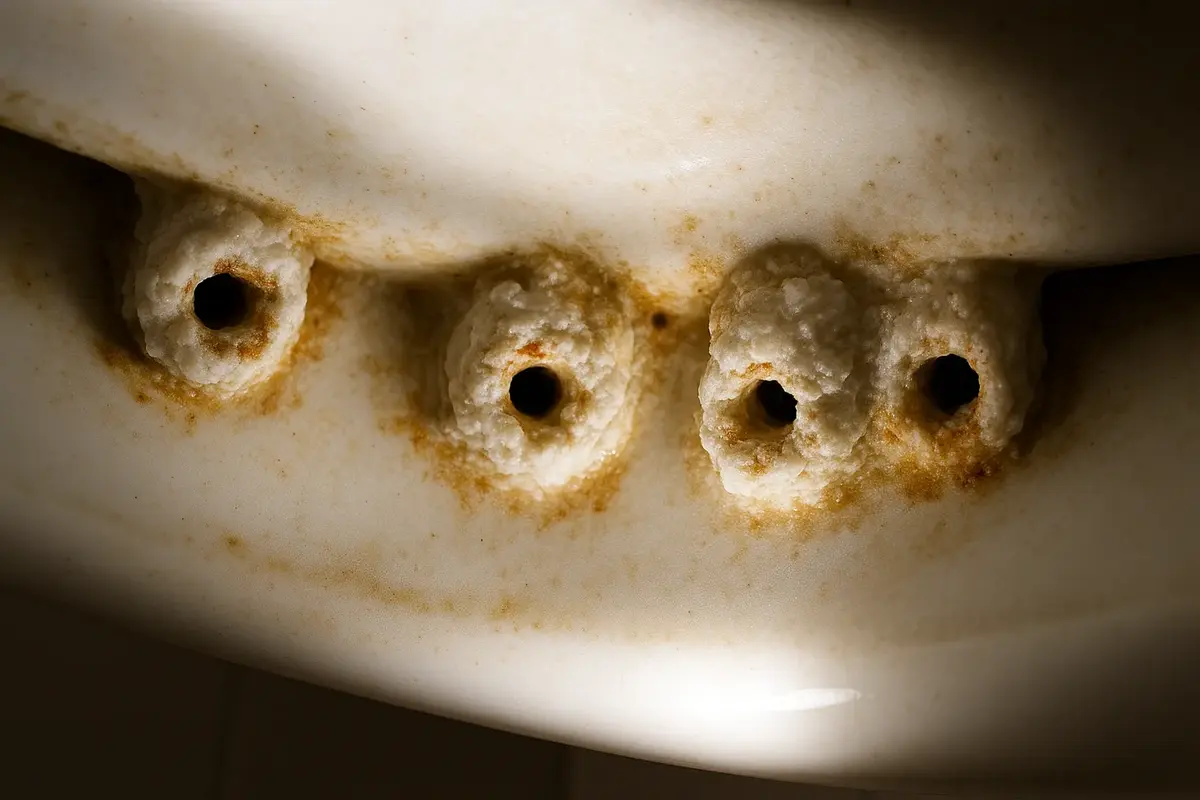
Your toilet has a ring of small holes under the rim — usually 10 to 15 of them. Water flows through those jets every flush, creating the swirling action that cleans the bowl and starts the siphon. When those holes get clogged with calcium, magnesium, and lime deposits, water can’t flow properly. Flush weakens, siphon doesn’t form, and no amount of plunging fixes it.
We see this problem constantly in Utah homes because the Wasatch Front pulls its water from snowmelt and aquifers fed by mineral-rich geology. That’s why your water tastes clean but leaves white buildup on everything it touches. Rim jets are especially vulnerable because they’re small — just a few millimeters in diameter.
According to the EPA, toilets account for nearly 30 percent of an average home’s indoor water consumption. When yours isn’t flushing properly, you’re wasting water every time you double-flush.
How to check: grab a small mirror and a flashlight, hold the mirror under the rim, and look at those holes. Crusted over or narrowed by white or rust-colored buildup? You’ve found your problem. In homes we service around Lehi, Eagle Mountain, and the Salt Lake Valley, this is almost always the culprit. Want us to take a look? We’re open 7 days a week at (801) 997-8909.
Hard water doesn’t just affect toilets — it quietly damages your pipes, water heater, and fixtures over time. Noticing buildup in multiple places? Read more about how Utah’s hard water destroys your plumbing.
5 Other Common Causes of Weak Flush
Mineral buildup is the big one in Utah, but it’s not the only culprit.
Low Water Level in the Tank
Open your tank and look at the water level. There should be a line marked on the overflow tube — usually about an inch below the top. Water sits well below that line? Your tank isn’t filling all the way, which means a weaker flush.
Happens when the float is set too low or the fill valve isn’t working properly. Easy fix: adjust the float arm or turn the adjustment screw on the fill valve to raise the water level.
Worn or Damaged Flapper Valve
Flapper is the rubber seal at the bottom of the tank. When it’s worn, cracked, or covered in mineral buildup, it doesn’t seal properly — and water leaks slowly from the tank into the bowl between flushes, robbing you of flush power before you even press the handle.
How to check: add a few drops of food coloring to the tank, wait 15 minutes without flushing, and see if the bowl water changes color. If it does, your flapper is leaking. At Ninja, flapper replacement is priced after assessment — we’ll inspect the tank components and quote the repair before starting work.
Partial Clog in the Drain
Sometimes the toilet bowl drains slowly even with a full flush, which usually means a partial clog in the trap or the drain line beyond it. Start with a plunger — firm plunges can dislodge paper, waste, or debris stuck in the trap. Doesn’t work? Try a toilet auger, a specialized snake designed to reach clogs deeper in the drain without scratching the porcelain. Dealing with recurring clogs elsewhere in your home? Problem might be further down the line. We cover that in our post on clearing clogged drain pipes.
Chain Too Long or Too Short
Chain connects the flush handle to the flapper. Chain too long? It doesn’t lift the flapper all the way, giving you a weak flush. Too short or tangled? Flapper can’t close properly, and water leaks into the bowl between flushes.
Pop the tank lid and press the handle while watching the chain — it should lift the flapper fully and drop it cleanly when you release. Doesn’t? Adjust the chain length by moving the clip to a different link.
Clogged Siphon Jet
Siphon jet is the large opening at the bottom of the bowl, aimed at the drain. It shoots a concentrated stream of water directly into the trap to start the siphon action. When that jet gets clogged with mineral deposits or debris, the flush loses power.
Check it with a mirror and flashlight. See buildup? Clear it with a piece of wire or a small brush. Stubborn mineral deposits? Soak the jet with vinegar or a CLR-type cleaner, let it sit for 30 minutes, then scrub and flush.
How to Fix Each Problem (DIY Steps)
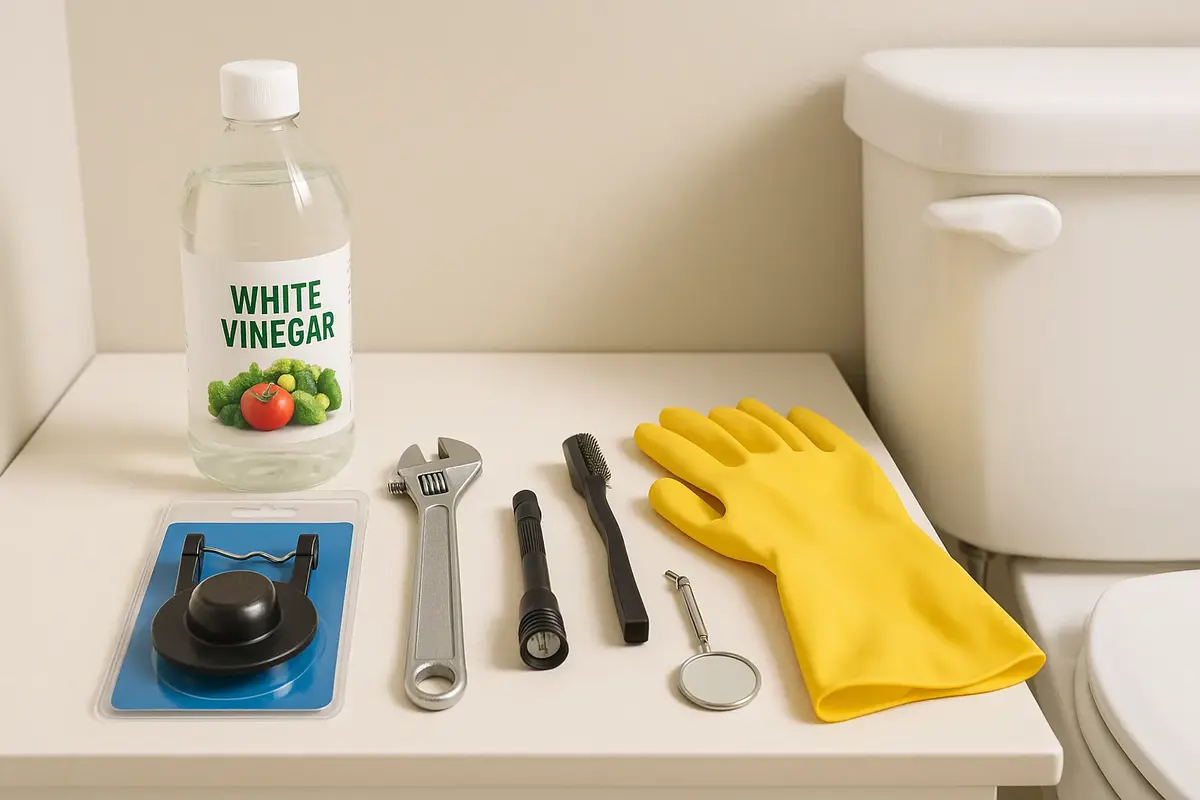
Mineral buildup in rim jets: Pour a gallon of white vinegar into the overflow tube in the tank (not the bowl). Let it sit overnight. Vinegar flows through the rim jets and dissolves calcium deposits. In the morning, scrub the jets with a small brush or piece of wire, then flush a few times. Heavier buildup? Use a CLR-type cleaner following the product instructions. Time: 10 minutes of work, 8 hours of soaking.
Low water level: Adjust the float arm or fill valve until the water level reaches the marked line on the overflow tube. Time: 5 minutes. If the fill valve needs replacement, that’s a repair priced after assessment.
Worn flapper: Shut off the water supply, flush to drain the tank, unhook the old flapper, snap the new one into place, and turn the water back on. Time: 20 minutes. At Ninja, flapper replacement runs $99–$149.
Partial clog: Use a plunger or toilet auger to clear the blockage. Clog is deeper and won’t budge? Time to call a pro. Time: 10–20 minutes if you’re doing it yourself.
Chain adjustment: Open the tank, move the chain clip to a different link, and test the flush. Time: 2 minutes.
Clogged siphon jet: Use a wire or brush to clear debris. Mineral buildup? Apply vinegar or CLR, let it soak, scrub, and flush. Time: 10 minutes.
One thing to remember about Utah: hard water buildup happens faster here than in most of the country. Just cleaned your rim jets and they’re clogged again six months later? That’s normal for our water. Quarterly cleaning keeps you ahead of it, or consider a water softener to reduce buildup at the source.
When to DIY vs. When to Call a Plumber
Most of the fixes above are DIY-friendly — flappers, chains, water levels, and surface clogs are all things you can handle with basic tools and a little patience. But some problems need a professional.
Water leaking from the base of the toilet? That’s a wax ring failure or a cracked bowl — both require pulling the toilet off the floor. Don’t ignore it, because slow leaks can rot your subfloor before you notice the damage. We’ve written a full guide on why toilets leak at the base if you’re seeing that problem.
Tried the DIY fixes and the flush is still weak? Problem might be deeper — a venting issue, a drain line blockage beyond the toilet, or an internal crack you can’t see. We can diagnose those in one visit.
Got an old toilet? Pre-1992 toilets used 3.5 to 6 gallons per flush, while modern WaterSense toilets use 1.28 gallons and flush better. Living in an older neighborhood like Sugarhouse, the Avenues, or parts of Provo or Ogden? If your toilet’s been there since the house was built, professional toilet replacement might make more sense than another repair. According to the EPA, upgrading to a WaterSense toilet can save your household 13,000 gallons of water per year.
What to Expect: Plumber Costs for Toilet Repair in Utah
At Ninja, toilet repairs range from $99–$1,035 depending on the issue. Minor fixes like flapper, handle, or seat replacement run $99–$149. Pull and reset runs $175. Full toilet replacement starts at $519 for a standard model.
We charge a $49 dispatch fee on weekdays (Monday through Friday, 9 AM to 5 PM), applied to your repair. After 5 PM, weekends, and holidays, the dispatch fee is $149 — or $99 if you’re on our Home Health Plan.
We’ll diagnose the problem, explain your options, and give you a flat-rate quote before we start any work. Give us a call at (801) 997-8909 and we’ll get you on the schedule.
Preventing Weak Flush Problems Long-Term
Fixed the problem? Here’s how to keep it from coming back. In Utah, the name of the game is managing mineral buildup. Clean your rim jets every three to six months with vinegar or a descaling cleaner — it takes ten minutes and saves you from a weak flush down the road.
Serious about reducing buildup across your entire plumbing system? Consider installing a water softener. Won’t end maintenance completely, but it will slow the rate at which calcium and magnesium clog your fixtures, pipes, and water heater. We’ve written a detailed breakdown of whether Utah homes need a water softener based on local water hardness data.
Add toilet maintenance to your annual plumbing checkup — a quick inspection of the tank components, a flush test, and a look under the rim can catch small problems before they turn into double-flushing annoyances. Already scheduling spring maintenance for your HVAC system or water heater? Throw the toilets on the list. Our spring plumbing checklist covers the full routine.
Frequently Asked Questions
Why is my toilet not flushing all the way in Utah?
Most common cause in Utah is mineral buildup in the rim jets under the toilet bowl rim. Utah’s water averages 13–15 grains per gallon of hardness — some areas see 15–25 GPG — and that calcium and magnesium restricts water flow through the small jets, weakening the flush. Check under the rim with a mirror and flashlight. See white or rust-colored deposits? That’s your problem.
How much does it cost to fix a weak toilet flush?
At Ninja, toilet repairs range from $99–$1,035 depending on what needs fixing. Minor repairs like flapper, handle, or seat replacement run $99–$149. Pull and reset is $175. If you need a full toilet replacement, standard models start at $519. We charge a $49 dispatch fee on weekdays 9 AM-5 PM (waived with repair), or $149 after 5 PM, weekends and holidays ($99 for Home Health Plan members).
Can I fix a toilet that won’t flush completely myself?
Yes, in most cases. Adjusting the water level, replacing a flapper, clearing rim jets, fixing the chain, and plunging a partial clog are all DIY-friendly if you’re comfortable with basic home maintenance. Call a plumber if you see water leaking from the base, if DIY fixes don’t work, or if the toilet is very old and might need replacement.
Does hard water cause toilet flushing problems?
Absolutely. Hard water deposits calcium and magnesium inside the rim jets and siphon jet, restricting water flow and weakening the flush. Utah’s water is some of the hardest in the western U.S., which is why mineral buildup is the #1 cause of weak flushes here. Regular cleaning with vinegar or a descaling product helps, and a whole-home water softener reduces the problem long-term.
When should I call a plumber for toilet problems?
Seeing water leaking from the base of the toilet? Problem persists after trying DIY fixes? Toilet is pre-1992 and you’re considering replacement? Call a plumber. Also call if you suspect a venting issue or a clog deep in the drain line that a plunger or auger can’t reach. We’re open 7 days a week at (801) 997-8909.
Conclusion
Toilets that won’t flush all the way are frustrating, but they’re usually fixable — and on the Wasatch Front, it’s usually mineral buildup. Pop the tank lid, grab a mirror, and check those rim jets. Clogged? Vinegar soak and a little scrubbing will get you back to a one-flush routine.
Checked everything and the problem’s still there? Or just rather have someone else handle it? Give us a call at (801) 997-8909 — we’re open 7 days a week, and the $49 weekday dispatch fee (9 AM-5 PM) is applied to your repair. We’ll figure out what’s wrong and get your toilet flushing like it should.