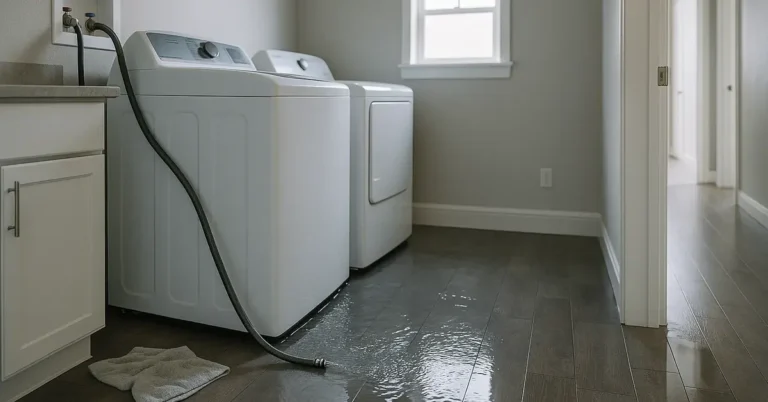
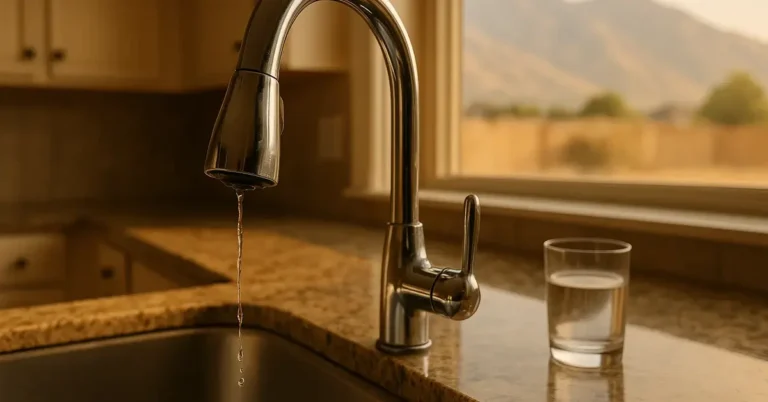
Most homes on the Wasatch Front sit on concrete slabs, not basements. That means when a pipe beneath your foundation starts leaking, you won’t see it flooding your basement. You’ll see it on your water bill — or worse, in cracks spreading across your walls. Slab leak detection catches these hidden problems before they destroy your foundation.
When pipes beneath your foundation start leaking, the problem hides until it can’t anymore. By the time you notice damp carpet or a warm spot on your kitchen floor, gallons of water have already soaked into the ground beneath your house. And in Utah, where clay soil swells when wet and our freeze-thaw cycles stress everything from sidewalks to buried pipes, slab leaks don’t just waste water — they move foundations.
Watch for these warning signs, understand why Utah homes are especially vulnerable, and learn when to call for help before a small leak turns into a structural nightmare.
If you’re already seeing warning signs, give us a call at (801) 997-8909. We’re happy to take a look. Need professional water leak detection and repair? We use thermal imaging and acoustic sensors to locate leaks without tearing up your floor.
What Is a Slab Leak (And Why Utah Homes Are Especially Vulnerable)
A slab leak is exactly what it sounds like: a leak in a water or sewer line running beneath your home’s concrete foundation. In a house with a basement, a pipe leak shows up on the basement floor. In a slab foundation home, the leak happens under several inches of concrete — invisible until the symptoms start showing up inside.
Most Wasatch Front homes built after 1970 use slab foundations. Copper or PEX supply lines run beneath or within that slab, carrying water to your sinks, showers, and washing machine. When one of those lines cracks or corrodes, you’ve got an under foundation leak — and that’s where Utah’s unique conditions turn a plumbing problem into a foundation problem.
Utah’s clay soil is expansive. When it absorbs water, it swells. When it dries out, it contracts. That expansion-contraction cycle is constant here — wet springs from snowmelt, bone-dry summers, then freeze-thaw cycles all winter. Every swing puts stress on the pipes beneath your slab. Add Utah’s notoriously hard water (300 to 400+ parts per million in most of the Salt Lake Valley), which accelerates corrosion in copper pipes, and you’ve got a recipe for leaks that develop faster here than in most other parts of the country.
Early detection matters because a slab leak doesn’t just waste water. It saturates the soil beneath your foundation, which causes that soil to swell unevenly. Uneven soil movement cracks concrete, shifts walls, and creates gaps around windows and doors. Left unchecked, you’re looking at foundation repairs that cost thousands more than fixing the pipe ever would have.
8 Warning Signs You Might Have a Slab Leak
Slab leak symptoms don’t announce themselves. You won’t see a puddle. You won’t hear a drip. But the signs of a slab leak leave clues — some obvious, some subtle. Here’s what to watch for, organized from the easiest signs to spot to the ones that show up only after the leak has been active for a while.
Your Water Bill Jumped Without Explanation
Often the first sign you’ll notice. According to the EPA, 10% of homes have leaks that waste 90 gallons or more every day. A slab leak running 24/7 can burn through hundreds of gallons a week, and you’ll see it on your bill long before you see it anywhere else.
Look for a 30% or higher spike compared to the same month last year, with no change in your usage. No new lawn watering schedule. No houseguests. Just a bill that doesn’t make sense.
To check, pull your last three months of water bills. If you’re seeing a steady climb with no explanation, that’s your cue to investigate further. You might have a leak — and if it’s not a toilet flapper or an outdoor faucet, there’s a good chance it’s beneath the slab.
You Hear Running Water When All Faucets Are Off
Walk into your house at night when it’s quiet. Listen. Do you hear a faint hissing or the sound of water rushing somewhere beneath the floors? That’s not your imagination.
Under-slab leaks create a constant flow of water through the pipe and into the ground. Depending on where the leak is and how much pressure is behind it, you might hear it near your water heater, along the edge of the slab, or in the room directly above the leak.
Detection tip: Turn off every faucet, appliance, and fixture in your house. No dishwasher running. No toilets refilling. Then listen near the water heater and along the baseboards in bathrooms and the kitchen. If you hear water moving, something is leaking.
There Are Warm or Hot Spots on Your Floor
Step barefoot across your kitchen or bathroom floor. Does one section feel warmer than the rest? That’s a sign of a hot water line leak beneath the slab.
Hot water escaping from a pipe creates a temperature difference you can feel — sometimes a subtle warmth, sometimes a spot that’s noticeably hot to the touch. It’s most common near the water heater or along the path to bathrooms and the kitchen, where hot water lines run.
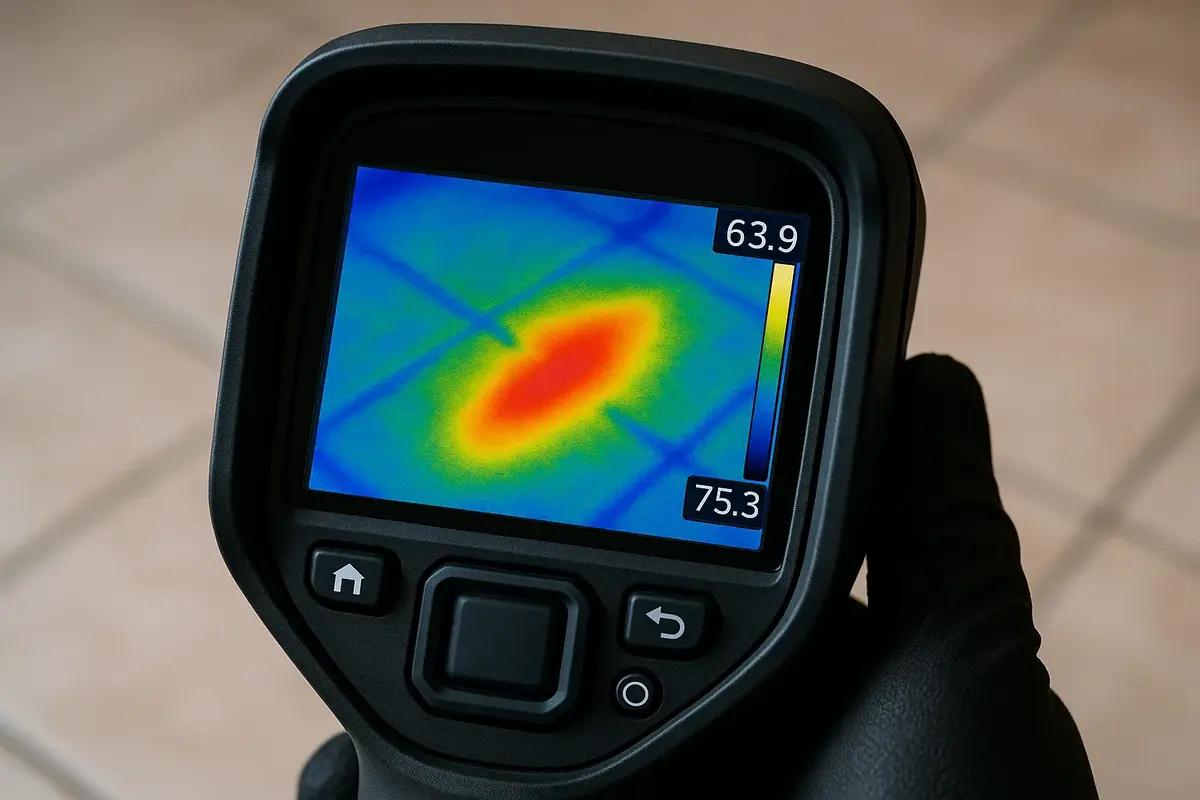
Plumbers use thermal imaging cameras to detect these temperature differentials before they’re obvious to the touch. If you’re feeling warmth through tile, laminate, or carpet, the leak has been there long enough to heat the concrete above it. That’s not an emergency yet, but it’s not something to ignore either.
Damp Carpet, Pooling Water, or Moisture on Concrete
The most obvious sign, but it usually shows up late — after the leak has been active for days or weeks. Water finds the path of least resistance. If there’s a crack in your slab or a gap along the edge, water will eventually surface.
Where to look: along baseboards, in closets, near the water heater, or in corners where carpet meets tile. Sometimes you’ll see a visible puddle. Other times it’s just a damp spot that never quite dries out, even in the middle of a Utah summer.
Once moisture appears, the clock starts ticking. Mold can develop within 24 to 48 hours of moisture exposure. If you’re seeing water on your floor and you can’t trace it to a spill or a leaky appliance, assume it’s coming from beneath the slab and call a plumber.
Water Pressure Dropped Throughout the House
Low water pressure can mean a lot of things — a clogged aerator, a failing pressure-reducing valve, sediment buildup in your water heater. But if pressure drops suddenly across multiple fixtures, especially if it’s happening on the hot water side, there’s a good chance you’ve got a leak on the supply line.
Test it by turning on two or three faucets at once — bathroom sink, kitchen sink, shower. If the flow is weak across all of them, and you’ve ruled out aerator clogs, the leak might be siphoning off pressure before the water even reaches your fixtures.
On the pressure side, a slab leak (the supply line bringing water into your house) will steal volume and pressure. The bigger the leak, the more noticeable the drop.
You Smell Mold, Mildew, or Mustiness (Especially Under Floors)
Smell is often the second or third warning sign. If moisture has been present for more than a few days, mold starts growing — and you’ll smell it before you see it.
Strongest near carpet, under baseboards, or around HVAC return vents that pull air from beneath the floor, the odor is a damp, earthy smell that doesn’t go away with cleaning. That’s because the source isn’t on the surface — it’s under the slab, where water has been soaking into insulation, subfloor materials, or the soil itself.
Mold isn’t just a smell problem. It’s a health risk. Spores can trigger respiratory issues, especially in kids and anyone with asthma. If you’re smelling mildew and you can’t find a visible source, get a plumber out to check for a slab leak.
Cracks Appeared in Your Foundation or Walls
Utah’s clay soil becomes the villain at this stage. When water from a slab leak saturates the ground beneath your foundation, that clay swells. It doesn’t swell evenly — it pushes up in the wet areas and stays compressed in the dry areas. That uneven pressure cracks concrete.
Look for new cracks in your foundation, widening of existing cracks, or separation where walls meet at corners. Hairline cracks are common in any concrete slab, especially in Utah where soil movement happens every season. But cracks that grow, or cracks that appear suddenly, are a red flag.
A serious sign, this one. If a slab leak has been active long enough to cause visible foundation damage, you’re past the early detection stage. The repair bill just went from a few hundred dollars for a pipe fix to potentially thousands for foundation stabilization. Call a plumber immediately — and depending on what they find, you might need a foundation specialist too.
Your Water Meter Is Spinning When Nothing Is Running
The definitive test. Your water meter measures every gallon that enters your house. If it’s spinning and you’re not using water, you’ve got a leak somewhere.
Check it this way: Turn off every water-using appliance and fixture in your house. Turn off all faucets. Make sure toilets aren’t refilling. No dishwasher, no washing machine, no ice maker. Then go outside and watch your water meter. If the dial is moving — even slowly — you have an active leak.
That leak might not be beneath the slab. It could be a toilet flapper, a leaky outdoor faucet, or a drip under the kitchen sink. But if you’ve checked all the obvious suspects and the meter is still spinning, the leak is probably underground — either in the supply line running from the street to your house, or beneath the slab.
Pro tip for Utah homes: Check during an off-peak irrigation time (early morning before 6 AM) to rule out any automatic sprinkler systems you might have forgotten about. If the meter spins at 5 AM when nothing should be running, you’ve confirmed it.
Noticed multiple signs? Foundation damage happens fast once soil starts swelling. Call us at (801) 997-8909 for 120-minute emergency response during business hours and after-hours emergency service. If you think you might have a slab leak but you’re not sure, we can help you figure it out — here’s what to look for in an emergency plumber.
Causes of Slab Leaks in Utah Homes
They happen everywhere, but faster and more often in Utah. The conditions here are uniquely hard on under-slab plumbing.
Start with the soil. Most of the Wasatch Front — especially areas near the Great Salt Lake, including parts of Salt Lake City, West Valley, and Bountiful — sits on expansive clay. This blue clay swells when it absorbs moisture and shrinks when it dries out. That expansion-contraction cycle is constant in Utah’s climate. Spring snowmelt saturates the soil, summer heat dries it out, and winter freeze-thaw cycles cause heaving and settlement. Every swing puts stress on the rigid pipes beneath your slab.
Then there’s the freeze-thaw effect. Utah winters regularly see overnight lows in the 10 to 20°F range, followed by daytime temps in the 40s or 50s. When soil freezes, it expands and can lift pipes slightly. When it thaws, settlement occurs. Repeat that cycle dozens of times over a single winter, and pipe joints weaken. Solder connections crack. PEX fittings shift. Eventually, something gives.
Add Utah’s hard water to the mix. We’re talking 300 to 400+ parts per million of total dissolved solids in most areas — some of the hardest water in the nation. Hard water accelerates internal corrosion in copper pipes, which is the most common material used in under-slab installations from the 1970s through the early 2000s. Galvanized steel, common in pre-1970 homes, is even worse — it corrodes from the inside out and has a lifespan of 40 to 50 years at best. If your home was built before 1990 and still has the original plumbing, you’re living on borrowed time.
There’s also installation quality. Not every builder in the 1980s took the time to protect under-slab pipes from soil contact or sharp rocks. Abrasion from soil movement can wear through copper over decades. Poor workmanship — kinked lines, over-tightened fittings, inadequate support — creates weak points that fail under stress.
Spring and late fall are peak slab leak seasons in Utah. March through April, when snowmelt saturates the soil, and October through November, when the ground starts freezing, are when we see the most calls. That’s when soil movement is most active — and when the pipes beneath your slab are under the most stress. Utah’s summer heat also causes pipe expansion and soil movement that can lead to leaks.
Curious how Utah’s hard water affects your plumbing beyond just slab leaks? We wrote a full breakdown here. Spoiler: it’s not great. And if you’re wondering whether a water softener would help, the data says yes — especially if you want to slow down the corrosion that leads to leaks in the first place.
How Professionals Detect Slab Leaks (Without Tearing Up Your Floor)
Twenty years ago, finding a slab leak meant a jackhammer and a lot of guesswork. Today, plumbers can pinpoint leaks within a foot or two without breaking concrete — and only dig once they know exactly where the problem is.
Detection starts with acoustic listening devices. These are essentially high-sensitivity microphones that detect the sound of water escaping a pressurized pipe. A plumber will pressurize your water lines, then move the sensor across your floor, listening for the hiss or rushing sound of water leaking into the ground. It’s surprisingly accurate — especially on concrete, which transmits sound well.
Second tool: thermal imaging cameras. These detect temperature differences across your floor. If you’ve got a hot water line leaking beneath the slab, the concrete above it will be warmer than the surrounding area. The camera shows that temperature differential as a color gradient. Warm spots glow. Cool spots stay dark. It’s non-invasive, fast, and works even through carpet or tile.
Third method: pressure testing. A plumber will isolate sections of your plumbing system, pressurize them, and watch for pressure drops. If one zone loses pressure and another doesn’t, they’ve narrowed down which pipe is leaking. Combine that with acoustic detection, and they can get within inches of the leak location.
Fourth tool: moisture meters. These measure moisture content in concrete, drywall, and flooring materials. If you’ve got a damp spot but no visible water, a moisture meter can confirm that the moisture is coming from beneath the slab, not from surface condensation or a spill.
Good plumbers use a combination of methods. Acoustic sensors to locate the general area. Thermal imaging to confirm a hot water leak. Pressure testing to verify which line is leaking. Moisture meters to assess how much water has already soaked into surrounding materials. Only after all that do they break out the concrete saw — and by that point, they know exactly where to cut.
Minimizing invasive work is always the goal. Find the leak. Access the pipe. Fix it. Patch the concrete. If the leak is near an edge or in an accessible location, the whole repair might involve a 2-foot-by-2-foot section of slab. If it’s under the middle of your kitchen, the plumber might recommend rerouting the line through the attic or walls instead of tearing up your entire floor.
Slab Leak Detection and Repair Costs in Utah
Let’s talk numbers. Slab leak detection in Utah typically runs $250 to $1,250, depending on the size of your home, the complexity of your plumbing layout, and how long it takes to locate the leak. A straightforward job in a small home with good access might be on the lower end. A sprawling house with a complicated plumbing system and multiple potential leak points will cost more.
Repair costs depend on the leak location and the method used to fix it. Spot repairs — where the plumber cuts a small section of concrete, fixes the pipe, and patches the slab — typically run $630 to $4,500. That range covers everything from a simple joint repair in an accessible spot to a full pipe replacement under a kitchen island that requires moving appliances and cutting through finished flooring.
Rerouting the line (running a new pipe through walls or the attic instead of repairing the one under the slab) can cost less or more, depending on how much drywall and framing work is involved. Sometimes it’s the smarter move — especially if the leak is in an inaccessible location or if the rest of your under-slab plumbing is old enough that another leak is likely.
At Ninja, our dispatch fee is $49 from 9 AM to 5 PM (Monday through Friday) and $149 after 5 PM, weekends, and holidays. If you’re a Home Health Plan member, after-hours dispatch is $99. The $49 fee (weekdays 9 AM-5 PM) is applied to your repair. That gets a licensed plumber to your house, usually within 120 minutes during business hours, to assess the situation and give you a quote before any work starts.
Now, here’s the insurance question. Some homeowner policies cover sudden pipe bursts. Most don’t cover gradual corrosion or leaks that developed over time. If a pipe cracked because of a freeze event or a soil shift that happened overnight, you might have coverage. If it corroded slowly over ten years, probably not. Check your policy, and ask your plumber to document the cause when they write up the repair — that documentation can make or break an insurance claim.
Want a free estimate or just some honest advice about what you’re dealing with? Call us at (801) 997-8909 — no pressure, no upselling, just straight answers from people who’ve seen this a hundred times. And if you’re the type who likes to stay ahead of problems instead of reacting to them, our Home Health Plan covers annual plumbing inspections, priority scheduling, and discounted rates after 5 PM, weekends and holidays. Catching a leak early beats emergency repairs every time.
When to Call an Emergency Plumber (And When You Can Wait)
Not every slab leak is a 2 AM emergency. Some are. Here’s how to tell the difference.
Call for emergency service, including after hours (we guarantee a 120-minute response during business hours), if you’re seeing any of these: visible pooling water that’s spreading across your floor, your water meter spinning fast even with everything off, multiple warning signs appearing at the same time (warm spots, low pressure, damp carpet, and a spiking water bill all together), or foundation cracks that are widening or new shifting in walls and door frames.
These are signs that the leak is active, large, and causing damage right now. Every hour you wait, more water soaks into your foundation. More soil swells. More pressure builds against your slab. This is when you call immediately, even if it’s the middle of the night.
Next-day service works if you’re seeing a single subtle sign — a warm spot on the floor, a minor water bill increase with no obvious cause, or a faint sound of running water that you’re not 100% sure about. These are early warnings. They’re worth investigating, but they’re not going to destroy your foundation overnight.
Same thing if you just want professional peace of mind. Maybe you’ve had a slab leak before and you’re hearing that sound again. Maybe you’re buying a house built in 1985 with original copper plumbing and you want to know what you’re getting into. Schedule an inspection. We’ll check it out, tell you what we find, and you can decide what to do from there.
Early detection saves money. A small leak caught in week one costs a fraction of what the same leak costs after six months of saturating your foundation. If you’re on the fence about whether to call, call. We’d rather tell you “it’s nothing” than show up three months later to a cracked slab and a four-figure repair bill.
Not sure whether your situation is an emergency? This guide walks through when to call immediately and when you can wait. Bottom line: pooling water, fast meter spin, or foundation movement = call now. Subtle signs or curiosity = schedule soon.
Frequently Asked Questions About Slab Leaks
Can a slab leak go undetected for months or years?
Months, sometimes years — especially if it’s a slow leak on a hot water line in a spot where you don’t walk often. The first sign is usually a gradual increase in your water bill. By the time you see damp carpet or foundation cracks, the leak has likely been active for weeks or longer. That’s why monitoring your water bill and listening for the sound of running water when everything is off are your best early detection tools.
Can a slab leak cause foundation damage?
Yes — and in Utah, it happens faster than in most places because of our expansive clay soil. When water from a slab leak saturates the ground beneath your foundation, the clay swells. That swelling creates uneven pressure against your slab, which causes cracks, shifting, and settlement. Left unchecked, you’re looking at foundation repairs that cost far more than fixing the pipe would have. Early detection is everything.
What’s the difference between a slab leak and a pipe burst?
Pipe bursts are sudden and obvious — you’ll see water everywhere, pressure will drop to almost nothing, and your water meter will spin like a slot machine. A slab leak is usually slower and subtler. It might waste 10 gallons a day instead of 100 gallons an hour. You’ll notice it on your bill before you see it on your floor. Both need a plumber, but a pipe burst is an immediate emergency. A slab leak gives you a little more time — not a lot, but enough to schedule a pro instead of calling at midnight.
Should I turn off my water if I suspect a slab leak?
Seeing active pooling water or a fast-spinning meter? Yes — turn off the main water supply to stop the leak until a plumber arrives. If you’re just noticing subtle signs like a warm spot or a minor bill increase, you don’t need to shut off the water, but you should get someone out to investigate soon. Turning off the water stops the damage but also means no water for showers, toilets, or cooking, so it’s a judgment call based on how severe the symptoms are.
Does homeowners insurance cover slab leak repair?
Sometimes. Most policies cover sudden, accidental damage — like a pipe that bursts because of a freeze event or a soil shift that happened overnight. They usually don’t cover gradual damage from corrosion or wear and tear over time. If your copper pipe corroded slowly over ten years, that’s maintenance, not a covered event. Check your policy, and ask your plumber to document the cause of the leak when they write up the repair. That documentation can make the difference between a covered claim and one that gets denied.
How to Prevent Slab Leaks (Or Catch Them Early)
Eliminating the risk entirely isn’t possible — soil moves, pipes age, and Utah’s climate does what it does. But you can reduce the odds and catch problems early, before they turn into foundation damage.
First: install a water softener. Utah’s hard water accelerates corrosion in copper pipes. A softener removes the minerals that cause that corrosion, which extends the life of your plumbing and slows the breakdown that leads to leaks. If you’ve got copper pipes and no softener, you’re fighting a losing battle. Here’s the full case for why Utah homes need them.
Second: schedule annual plumbing inspections. A good plumber can spot early signs of trouble — low pressure, temperature fluctuations, soil moisture near your foundation — before you ever notice them. Catching a small issue before it becomes a leak is the best insurance you can buy. Our Home Health Plan includes annual inspections, along with priority scheduling and discounted rates if something does go wrong. A spring plumbing inspection can catch slab leak warning signs early — see what a thorough spring inspection should cover.
Third: monitor your water bills. Pull them every month and compare to the same month last year. If you see a 20% or 30% jump with no explanation, investigate immediately. Your next bill won’t be lower — it’ll be higher. That’s money pouring into the ground beneath your house.
Fourth: maintain proper drainage around your foundation. Downspouts should direct water at least 6 feet away from your house. Grading should slope away from the slab. The less water that pools near your foundation, the less your soil will swell and contract — and the less stress on those under-slab pipes.
Fifth: consider a whole-home leak detection system. These smart devices monitor water flow through your main line and alert you to unusual usage patterns — like water running at 3 AM when everyone’s asleep. Some models will even shut off the water automatically if they detect a major leak. They’re not cheap, but if you’ve already had one slab leak and you want to make sure you catch the next one before it does damage, they’re worth considering.
Final Thoughts
Sneaky and more common than most people realize in Utah — that’s the nature of slab leaks. Our clay soil, our freeze-thaw cycles, and our hard water create the perfect conditions for under-slab pipes to fail — and when they do, the damage compounds fast.
But here’s the good news: caught early, a slab leak is just a plumbing repair. Caught late, it’s a foundation crisis. The difference is paying attention to your water bill, listening for the sound of running water when everything’s off, and calling a plumber when you notice something that doesn’t make sense.
We’ve been serving the Wasatch Front for 20+ years. We’ve seen what Utah’s conditions do to plumbing. We know where to look, what to listen for, and how to fix it without tearing up your whole house. No pressure. No upselling. Just honest work from people who understand Utah homes because we live here too.
Whether it’s an emergency or you just want peace of mind, we’re here to help. Call (801) 997-8909 — during business hours we’ll get someone out within 120 minutes if it’s urgent, or we’ll schedule a time that works for you if it’s not. Either way, we’ll figure out what’s going on and give you options before we do anything.