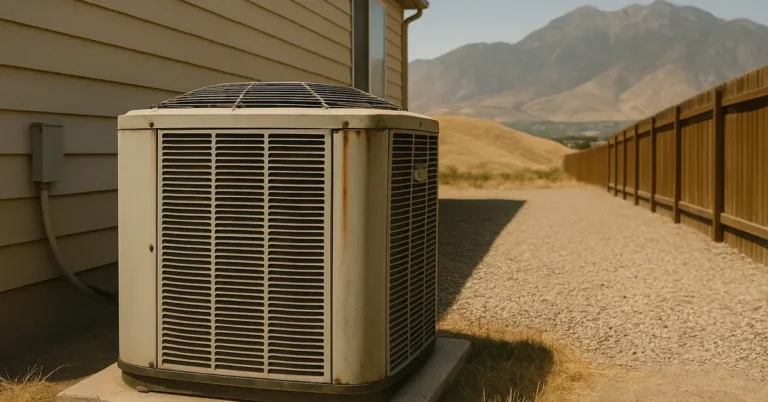
You know that morning in early April where you’re scraping frost off your windshield at 7 AM, wearing a coat and gloves — and by 2 PM, you’re opening every window in the house because it’s 72 degrees? That’s spring in Utah. And it makes figuring out the right spring thermostat settings feel almost impossible.
Along the Wasatch Front, we regularly see 30 to 40 degree temperature swings in a single day during March, April, and May. That kind of range makes most generic thermostat advice completely useless. What works in Georgia or Texas doesn’t work here at 4,300 feet above sea level.
So here’s what we’re going to cover: a month-by-month thermostat plan built specifically for life along the Wasatch Front — from Ogden down to Provo. No guesswork. Just what actually works, based on 20-plus years of walking into Utah homes and seeing what’s going on with their systems.
If your system has been acting strange this spring, or you just want a second opinion on your spring thermostat settings, give us a call at (801) 997-8909. We’re happy to help.
Why Spring Is the Trickiest Season for Your Thermostat in Utah
Here’s the thing — Utah’s high-altitude, arid climate creates some of the biggest daily temperature swings in the country. We sit between 4,200 and 4,600 feet along the Wasatch Front. That thinner air means heat escapes fast once the sun goes down. So you get freezing mornings followed by warm afternoons, sometimes with a 35-degree difference between the two.
Lower humidity plays a role too. Dry air doesn’t hold heat as well as moist air, so heated air in your home can feel less warm than the thermostat reading suggests. Getting your Utah spring HVAC settings right means accounting for altitude and daily swings that most other states never deal with.
Spring inversions along the Wasatch Front add another layer. Cool air gets trapped in the valley while the benches warm up faster. A home in Cottonwood Heights might feel ten degrees different from one down on State Street in Murray — same day, same hour.
According to the U.S. Department of Energy, heating and cooling account for roughly 52% of household energy costs. Getting your spring thermostat settings dialed in isn’t just about comfort — it’s real money.
Best Spring Thermostat Settings for Utah: March, April, and May
This is where it gets practical. The best temperature setting for spring in Utah depends on the month, because each one feels like a different season. Your spring thermostat settings should shift with those changes.
March: Still Heating Season
Don’t let a few warm days fool you. March in the Salt Lake Valley averages a high of 52 and a low of 33. Snow is still very much on the table. Last March in Sandy, we got called out to a home where the homeowner had already shut off their furnace — and woke up to 48 degrees inside the house.
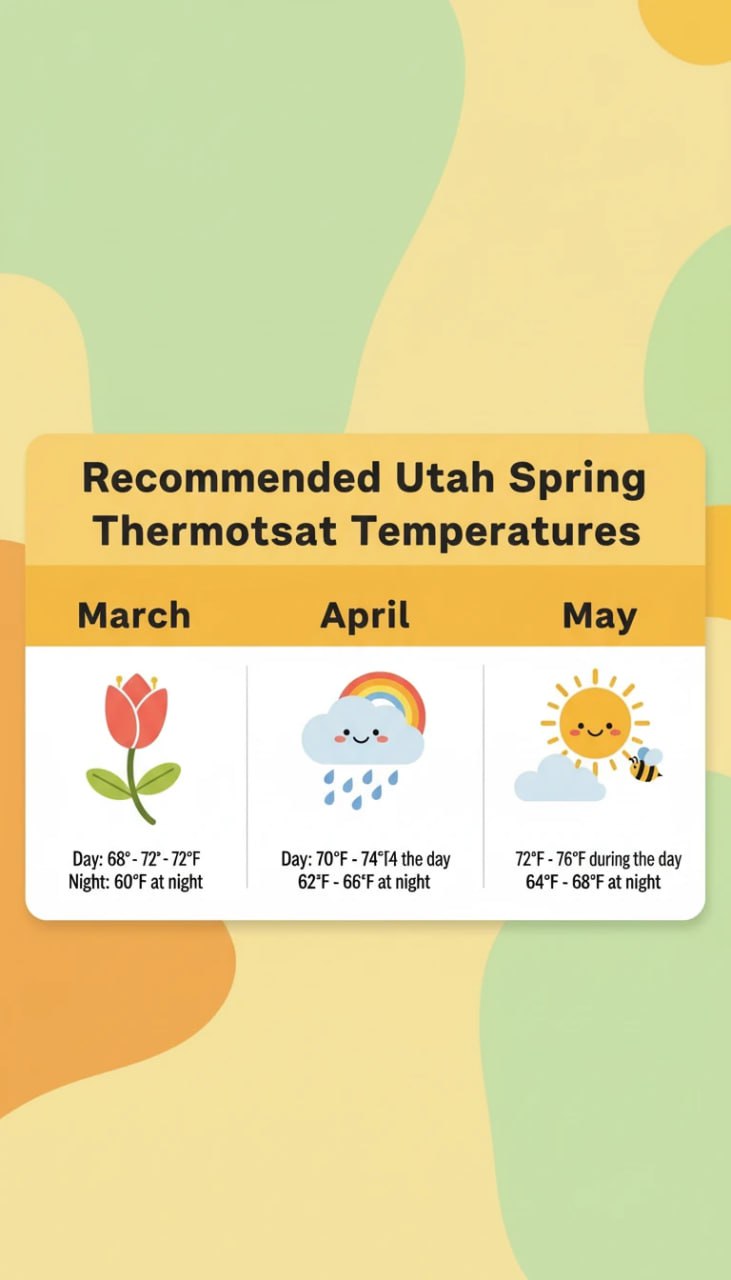
Keep your spring thermostat settings at 68 degrees when you’re home and awake. Set it back to 60-62 degrees at night and when you’re away. The DOE says you can save up to 10% a year on heating and cooling just by setting your thermostat back 7 to 10 degrees for 8 hours a day. That’s meaningful.
If you’re winding down from a long heating season, it’s a good time to review your furnace maintenance checklist and make sure everything’s still running clean.
April: The Big Transition Month
April is when things get interesting. Average highs climb to 61, but lows still hang around 40. You’ll get a week where afternoons hit the low 70s, then a cold snap drops you back to freezing overnight.
April is also Utah’s wettest month at about 2.16 inches, and that extra moisture changes how the air feels inside your home.
This is the month to use what we call the deadband strategy for your spring thermostat settings. Set your heat to 68 degrees and your cooling to 78 degrees. That 10-degree gap in the middle is intentional — it keeps your system from short-cycling back and forth between heating and cooling during those wild daily swings.
Mid-to-late April is usually when the switchover to cooling starts to make sense. But don’t rush it. Let the deadband do its job for a couple of weeks first.
May: Shifting to Cooling Mode
By May, average highs reach 72 with lows around 48. You’ll start getting occasional days in the 80s, especially in the lower valley areas like West Jordan and Riverton. Cooling becomes the primary concern, and your spring thermostat settings need to reflect that shift.
Set your cooling to 72-76 degrees when you’re home, and 78-80 degrees when you’re away. Keep a heating setpoint of 65 as a safety net for those cool nights that still creep in through late May.
One thing that matters more than people think: set your fan to AUTO, not ON. Running the fan on ON circulates unheated air nonstop and drives up your energy bill without actually making you more comfortable. AUTO lets the fan run only when the system is actively heating or cooling. This is especially important during allergy season — if you’re dealing with spring pollen, our guide on spring allergies and your HVAC filter covers how filter choice and system settings affect indoor air quality.
When to Switch Your Thermostat from Heating to Cooling
We get this question a lot. The short answer: switch when overnight lows always stay above 50 degrees and daytime highs regularly hit 70-plus. Along the Wasatch Front, that’s typically mid-to-late April — and it’s one of the most important spring thermostat settings decisions you’ll make.
But here’s the smarter approach — don’t flip a hard switch at all during the transition weeks. Set your system to AUTO mode and use the deadband strategy we talked about (heat at 68, cool at 78). Your system handles both as needed, and you don’t have to guess which day is “the day.” When you do make the switch manually, make sure to follow the proper procedure — waiting 5 minutes between turning off heat and switching to cooling protects your compressor from pressure imbalances. Our full guide on switching from heat to AC walks through the complete step-by-step process.
Before you start running the AC, it’s worth spending ten minutes on your spring AC startup checklist. Check your outdoor unit for debris, swap your filter, and make sure the condensate drain is clear. A system that sat all winter without attention can surprise you with problems on the first hot day.
Speaking of that first hot day — if something doesn’t sound right when your AC kicks on, or if it’s blowing warm air, don’t wait on it. Give us a call at (801) 997-8909. We’re open 7 days a week, and as a family-owned Utah company, we can usually get to you within 120 minutes for emergencies during business hours.
Why a Smart Thermostat Pays for Itself in Utah’s Spring
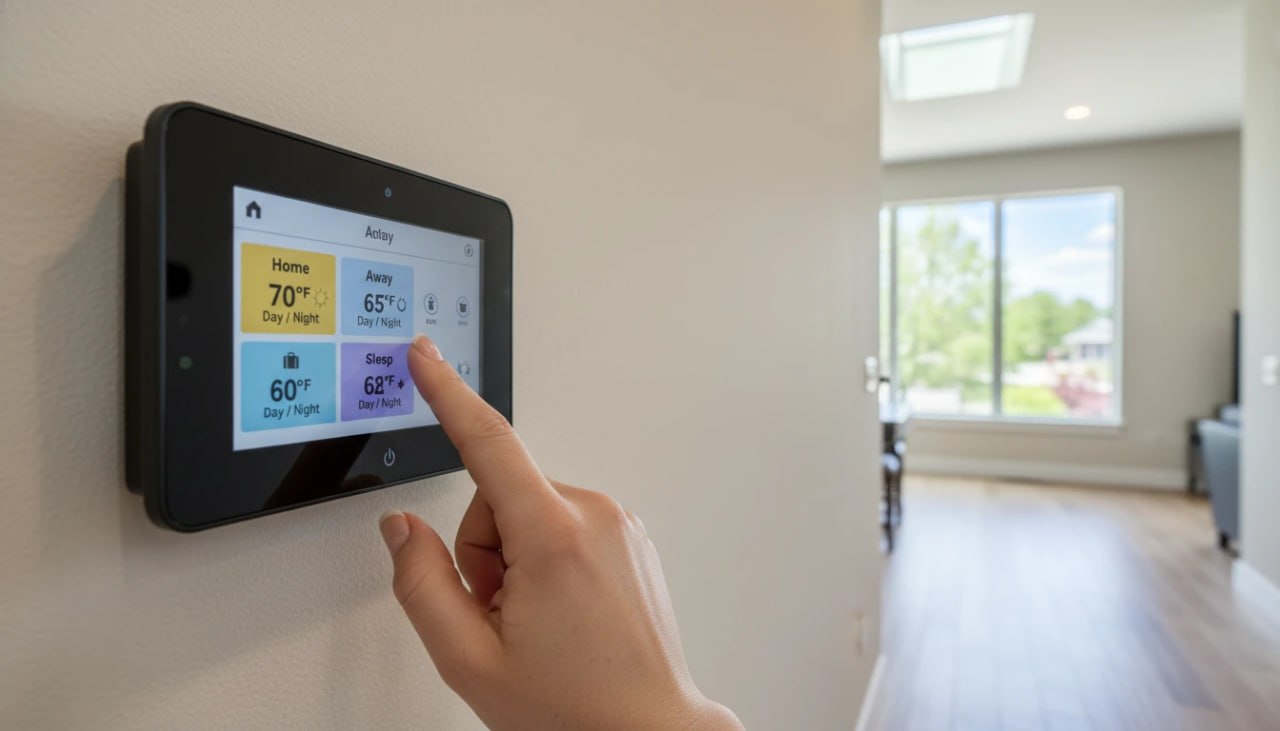
If you’re still using a basic standard thermostat — or worse, a manual dial — spring in Utah is the season that makes you feel it. You’re constantly adjusting your spring thermostat settings, trying to keep up with temperatures that can swing 30 degrees before dinner.
Smart thermostats learn your schedule and adjust on their own. ENERGY STAR certified models save about 8% on heating and cooling bills, roughly $50 a year on average. Over five years, the thermostat pays for itself. For detailed ROI calculations and real Utah savings numbers, see our complete breakdown of programmable thermostat savings in Utah.
The location-based feature is the real game-changer for Utah families. It detects when you leave the house and when you’re heading home, then adjusts your spring thermostat settings on its own. No more forgetting to set it back when you run out for groceries or pick up the kids from school.
One important note: if you have a heat pump, standard set-it-and-forget-it thermostats aren’t a great match. They can kick on backup resistance heating when you don’t need it, which wastes energy. Look for a smart thermostat with a heat pump algorithm built in — the DOE specifically recommends this. If you’re weighing your options, our guide on heat pumps and why they’re the most efficient way to heat your home covers what you need to know. And you may qualify for federal rebates on energy-efficient upgrades like these.
5 Spring Thermostat Mistakes Utah Homeowners Make
Even with the right spring thermostat settings dialed in, a few common habits can undo your effort. Here are the ones we see most often along the Wasatch Front.
1. Cranking the thermostat way up on cold mornings. We’ve all been tempted. It’s 38 degrees at 6 AM, and you push the thermostat to 76 thinking it’ll warm up faster. It won’t.
Your furnace produces heat at the same rate whether you set it to 68 or 85. All you’re doing is overshooting and wasting energy.
We’ve debunked this myth before — it’s one of the most common ones we see. Consistent spring thermostat settings always beat reactive cranking.
2. Switching to AC too early. That first 70-degree day in March feels incredible after a long winter. But turning on the AC when you could just open a window?
That’s money out the window — literally. If it’s comfortable enough outside to let fresh air in, do that first. Your thermostat settings can wait a few more weeks.
3. Running the fan on ON instead of AUTO. ON sounds like it should be better, right? More air circulation?
The problem is it runs the fan 24/7, circulating unheated air through your ducts. Your energy bill goes up, and your home doesn’t feel any better. Keep it on AUTO — it’s one of the simplest settings to get right.
4. No temperature setback when away from home. If nobody’s home for 8 or more hours a day, you’re paying to heat or cool an empty house.
That DOE stat about saving 10% a year? This is where it applies. Set it back when you leave — it’s one of the most overlooked adjustments you can make.
5. Skipping maintenance before switching seasons. Dirty filters, neglected coils, low refrigerant — all of these make your system work harder than it needs to. If your outdoor unit sat through the winter uncovered, our guide on how to clean your AC condenser after a Utah winter walks you through the process step by step. A quick tune-up before you switch from heating to cooling can prevent breakdowns and keep your energy bills in check.
Spring Thermostat Settings FAQ
What temperature should I set my thermostat in spring in Utah?
During March when heating is still primary, keep your spring thermostat settings at 68 degrees when home and 60-62 at night or when away. In April, use the deadband approach — heat at 68, cool at 78. By May, shift focus to cooling at 72-76 degrees when home and 78-80 when away.
When should I switch from heat to AC in Utah?
When overnight lows always stay above 50 degrees and daytime highs regularly reach 70-plus. Along the Wasatch Front, this is typically mid-to-late April. Use AUTO mode with a deadband during the transition weeks so your system handles both.
How much can I save with a programmable thermostat in spring?
The U.S. Department of Energy says you can save up to 10% a year on heating and cooling by setting back your thermostat 7-10 degrees for 8 hours daily. ENERGY STAR certified smart thermostats save about 8% on heating and cooling bills, or roughly $50 per year on average.
Should I set my thermostat fan to auto or on in spring?
AUTO is the way to go. The ON setting runs your fan continuously, even when the system isn’t actively heating or cooling. That wastes energy and circulates unheated air through your home. AUTO only runs the fan when there’s conditioned air to move.
Keep Your System Ready for Whatever Utah Spring Throws at You
The right spring thermostat settings save you money and keep your home comfortable through Utah’s wildest temperature swings. But settings are only half the equation — your system needs to be in good shape to deliver.
Before you switch over to cooling mode, schedule a spring AC tune-up. We run a full system check for $69, and it’s the best way to catch small issues before they turn into expensive repairs on the hottest day of the year. Check out our Home Health Plan if you want both your spring AC tune-up and fall furnace check covered under one plan.
We serve the entire Wasatch Front — Ogden to Provo and everywhere in between. Family-owned, 20-plus years of experience, and Utah state licensed. If your spring thermostat settings need attention, or you want help choosing the right thermostat, call us at (801) 997-8909. For more HVAC maintenance tips, check out our full guide.
Need help? Learn more about our AC tune up or call us at (801) 997-8909.
Ninja HVAC also serves Fruit Heights and surrounding communities.