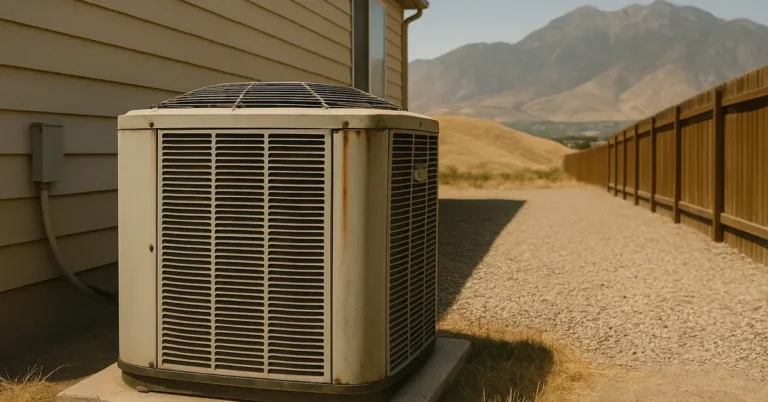
Last summer in Lehi, a customer called after getting hit with a $280 electric bill. One month. Their AC was set at 72°F around the clock during that brutal week when the valley hit 105°F three days straight. When we installed and programmed a smart thermostat, their next bill dropped to $168. Same house. Same heat wave. $112 saved in one month.
That’s the programmable thermostat savings opportunity in Utah’s extreme climate. And honestly? Most programmable thermostats in Utah homes aren’t even programmed. They’re just expensive manual thermostats sitting on the wall doing nothing special.
This guide shows you the real numbers — what programmable thermostat savings look like for Utah homeowners, how long until they pay for themselves, and the programming strategies that work specifically for our 100-degree summers and sub-zero winters.
Not sure which thermostat is right for your Utah home? Give us a call at (801) 997-8909 — we’re happy to walk you through it.
What Programmable and Smart Thermostats Actually Do
A programmable thermostat runs on a schedule you set once. Wake up at 6 AM? It warms the house to 68°F at 5:45. Leave for work at 8? It drops to 62°F at 8:15. Home at 5 PM? Back to 68°F at 4:30.
You program it once, then forget about it.
Smart thermostats do that too, but they also learn and adapt. They track when you’re actually home using geofencing on your phone. They adjust before a cold snap hits and let you control them from anywhere — stuck in traffic? Tell your thermostat to hold off heating up until 6 instead of 5.
The key difference is automation. A manual thermostat requires you to walk over and adjust it every time. Programmable thermostats follow a schedule. Smart ones follow your life.
Programmable Thermostat Savings: What the Numbers Actually Show
The U.S. Department of Energy says you can save up to 10% a year on heating and cooling just by turning your thermostat back 7 to 10 degrees for 8 hours a day. That’s a proven number, not marketing hype.
ENERGY STAR puts it differently — about 8% of your heating and cooling bills, or roughly $50 a year for the average American home. But Utah isn’t average.
With HVAC taking up roughly half your electric bill, the programmable thermostat savings add up fast. Rocky Mountain Power customers in Utah spend anywhere from $75 to $168 a month on electricity, depending on home size, insulation, and how hard the system works.
Let’s say your bill averages $120 a month. About half of that — $60 — goes to heating and cooling. A 10% reduction saves you $6 per month, or $72 a year.
Smart thermostats do better.
How Much Does a Programmable Thermostat Save?
With a basic programmable thermostat properly set up, most Utah homeowners save $50 to $100 a year. The big variable is whether you actually program it.
Nearly 50% of people with programmable thermostats never set them up, which means zero savings. If you forget to adjust manually — or if your schedule changes week to week — the automation pays off fast.
Do Smart Thermostats Really Save Money?
The smart thermostat energy savings are higher because they adapt in real time. Nest reports their users save an average of 10 to 12% on heating and 15% on cooling. Ecobee claims up to 26% savings compared to manual thermostats.
For a Utah home with a $120 monthly electric bill and $60 going to HVAC, that’s $100 to $180 saved per year. The difference comes from geofencing, learning algorithms, and remote control.
Programmable Thermostat Savings by Type: Which Saves More?
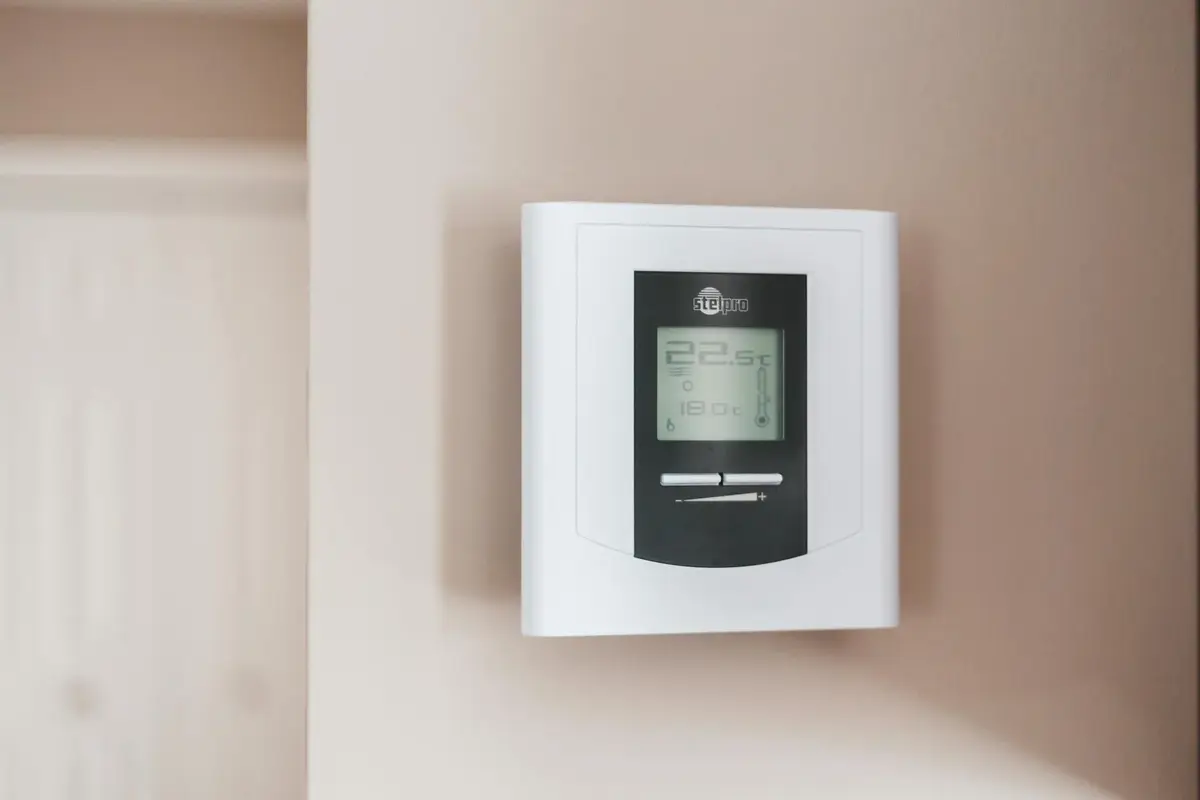
Here’s the honest breakdown of what each type costs and saves, based on what we see installing them across the Wasatch Front.
Manual Thermostat: Costs $15 to $30. Saves nothing unless you manually adjust it twice a day, every day. Most people don’t.
Programmable Thermostat: Costs $80 to $150 for the unit. Installation runs another $100 to $200 if you hire a pro. Annual savings: $50 to $100. Best for people with consistent schedules who want to set it and forget it.
Smart Wi-Fi Thermostat: Costs $150 to $250 for the unit, plus $100 to $200 for installation. Annual savings: $100 to $150. Best for people who want remote control and usage tracking. Examples: Honeywell Home T9, Emerson Sensi.
Learning Thermostat: Costs $200 to $300 for the unit, plus $100 to $200 for installation. Annual savings: $120 to $180. Best for irregular schedules and people who want zero programming effort. Examples: Nest Learning Thermostat, Ecobee SmartThermostat.
Which is worth it? If your schedule is rock-solid, a basic programmable gets you 80% of the savings for half the cost. If your life is unpredictable, a learning thermostat pays for itself and keeps working for 10+ years.
Utah-Specific Programming Strategies That Actually Work
Utah’s climate is brutal on HVAC systems. We see 100-degree days in July and August, then single-digit nights in January and February. That range creates serious savings opportunities if you program your thermostat to match the extremes.
Rocky Mountain Power’s peak hours are 6 PM to 10 PM, Monday through Friday. That’s when rates are highest. The thermostat setback savings come from pre-cooling your house before 6 PM in summer or pre-heating before 6 PM in winter — you’re avoiding the most expensive electricity of the day.
If you have a heat pump — which a lot of Utah homes do now — you need to be careful with setbacks. Aggressive temperature drops can trigger auxiliary heat, which costs 2 to 3 times more to run than the heat pump itself.
Speaking of heat pumps, if you’re considering upgrading to a high-efficiency system, you’ll want to know about current federal tax credits and rebates for HVAC systems in 2026. While some credits expired at the end of 2025, Utah homeowners still have access to significant rebate programs.
Best Temperature to Set Thermostat to Save Money in Utah Winters
For winter heating, set your thermostat to 68°F when you’re home and awake. When you leave for work or go to bed, drop it to 60 to 62°F.
Why those numbers? A 6 to 8 degree setback for 8 hours gives you the 10% annual savings without making your house uncomfortable when you wake up or get home. In Utah’s dry climate, 68°F feels warmer than it does in humid states.
Last January in Eagle Mountain, we programmed a customer’s thermostat to 68°F from 6 AM to 10 PM, then 60°F overnight. Their gas bill dropped $35 that month compared to the prior year when they kept it at 70°F all day. Of course, thermostat programming works best when your furnace is in good shape — our furnace maintenance checklist for winter covers what to check before the heating season starts.
Summer Settings for 100-Degree Utah Days
Summer is where smart programming really shines. Set your thermostat to 78 to 80°F when you’re home. Raise it to 85°F when you leave for work.
That feels high if you’re used to 72°F. But on a 105-degree day in the Salt Lake Valley, your AC is working flat-out just to maintain any temperature below the outdoor air. The difference in energy use between 78°F and 72°F is massive.
Pre-cooling is the secret weapon. Program your thermostat to drop to 76°F at 4 PM, before peak hours start at 6. Your house is cool when you get home, and you’re using cheaper electricity to do it. Then let it coast back up to 78°F during the expensive 6 to 10 PM window.
One factor many Utah homeowners overlook is altitude. At elevations between 4,000 and 7,500 feet across the Wasatch Front, your AC loses cooling capacity — which means it has to run longer to achieve the same temperature. Understanding how altitude affects AC cooling capacity helps explain why energy bills can be higher here than in sea-level states, even at the same outdoor temperature.
For more on handling Utah’s wild spring temperature swings, we’ve got a whole guide on seasonal adjustments.
Heat Pump Homes: Don’t Make This Expensive Mistake
If your Utah home has a heat pump, you can’t use the same aggressive setbacks as a furnace. Here’s why.
When you drop the temperature 8 degrees overnight and then ask the heat pump to recover in the morning, it might decide the heat pump alone can’t catch up fast enough. So it fires the auxiliary heat strips — basically big electric resistance heaters that cost 2 to 3 times more per BTU than the heat pump.
For heat pump homes, use smaller setbacks — 2 to 4 degrees max. Or get a thermostat with adaptive recovery that slowly ramps up the temperature so the heat pump can handle it without calling for backup heat.
Ecobee and Nest both do this well. We’ve seen heat pump customers in Draper accidentally double their winter electric bill by programming a big overnight setback. If you’re considering a heat pump for your Utah home, check out our guide on why heat pumps are the most efficient way to heat your home.
Real ROI: How Long Until a Thermostat Pays for Itself in Utah

Let’s do the math with real Utah numbers.
Basic programmable thermostat: $120 for the unit, $150 for professional installation. Total upfront: $270. Annual savings: $75. Payback period: 3.6 years.
After that, it’s pure savings for the next 7+ years.
Smart Wi-Fi thermostat: $200 for the unit, $150 for installation. Total upfront: $350. Annual savings: $125. Payback period: 2.8 years.
Learning thermostat (Ecobee SmartThermostat): $249 for the unit, $150 for installation. Total upfront: $399. Annual savings: $144 (assuming 12% savings on a $120/month bill). Payback period: 2.8 years.
Thermostats last 10 to 15 years. So after the 2 to 3 year payback, you’ve got 7 to 12 years of net savings. On a learning thermostat saving $144 a year, that’s $1,008 to $1,728 in your pocket over the life of the device.
And that’s assuming energy rates stay flat. Rocky Mountain Power raised rates 15% from 2024 to 2025. If that trend continues, your programmable thermostat savings go up every year.
Want professional installation and programming tailored to your specific system? Family-owned and operated with 20+ years serving Utah homes, we’ll make sure it’s set up right the first time. Call (801) 997-8909 for a free quote.
5 Thermostat Mistakes That Kill Your Savings
1. Not programming it at all. About half of programmable thermostats never get set up. They just sit there in permanent “manual” mode.
2. Using heat pump setbacks that trigger aux heat. Big overnight setbacks sound smart until you get the electric bill.
3. Ignoring Rocky Mountain Power’s peak hours. If your thermostat is working hardest from 6 to 10 PM, you’re paying top rates. Pre-cool or pre-heat before 6, then coast during the expensive window.
4. Permanent manual overrides. You hit “override” one hot afternoon, and the thermostat stays there forever because you forgot to cancel it. Smart thermostats ask if you want a temporary or permanent change.
5. Bad thermostat placement. If your thermostat is in direct sunlight, near a supply vent, or next to an exterior door, it’s reading the wrong temperature. It’ll run your system too much or too little, killing both comfort and savings.
We’ve moved thermostats 10 feet and cut runtime by 20%. For more on efficiency mistakes, check out our post on common HVAC myths that cost Utah homeowners money.
Installation: DIY or Call a Pro?
If you’ve got a simple single-stage furnace or AC, a visible C-wire at your current thermostat, and you’re comfortable with basic wiring, DIY is fine. Most smart thermostats come with step-by-step app-based installation guides. Budget 30 to 60 minutes.
Call a pro if you have:
- A heat pump (programming and wiring are more complex)
- A multi-stage or modulating system
- No C-wire (you’ll need an adapter or a new wire run)
- A zoned system with multiple thermostats
- Any uncertainty about what wires do what
We’ve fixed a lot of DIY thermostat installs where someone crossed the wrong wires and fried a control board. That’s a $400 to $800 repair on top of the thermostat cost.
A professional install runs $100 to $200 and comes with a warranty. We program it for Utah’s climate, your specific system type, and your schedule.
Utah Rebates and Incentives for Smart Thermostats
Rocky Mountain Power occasionally offers rebates on ENERGY STAR certified smart thermostats, but programs change year to year. Check Rocky Mountain Power’s rebate page to see what’s currently available.
Federal energy tax credits sometimes cover smart thermostats as part of whole-home efficiency upgrades. For the latest on what qualifies and how to claim it, see our guide to federal energy rebates and incentives.
The key is ENERGY STAR certification. Nest, Ecobee, Honeywell Home, and Emerson Sensi all have certified models.
Frequently Asked Questions
Are smart thermostats worth it?
Yes, if you want remote control, usage tracking, and automatic adjustments without manual programming. The programmable thermostat savings pay for the device in 2 to 3 years and keep saving for a decade or more.
Will a smart thermostat save money?
Absolutely. Smart thermostats save 10 to 20% on heating and cooling costs compared to leaving a manual thermostat set at one temperature all day. For a Utah home spending $60 a month on HVAC, that’s $100 to $180 a year.
What is the difference between a smart thermostat and a programmable thermostat?
A programmable thermostat follows a schedule you set manually. A smart thermostat learns your habits, adjusts based on weather and occupancy, and lets you control it remotely from your phone. Both save money — smart ones just require less effort.
How to install a smart thermostat?
Most smart thermostats install in 30 to 60 minutes if you have a C-wire and a simple system. Turn off power at the breaker, label your old wires, connect them to the matching terminals on the new thermostat, mount it, and turn the power back on. The app walks you through setup. If you don’t have a C-wire or you’re not confident with wiring, hire a professional — it’s $100 to $200 and avoids expensive mistakes.
What temperature should I set my thermostat to in winter to save money?
Set it to 68°F when you’re home and awake, and 60 to 62°F when you’re asleep or away. That 6 to 8 degree setback for 8 hours a day saves up to 10% on heating costs.
Final Thoughts
Programmable and smart thermostats aren’t magic. They’re automation. They do what you should be doing manually — turning down the heat when you’re gone, raising the AC setpoint when the house is empty, avoiding peak electricity hours — but they do it consistently, every single day, without you thinking about it.
In Utah, where we run heating 6 months a year and cooling 4 to 5 months, that consistency adds up fast. Whether you’re running a ductless mini-split system or traditional central air in your Utah home, a programmable thermostat maximizes your equipment’s efficiency. $100 to $180 saved annually. A 2 to 3 year payback. Then 7 to 10 more years of net savings.
With Rocky Mountain Power rates climbing 15% in the last year alone, programmable thermostat savings are more valuable than ever. But here’s the thing: even the smartest thermostat can’t compensate if 20 to 30% of your conditioned air is leaking into the attic. For a complete breakdown of how much energy waste you’re actually experiencing — and how to stop it — see our guide on how leaky ducts waste $600 per year.
Ready to start saving on your Utah energy bills? Ninja installs and programs thermostats for maximum efficiency in Utah’s extreme climate. Call (801) 997-8909 for a free quote — we’ll get it set up right and show you exactly how to use it.
Need help? Learn more about our HVAC services or call us at (801) 997-8909.