You sealed your windows. Closed your doors too. But you still smell smoke inside. You’re not imagining it. Wildfire smoke gets into Utah homes at a rate that surprises most people — and wildfire smoke indoor air quality issues are a bigger deal than many homeowners realize. Research from the University of Utah shows wildfire smoke gets into buildings at 78% of outdoor levels — that’s 4 to 5 times higher than winter inversion or dust. Utah’s 2026 wildfire season started early due to low snowpack, and the state already burned 114,000 acres in 2025 before summer was half over. This isn’t a problem you can just wait out.
Struggling with indoor air quality from wildfire smoke? Give us a call at (801) 997-8909. We’re happy to walk you through filter upgrades and system changes that help. We care about keeping your family comfortable and safe — not just during wildfire season, but year-round.
How Wildfire Smoke Gets Inside and Affects Indoor Air Quality
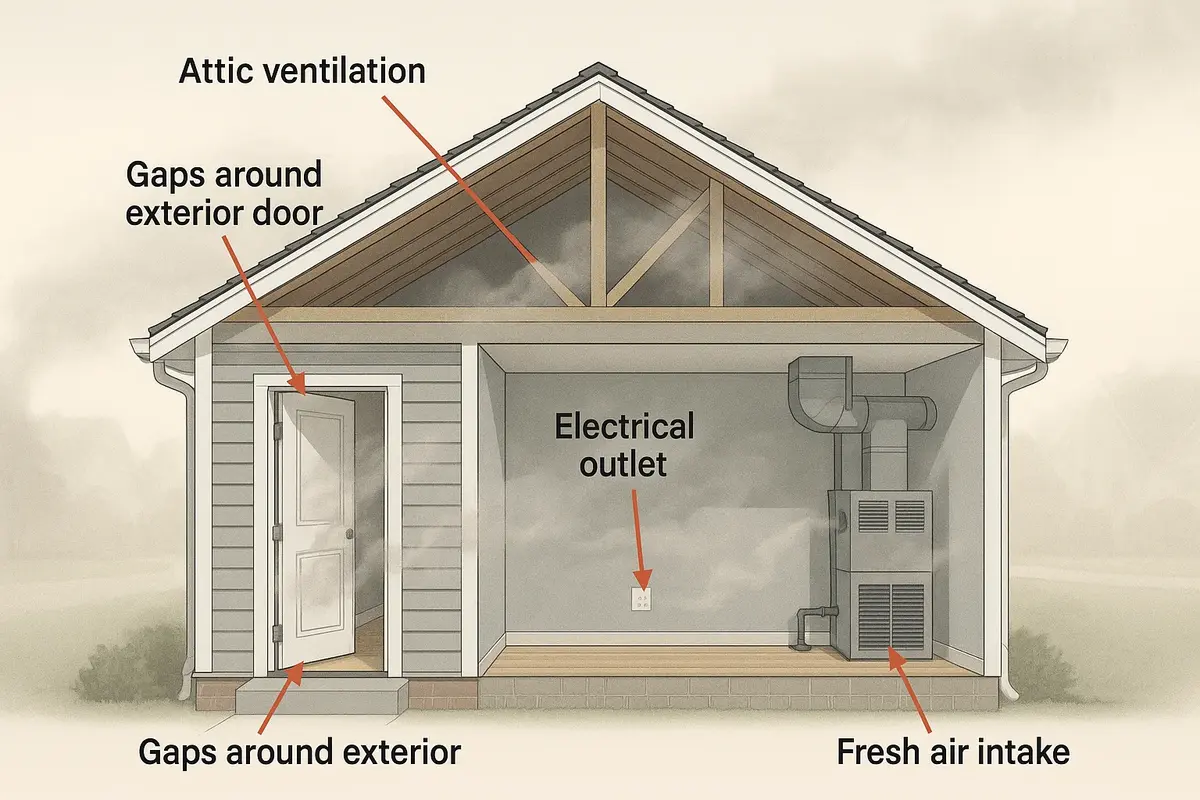
Wildfire smoke doesn’t need an open window to get in. The fine bits in smoke — PM2.5, which measure just 0.3 to 1.0 microns — slip through gaps you didn’t know existed. This indoor air pollution Utah homeowners face is different from winter inversion dust. We’re talking about the space around outlets, the crack under your front door, the seam where your attic vent meets the roof, and the fresh air intake on your HVAC system.
Even in sealed homes, indoor particle levels reach 33% to 44% of outdoor levels when you have central HVAC running with windows closed, according to EPA research. Without central air? That number jumps to 64% to 80%. Your house is breathing in smoke whether you like it or not.
Here’s the thing. When your AC runs, it creates low pressure inside your home. That pressure difference acts like a vacuum, pulling outdoor air in through every tiny gap. If your home is sealed tight, your HVAC system makes up for it by pulling air from somewhere. And if your fresh air intake isn’t filtered right, you’re just pumping smoke straight into your ducts.
PM2.5 bits are so small they stay in the air for hours. They float, move around, and don’t settle on the floor like dust. And they go deep into your lungs when you breathe. That’s why you still smell smoke inside even when your doors and windows have been closed all day.
Today, wildfire smoke is now behind 52% of all PM2.5 sent into the air in the U.S., according to the EPA. It’s not a small problem anymore — it’s the main source of fine dust in the air. Utah’s land makes it worse.
Why Utah Homes Are Especially Vulnerable
Picture the Wasatch Front as a bowl. You’ve seen it in winter — cold air settles in valleys, bad air gets trapped, and air quality goes from bad to worse over days. The same shape that traps winter smog also traps wildfire smoke. Utah wildfire air quality can deteriorate fast when fires 200 miles away push smoke into our valleys. A fire 200 miles away in Northern California or Oregon can push smoke into Salt Lake Valley within hours, and once it’s here, it sticks around.
University of Utah researchers found something odd when they studied how different types of bad air get into buildings. Wildfire smoke gets in at 78% of outdoor levels. Inversion air? Only around 15% to 20%. Smoke is in a class of its own when it comes to getting into homes.
Utah’s building codes play a role too. Modern homes built under the state’s rules need tight air sealing — less than 5 air changes per hour at a certain pressure. Great for saving energy. But tight sealing means you need fans to bring in fresh air, and during wildfire season, that fresh air system becomes a problem if your filters aren’t good enough.
Altitude matters. At 4,000 to 6,000 feet across the Wasatch Front, your HVAC is already working harder because the air is thinner. When you upgrade to a better filter, you’re adding drag to a system that’s already cut back by 10% to 15% due to height. Not every system can handle that without straining the blower motor.
This year’s wildfire season started in March and April instead of the usual June start. Southern Utah faces high fire risk through June, with the rest of the state following in July. Low snowpack and warm, dry winters are the new normal. In 2025, 72% of Utah’s wildfires were set by people — not lightning — which means the fire season isn’t expected anymore.
Want to know how altitude affects your AC’s power and airflow? Our post on how Utah’s altitude cuts your AC’s cooling power matters when you’re thinking about filter upgrades.
Signs Wildfire Smoke Is Getting Into Your Home
You don’t need an air quality meter to know smoke is getting into your house. Your nose and your body will tell you.
Most clear sign? The smell. When your windows are closed and you still smell smoke — especially when the AC kicks on — you’ve got a problem. That smell gets stronger near vents because that’s where the air comes from.
Stand in a room with good light and look toward a dark wall. See a faint haze, almost like fog? That’s hanging dust, and it’s not your mind playing tricks.
Dust on surfaces is another giveaway, but not the normal kind. Wiping down counters and windowsills every day and the dust keeps coming back with a gray tint? That’s smoke film. Normal house dust is lighter in color.
Physical signs show up fast. Scratchy throat. Watery eyes. A dry cough that won’t quit. For people with asthma or allergies, symptoms get worse even though you’re indoors. Wildfire smoke is up to 10 times more harmful than regular PM2.5, based on research in Nature Communications. Your lungs know the difference.
Always check the Utah Department of Environmental Quality’s air alerts for your area. When outdoor PM2.5 is in the “bad for sensitive groups” range or higher, and you’re seeing any of the signs above, smoke is getting in.
How Your HVAC System Can Filter Wildfire Smoke
Your HVAC can be your best guard against wildfire smoke — if you upgrade the right parts. When it comes to HVAC filter smoke protection, EPA’s lowest advice for wildfire smoke is a MERV 13 filter. MERV stands for Minimum Efficiency Reporting Value, and it measures how well a filter grabs bits. A MERV 13 filter removes 90% to 95% of bits in the 0.3 to 1.0 micron range — exactly where wildfire smoke lives.
Most homes come with MERV 1 to MERV 4 filters. Those protect your gear, not your lungs. They catch large stuff and pet hair but do almost nothing for smoke.
MERV 13 Filters: The Gold Standard for Smoke
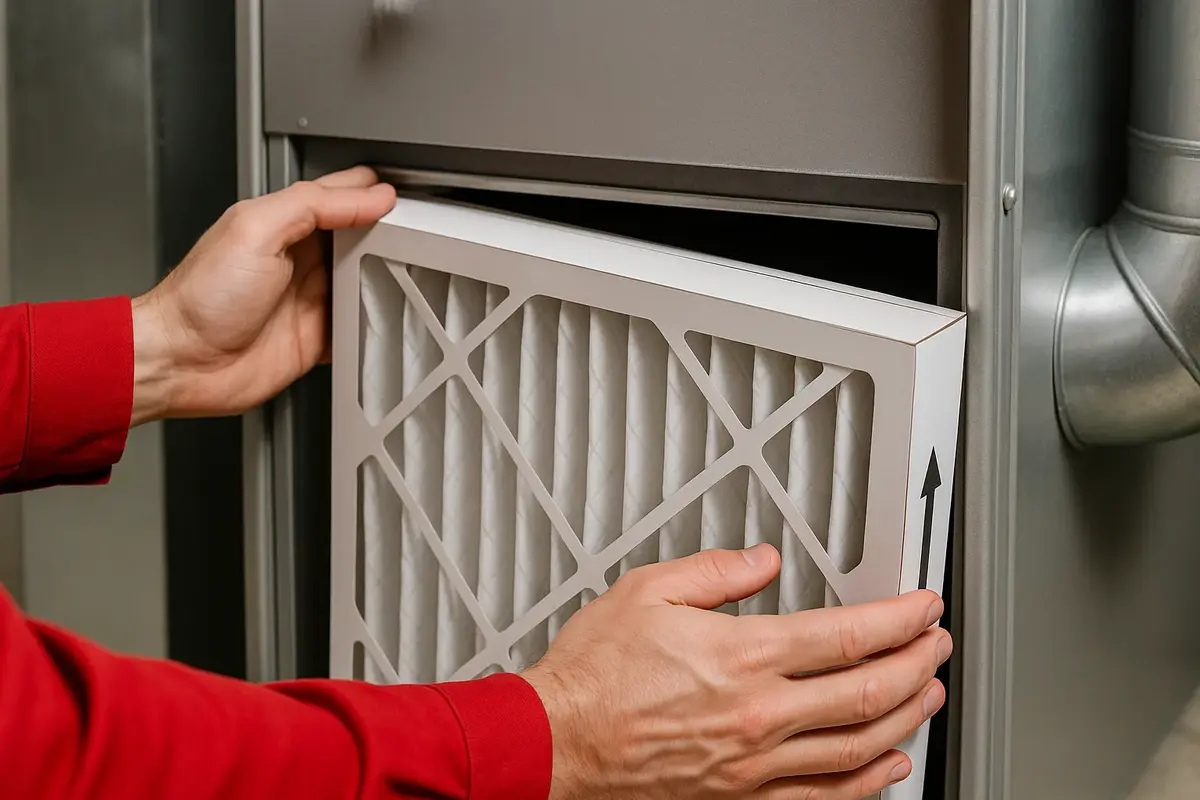
A MERV 13 filter is the best spot for wildfire smoke safety. It grabs the fine bits that slip through lower filters, but it doesn’t create so much drag that your system can’t push air through. MERV 13 filters are available in different sizes and last 1 to 3 months under normal use. During heavy smoke events? Check them weekly.
These filters work by forcing air through dense folded sheets. Bits get trapped in the folds. More surface area means more bits it can hold before it clogs. That’s why a cheap flat filter and a good pleated MERV 13 are night and day different — it’s not just the rating, it’s the build.
When you put in a MERV 13 filter, watch the arrow on the frame. It points toward the furnace. Put it in backward and it won’t seal right, letting dirty air skip the filter. Also confirm the fit around the edges — gaps mean smoke gets through.
Will Your System Handle a MERV 13 Filter?
Here’s the truth: not every HVAC can handle a MERV 13 filter without fighting. Older systems — especially those put in before 2010 — were built for lower-drag filters. A MERV 13 filter slows airflow more than a MERV 8, and if your blower motor isn’t strong enough, it’ll work harder, run hotter, and wear out faster.
Start by checking your filter slot size. Some older systems have narrow slots that only fit 1-inch filters. A 1-inch MERV 13 creates more drag than a 4-inch or 5-inch MERV 13 because there’s less surface area. Stuck with a 1-inch slot? You might need to upgrade the slot or stick with a MERV 11.
Watch for these warning signs: the blower motor runs all the time, rooms don’t cool the same, or the furnace gets too hot and shuts off. Seeing any of these after moving to MERV 13? Call us. We can test your system’s airflow and tell you if you need a blower motor upgrade or a larger filter rack.
More on keeping your filter on the right plan in our guide about how often to change your AC filter during Utah’s dusty summer.
How to Run Your HVAC During Smoke Events
Filter upgrades are only half the answer. You also need to change how your system runs during smoke events.
Close your fresh air intake if your system has one. Most home HVAC systems have a flap that pulls outdoor air into the return duct to boost indoor air quality under normal times. During wildfire smoke? That flap should be closed. You want your system moving indoor air around, not pulling in smoke from outside.
Set your thermostat fan to “ON” instead of “AUTO.” In AUTO mode, the fan only runs when the AC or furnace is heating or cooling. In ON mode, the fan runs all the time, which means your air is going through the MERV 13 filter all day long. Every pass through the filter grabs more bits.
Running the fan all the time does use more power — about $20 to $40 extra per month based on your blower motor. Worth it for the air quality boost. You’re turning your HVAC into a whole-home air cleaner.
During smoke events, check your filter weekly. A filter that normally lasts 3 months might need swapping in 3 weeks when outdoor PM2.5 is high. A clogged filter is worse than no filter because it forces your system to work harder and can cause breaks.
Dealing with spring allergies and indoor air issues too? Our post on Utah spring allergies and your HVAC filter covers filter upgrades in more detail.
Beyond HVAC: Other Ways to Keep Smoke Out
Your HVAC does the heavy work, but there are other tricks that help.
Portable air cleaners work well in bedrooms or rooms you use most. Look for units with HEPA filters or MERV 13 equals. They’re not a swap for whole-home HVAC cleaning, but they’re a good add-on for the rooms where you spend the most time.
EPA tested DIY box fan filters a few years ago and found they’re just as good as store-bought cleaners. Take a 20-inch box fan, attach four MERV 13 filters to the sides with tape or cords, and add a cardboard top to push airflow. Sounds rough, but it works. You can build one in about 15 minutes with materials from a hardware store.
Behavioral changes matter. Keep windows and doors closed during smoke events. Skip candles and cooking that makes smoke — you’re adding dust to the air you’re trying to clean. Shower and change clothes after being outside to avoid bringing smoke film into your house on your skin and hair.
Create a “clean room” if you have family with breathing issues. Focus your cleaning on one room — usually a bedroom — and seal gaps around the door with strips. Run a portable air cleaner in that room all day and night. It’s easier to keep good air quality in 200 square feet than in 2,000.
When to Call a Pro
Some HVAC changes are DIY-friendly. Others need a pro look.
Not sure whether your system can handle a MERV 13 filter? Call us for an airflow test. We measure the static pressure in your ducts before and after the filter upgrade. Pressure too high? We’ll suggest either a blower motor upgrade or a larger filter rack. That’s a $49 service call during work hours, and the fee goes away if you do the work.
Filter slot changes aren’t hard, but they do need cutting into your ducts. Current slot only fits a 1-inch filter and you want to move to a 4-inch or 5-inch pleated filter? We can put in a larger rack. That gives you more surface area, which means less drag even with a MERV 13 rating.
Fresh air intake check is another pro-level job. We confirm the flap closes all the way during smoke events and check for leaks around the ducts. Leaky ducts skip your filter, so smoke gets in no matter how good your filter is.
Duct sealing is one of the most missed ways to boost indoor air quality. When 20% of your air is leaking through gaps in the ducts, that’s 20% dirty air mixing with the clean air. We use mastic and metal tape to seal joints and seams. Not pretty work, but it makes a big difference.
Need a long-term solution for indoor air quality? Our indoor air quality services include advanced filtration systems, UV air purifiers, and whole-home dehumidifiers that manage moisture during Utah’s monsoon season and work year-round — not just during wildfire season.
Our $69 AC tune-up covers a filter talk and a basic system check. Getting ready for wildfire season? That’s a good place to start. We’re Utah state licensed with 20+ years serving the Wasatch Front, and we know how altitude and Utah’s unique climate affect HVAC work.
Want to get ahead of wildfire season? Our Home Health Plan covers two tune-ups per year and first-in-line scheduling during peak times. Give us a call at (801) 997-8909.
Frequently Asked Questions
What MERV filter is best for wildfire smoke?
MERV 13 is EPA’s lowest advice for wildfire smoke. It grabs 90% to 95% of bits in the 0.3 to 1.0 micron range, which is where wildfire smoke sits. Lower filters like MERV 8 or MERV 11 help, but they don’t catch the smallest and worst bits. MERV 13 is the right spot for home systems.
Can HVAC systems filter wildfire smoke?
Yes, but only if you upgrade the filter. Standard MERV 1 to MERV 4 filters won’t do much. With a MERV 13 filter in place and the system running in loop mode with the fan on all the time, your HVAC becomes a whole-home air cleaner. EPA found that homes with central HVAC and upgraded filters see indoor smoke levels drop to 33% to 44% of outdoor levels.
How to tell if wildfire smoke is in your house?
Smell test: if you smell it near vents when the AC kicks on, you’ve got infiltration. Visual test: faint haze in rooms with good light. Physical test: gray-tinted dust on surfaces, scratchy throat, watery eyes, worse asthma or allergy symptoms indoors. Always check Utah DEQ’s air alerts — if outdoor PM2.5 is high and you see any of these signs, smoke is getting in.
Should I close my windows during wildfire smoke?
Yes. Keep windows and doors closed during smoke events. Even a small gap lets in a lot of dust. Your HVAC should be moving indoor air through a MERV 13 filter, not pulling in smoky outdoor air. Close the fresh air flap on your HVAC if you have one.
How often should I change my filter during wildfire season?
Weekly checks during smoke events. A filter that normally lasts 3 months might need swapping in 3 weeks when outdoor PM2.5 is high. Hold the filter up to light — can’t see light through it? It’s clogged and needs to be changed. Clogged filters force your system to work harder and can cause breaks.
Can wildfire smoke damage my HVAC system?
Not directly. Smoke bits are too small to clog your evaporator coil or hurt machine parts. But running your system all the time during smoke season with low-quality filters means the blower motor works harder pushing air through clogged filters. That extra strain can cut the motor’s life. Simple fix: use a MERV 13 filter and change it often.
Conclusion
Wildfire smoke gets into Utah homes at rates that surprise most people, but your HVAC can fight back if you give it the right tools. A MERV 13 filter, fan mode on all the time, and a closed fresh air intake turn your system into a whole-home air cleaner. Utah’s 2026 wildfire season started early and isn’t slowing down — now’s a good time to upgrade your filters before the peak season hits.
Need help with a filter upgrade or a system check? Give us a call at (801) 997-8909. We’re family-owned, Utah state licensed, and we’ve been protecting Wasatch Front homes for 20+ years. The $49 fee (weekdays 9 AM-5 PM) goes away if you do the work, and we handle emergency calls after hours, too.