Your air conditioner’s on its last legs. The HVAC tech just gave you the news — you’re looking at a replacement this year. But here’s where it gets interesting: they mentioned heat pumps as an option. You thought those were only for heating, right?
Turns out, heat pumps cool your home just as well as a traditional AC. The difference? They can also heat. And with Utah’s mild winters and some pretty big rebates available right now, the heat pump vs air conditioner Utah decision isn’t as obvious as you might think.
Here’s what makes this choice especially relevant for Utah homeowners in 2026: you could stack up to $4,800 in combined rebates when you install a heat pump system. That’s Rocky Mountain Power, Dominion Energy, and federal tax credits all working together.
If your cooling system needs replacing soon, give us a call at (801) 997-8909. We’re happy to talk through the heat pump vs air conditioner Utah comparison for your specific setup.
Heat Pump vs Air Conditioner Utah: The Key Difference
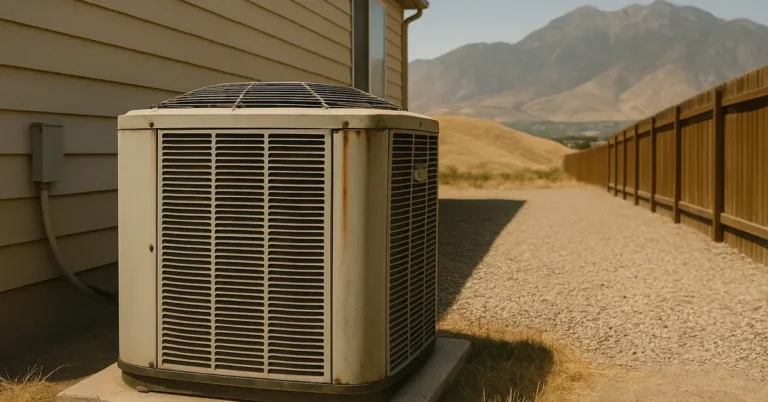
Let’s clear this up right away. An air conditioner moves heat in one direction — out of your house. A heat pump does the exact same thing in summer. Same cooling tech. Same cooling process. Same ratings.
The difference is a part called a reversing valve. In winter, this valve flips the flow direction, pulling heat from outside air and moving it indoors. Your AC doesn’t have this valve, so it’s a one-trick pony.
Both systems have an outdoor condenser unit and an indoor air handler. Both use refrigerant to move heat. Both are rated using the same SEER metric for cooling. When summer hits, you can maximize your summer cooling efficiency with proven cost-cutting strategies.
If you compared them on a 95-degree July afternoon in Draper, you wouldn’t notice any difference in how they cool your home. The decision point isn’t about summer comfort. It’s about what happens when temps drop. If you’re also considering ductless options, see our guide on mini-splits vs central air for Utah homes.
Summer Cooling in Utah: Heat Pumps and ACs Perform Identically
We need to stress this because there’s a myth that heat pumps don’t cool as well. Not true. In cooling mode, a heat pump IS an air conditioner. Same compressor. Same refrigerant. Same coils.
Both are rated by SEER. A 16 SEER heat pump cools exactly as well as a 16 SEER air conditioner. You’re getting the same tech in a slightly different package.
Utah’s dry climate actually helps both systems equally. Low humidity means your AC or heat pump doesn’t have to work as hard removing moisture from the air. When it hit 107°F in St. George last July, modern heat pumps handled it without breaking a sweat.
Salt Lake Valley’s average summer highs around 93°F are well within the best operating range for both systems. If you only needed cooling, the heat pump vs air conditioner Utah debate would be simple. But you also heat your home for six months of the year.
Winter Heating: Why Utah’s Climate Makes Heat Pumps Work
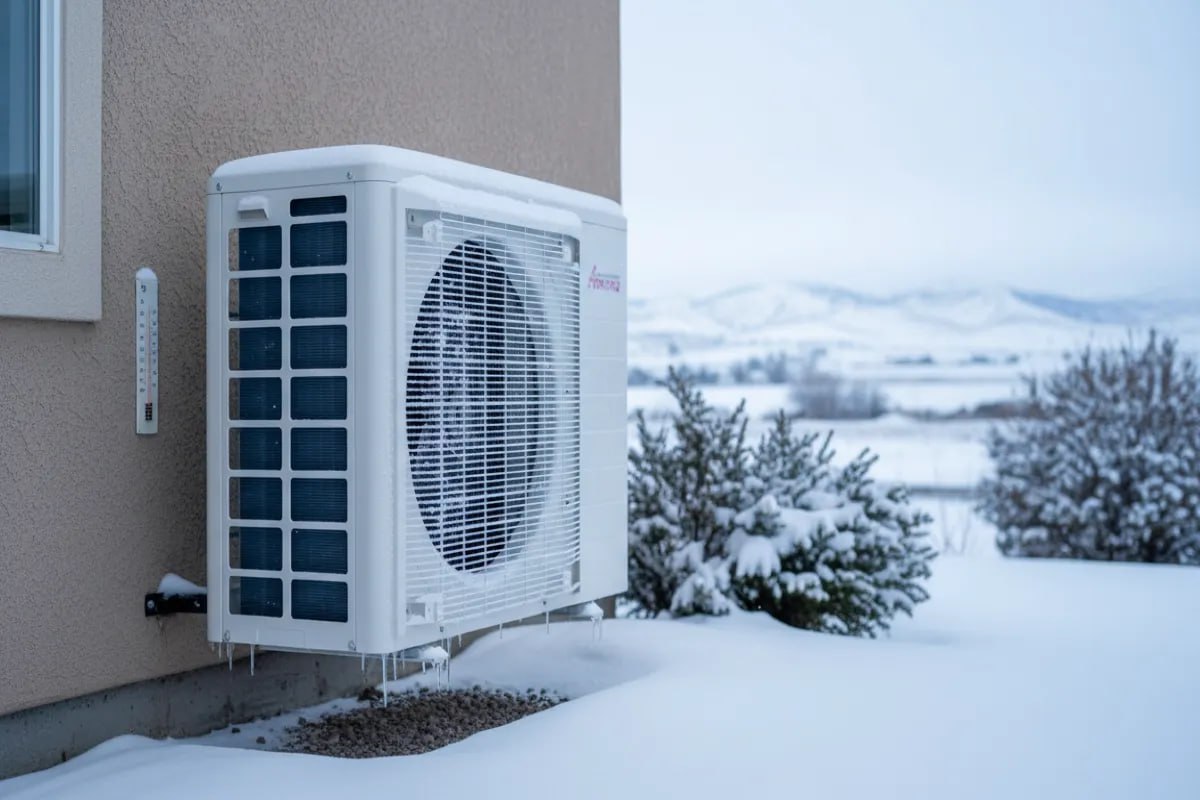
This is where the heat pump vs air conditioner Utah decision actually happens. And this is where Utah homeowners have a big advantage that people in, say, Minnesota don’t.
Utah’s winters are mild. Salt Lake City’s average January temp is 25.3°F. We get cold snaps, sure. But we rarely see long deep freezes below zero. About one in four winter days stays below freezing all day.
Modern cold-climate heat pumps are designed to work well down to 5°F, with many models still working at -15°F or lower.
The U.S. Department of Energy confirms that today’s air-source heat pumps can cut electricity use for heating by up to 75% compared to electric resistance heating. Heat pump performance in Utah is excellent — compared to gas furnaces in mild climates like ours, they’re two to three times more efficient.
Let me put that in context. Last winter in Sandy, we saw maybe five days where the temp stayed below 10°F. The rest of the heating season? Perfect heat pump weather.
Your system would run well for 90% of the winter, using a fraction of the energy a furnace would use. If you’re sticking with a gas furnace, make sure to follow a furnace maintenance checklist for winter to keep it running efficiently alongside or instead of a heat pump. Our elevation does matter for equipment sizing — we’re at 4,226 feet in Salt Lake City. But that’s a calculation any competent HVAC tech factors into the load calculation. If you’re wondering about AC or heat pump sizing for your home, our guide on what size AC unit your Utah home needs covers altitude adjustments and load calculations in detail.
How Cold Is Too Cold for a Heat Pump?
The old rule of thumb was that heat pumps lost power below 40°F. That was true in 1995. It’s not true anymore.
Today’s cold-climate heat pumps maintain power down to 5°F and keep working (though less well) down to -23°F. These aren’t theory numbers — this is tested, certified performance.
Utah winter data shows we have very few days where a modern heat pump would struggle. The Wasatch Front, Utah Valley, and most populated areas along the I-15 corridor rarely see the kind of long deep freezes that would push a heat pump to its limits.
Compare that to northern states where dual-fuel systems are essential because winter temps often sit at -10°F for weeks. That’s not our reality. We’re in the sweet spot where heat pumps actually make economic sense.
Want to learn more about heat pump performance in Utah? We’ve written a detailed breakdown at our heat pump guide.
Dual-Fuel Systems: The Utah Advantage
Here’s where the heat pump vs air conditioner Utah choice gets even more interesting. A dual-fuel system pairs a heat pump with a gas furnace. You get the best of both worlds.
The system automatically switches between the two based on outdoor temp. On mild winter days — say, 35°F — the heat pump runs. It’s cheaper and more efficient than firing up the gas furnace. When temps drop into the teens or single digits, the furnace kicks in as backup.
Most dual-fuel systems switch over between 25°F and 35°F, depending on your local utility rates and equipment. Your HVAC contractor programs this during installation based on what’s most cost-effective for you.
Why does this matter in Utah? We have Rocky Mountain Power for electricity and Dominion Energy for natural gas. You can use lower electric rates most of the winter, then switch to gas only on the coldest days.
And here’s the kicker: dual-fuel systems qualify for the highest rebate stacking available. We’re talking $1,800 from Rocky Mountain Power, up to $1,000 from Dominion Energy, plus federal tax credits. That’s real money that directly offsets your install cost.
If you’re trying to figure out furnace costs, check our Utah furnace installation guide for comparison.
Want to get ahead of equipment failures before they happen? Our Home Health Plan covers annual tune-ups and gives you priority scheduling. Or just give us a call at (801) 997-8909 to talk through your options.
Installation Costs and Utah Rebates
Let’s talk numbers. A heat pump system typically costs $500 to $2,000 more than an AC when paired with a furnace. That’s the upfront equipment premium you’re paying for the reversing valve and cold-climate parts.
But — and this is crucial — Utah’s rebate programs can cover that entire difference. In many cases, you’ll end up with a heat pump system for the same net cost as an AC-only setup, or even less. The heat pump cost savings are real. When you’re ready to collect quotes, our guide on how to compare HVAC contractor quotes in Utah shows you exactly what to look for and what red flags to avoid.
Rocky Mountain Power Rebates
Rocky Mountain Power offers $1,800 for air-source heat pump installs. Requirements are simple: existing home, use a program-eligible contractor (Ninja HVAC qualifies), and submit your rebate application within 180 days of install.
That $1,800 is a direct rebate check. Not a tax credit you wait on. Actual money back.
Dominion Energy Rebates (Dual-Fuel)
If you’re installing a dual-fuel system — heat pump plus gas furnace — Dominion Energy adds $800 to $1,000 on top of the Rocky Mountain Power rebate.
Requirements: ENERGY STAR certified heat pump with an HSPF of at least 9.0 and SEER of at least 14. Your gas furnace also needs to be ENERGY STAR certified. The system’s changeover temp must be set at 40°F or below.
These aren’t hard requirements to meet. Most modern mid-tier systems qualify easily.
Federal Tax Credits
The federal Energy Efficient Home Improvement Credit covers 30% of your project cost, up to $2,000. This credit is available through December 31, 2032, and it stacks with both utility rebates.
More details on the federal program are in our federal energy rebates guide.
Update (2026): The federal Section 25C tax credits expired on December 31, 2025. For details on what changed with HVAC federal tax credits in 2026 and which programs are still available, see our updated guide.
Total Rebate Stacking
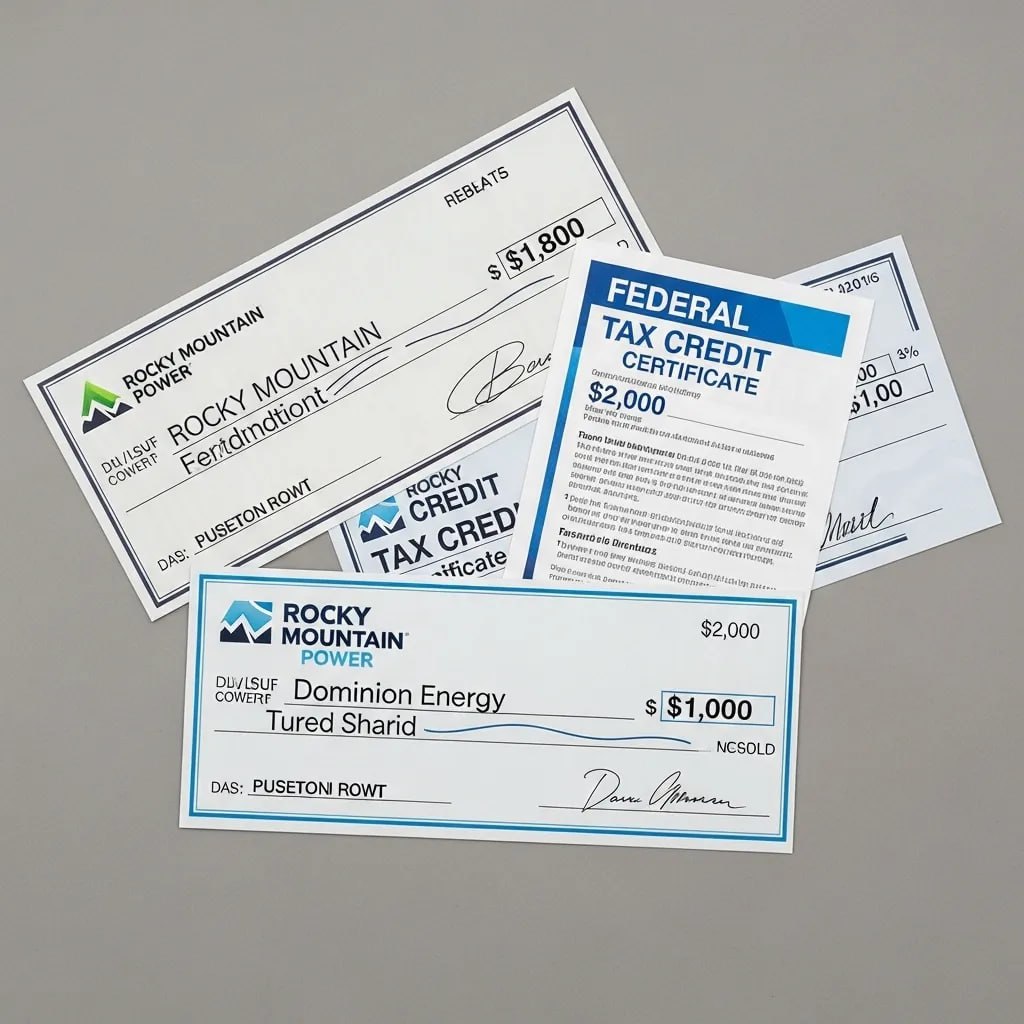
Add it up: $1,800 from Rocky Mountain Power + $1,000 from Dominion Energy + $2,000 federal tax credit = $4,800 in total incentives.
That’s not a theory maximum. That’s what homeowners in Utah are actually getting when they install qualifying dual-fuel systems right now in 2026.
The typical cost premium for a heat pump system over AC-only is around $1,500. You’re clearing that by $3,300. In practical terms, you’re getting a more efficient, more versatile system that heats and cools your home — for less net cost than buying just an AC.
For context on AC pricing, see our breakdown at 2-ton AC replacement costs.
Which System Makes Sense for Your Utah Home?
Enough theory. When weighing the heat pump vs air conditioner Utah question, here’s how to decide based on your actual situation. And if you’re also considering other cooling options unique to Utah’s dry climate, our swamp cooler vs. central AC comparison breaks down the cost and performance differences for evaporative cooling systems.
Choose Heat Pump If:
You currently heat with electric resistance or baseboard heaters. This is a no-brainer. A heat pump will cut your heating costs dramatically — we’re talking 50% to 75% cuts. There’s no scenario where staying with electric resistance makes financial sense.
Your gas furnace is 15+ years old and you’re facing replacement soon anyway — just like AC units in Utah typically wear out earlier than the national average. If your furnace is on borrowed time, you’re going to be buying something. Why not capture the $4,800 in rebates and get a system that does both heating and cooling better?
You’re in Rocky Mountain Power territory with no natural gas service. Some newer neighborhoods in Lehi, Herriman, and Eagle Mountain don’t have gas lines. A heat pump is your most cost-effective heating option, period.
Choose Dual-Fuel If:
You have natural gas service from Dominion Energy. This unlocks the full rebate stack and gives you maximum year-round performance. You use the heat pump 80% to 90% of the heating season, then switch to gas only on the coldest days.
Your existing furnace is 10+ years old but still limping along. You know it’s coming. When it does fail, you’re looking at an emergency replacement. Planning ahead with a dual-fuel install now means you control the timing and maximize rebates.
Choose AC-Only If:
Your gas furnace is less than 8 years old and it’s a high-efficiency model (90%+ AFUE). If it’s new and working well, it doesn’t make financial sense to replace it early. Just replace the AC and revisit heat pumps when the furnace reaches end-of-life.
You’re only replacing the outdoor AC unit and have no plans to touch the furnace. If you’re doing a straightforward AC swap and your heating is covered, keep it simple.
You don’t qualify for rebates — for example, you’re installing equipment in a rental property. Without the rebates, the math shifts back toward traditional systems.
For more cost context, see our guide on AC replacement costs.
Frequently Asked Questions
Are heat pumps worth it in Utah?
Yes, especially with current rebates. Utah’s mild winters make heat pumps highly efficient here. When you factor in the $4,800 in combined incentives available, the economics are strongly in favor of heat pumps for most Utah homeowners.
Do heat pumps work in cold weather?
Modern cold-climate heat pumps work well down to 5°F and continue working (with reduced power) down to -23°F. Salt Lake City’s average January temp is 25°F, well within efficient operating range.
Can a heat pump replace my furnace and AC?
Yes. A heat pump provides both heating and cooling. For Utah homes, we often recommend dual-fuel systems that pair a heat pump with your existing (or new) gas furnace. The heat pump handles most of the heating season well, and the furnace serves as backup on the coldest days.
How much does a heat pump cost in Utah?
Full heat pump systems range from $18,000 to $36,000 installed. After stacking Rocky Mountain Power ($1,800), Dominion Energy ($1,000), and federal credits ($2,000), your net cost drops by $4,800.
What temperature does a heat pump stop working?
Heat pumps don’t stop working at a specific temp, but performance drops as temps fall. Modern units maintain good performance to 5°F. Below that, they still produce heat but use more electricity to do it.
Most dual-fuel systems in Utah are programmed to switch to the gas furnace somewhere between 25°F and 35°F, which is where gas becomes more cost-effective than running the heat pump.
We’ve addressed some common myths in our HVAC myths guide. And if you want to keep whatever system you choose running well, check out our maintenance tips for homeowners.
The Bottom Line for Utah Homeowners
You’re in a sweet spot. Utah’s mild climate makes heat pumps viable in a way they wouldn’t be in Montana or North Dakota. And the rebates available right now — $4,800 when you stack them properly — make this one of the best times in recent memory to upgrade.
The heat pump vs air conditioner Utah choice ultimately depends on your current equipment, heating fuel, and whether you qualify for rebates. But for most homeowners along the Wasatch Front, heat pumps make strong financial sense in 2026.
Heat pumps aren’t some experimental tech. We’ve been installing them in Utah for years, and they perform exactly as advertised. The DOE data is real. The rebates are real. The savings on your utility bills are real.
Whether you go with a heat pump, dual-fuel, or stick with a traditional AC depends on your specific situation. We’ve installed all three, and we’re happy to walk you through what makes sense for your home, your existing equipment, and your budget.
Give us a call at (801) 997-8909 — we’ll give you straight answers based on 20+ years of working in Utah homes. No pressure, no upselling. Just honest guidance from Utah state licensed technicians who’ve seen every setup imaginable.
Need help? Learn more about our heat pump installation or call us at (801) 997-8909.