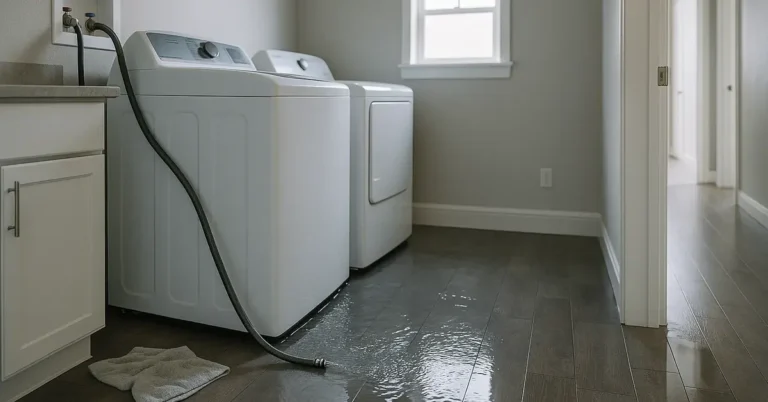
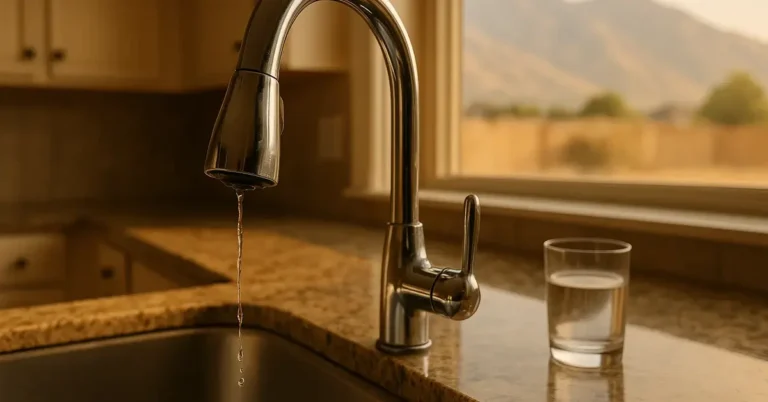
You poured the drain-store bottle in twenty minutes ago. The kitchen sink in your Avenues bungalow is still standing full of gray water, and now there’s a chemical smell hanging in the air. So you’re wondering the same thing every homeowner wonders at this exact moment: do I dump in another bottle, or do I call somebody?
Here’s the honest answer on drain cleaning in Salt Lake City from a plumber who’s been under these sinks for a couple of decades. Sometimes the bottle is fine. On a fully stopped drain in an older SLC home, it usually costs you more than it saves. This post is the no-pressure decision framework for telling those two situations apart.
If your drain’s already sitting full and going nowhere, skip the second bottle and give us a call at (801) 997-8909. We’re happy to take a look and tell you straight what it needs.
When the Drain-Store Bottle (and Simple DIY) Is Actually Fine
Let’s be fair to the bottle first. It isn’t always the wrong move. If your bathroom sink is draining slow but the water still goes down, you’re probably looking at hair and soap film in the trap — not a real blockage. That’s a low-risk situation, and a little DIY is reasonable.
Reach for the gentle stuff before anything caustic. A kettle of boiling water melts soap and grease. A good plunger with a tight seal knocks loose most surface clogs. An enzyme cleaner works overnight to eat organic gunk without cooking your pipes. And a cheap plastic drain-stick pulls hair out of a bathroom sink in about ten seconds — honestly one of the most satisfying home fixes there is.
Here’s the rule of thumb we give our own neighbors. If water is still moving, even slowly, DIY is fair game. If it’s standing dead still and refuses to budge, stop — you’re past the point where a bottle helps. For a single stubborn clog sitting deep in the line, we walk through the safe steps in our guide to clearing a clogged drain deep in the pipe.
Why the Chemical Bottle Is Riskier in Utah Homes Than the Label Admits
Ever notice how the bottle gets warm while it works? That heat isn’t magic — it’s a chemical reaction. On a drain that’s still flowing, the product moves through and rinses away. On a fully stopped drain, it just pools in one spot and keeps cooking. That heat softens the PVC and ABS joints in newer lines and speeds up rust in old metal pipe.
Now add the Utah multiplier. Our water is some of the hardest in the country. Salt Lake City taps commonly run 14 to 17 grains per gallon, roughly double the national average of about 7. All that dissolved calcium leaves mineral scale that narrows your drain lines from the inside. So the caustic doesn’t flow through — it sits against scaled, thinned pipe walls and eats at them. Our full breakdown of how Utah’s hard water wrecks plumbing gets into why buildup keeps coming back here.
There’s a safety angle no franchise service page bothers to mention. U.S. poison centers logged more than 3,000 drain-cleaner exposure cases needing medical care in 2023, and these caustics cause deepening burns to skin and eyes (National Capital Poison Center). When that bottle sits on a stopped drain and you go back at it, the risk is more than your pipe. It’s you. The single biggest mistake we see? Pouring any chemical into a drain that isn’t draining at all.
The Salt Lake City Old-Pipe Problem

Old houses change the math. Salt Lake City has some of the oldest housing stock in the state, and what’s buried under your floor matters more than the label on the bottle.
Clay sewer lines are common in homes built before about 1950 — think most of the Avenues, where the majority of homes went up between 1860 and 1930. Clay pipe doesn’t last forever, and plenty of those lines are already near the end of their run. Cast iron was the standard from the 1950s through the 1970s, which covers a lot of Sugar House, Central City, and Liberty Wells. Cast iron corrodes and scales from the inside and cracks at the transitions. Sugar House’s median home dates to 1959, and about a third were built before 1940.
Compare that to a newer build out in Daybreak or Eagle Mountain. Those homes run modern PVC and ABS with far fewer legacy-pipe headaches. So place your own house on that timeline. The older it is, the worse the chemical bottle bets against you — caustic and acidic cleaners speed up corrosion in exactly the aging clay and cast iron under these neighborhoods.
Not sure what’s under your floor? That’s a fair question, and it’s worth a straight answer before you pour anything. Call us at (801) 997-8909 and we’ll help you figure out what you’re working with — no pressure, no sales pitch.
Never in the Garbage Disposal or the Toilet
One hard line, no exceptions. Drain cleaner has no business in a garbage disposal or a toilet. In a disposal, the chemicals corrode the metal blades and can melt the plastic parts inside the unit. In a toilet, the caustic just settles in the trap and sits against the porcelain and the wax seal. Instead of chemicals, keep the unit healthy with the simple habits in our garbage disposal maintenance guide.
When to Skip the Bottle and Call a Pro
Some clogs are trying to tell you something, and the bottle can’t hear it. Here’s how to self-diagnose the moments when it’s time to put the jug down and call somebody who can actually see inside the pipe.
- You’ve snaked the same drain twice in a year. When a clog keeps coming back, the clog was never the real problem — buildup on the pipe walls is. That needs a real cleaning, not another pass.
- More than one drain is backing up at once. Two fixtures gurgling together, or a whiff of sewer gas, usually points at the main line rather than one sink.
- You’re in a mature, tree-lined neighborhood. Roots love old clay laterals, and no bottle on earth clears a root ball — here’s why tree roots attack Utah sewer lines.
- The drain is fully stopped with standing water. This is exactly where the chemical does the most damage and the least good.
And here’s a small thing that saves our customers real headache. Ninja handles both HVAC and plumbing under one roof — professional drain cleaning in Salt Lake City included — so a backed-up main line doesn’t mean juggling two contractors and two schedules. One company, one call.
What Professional Drain Cleaning Actually Involves

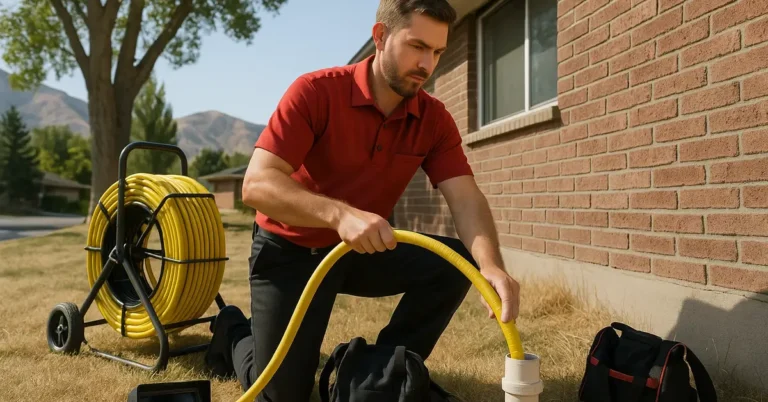
Calling a pro shouldn’t feel like handing over a blank check to a mystery. It’s really three tools. A motorized snake breaks through a physical clog. Hydro jetting scours the walls back to bare pipe with high-pressure water. And a camera inspection lets us actually see what’s going on down there.
Which one you need depends on the clog — we lay out the full trade-offs in our guide to hydro jetting versus snaking. The camera is the quiet hero on an old Salt Lake City line. Drop it down a cast-iron or clay pipe and it often finds the real story — heavy scale, a cracked transition, roots pushing through a joint — the stuff a bottle would never reach and you’d never see coming.
What Drain Cleaning in Salt Lake City Costs
Let’s talk numbers, because “call a plumber” shouldn’t feel like a leap into the unknown. What you’ll pay depends on the job. A single fixture is the most affordable fix. A main-line clog costs more, and hydro jetting more still, since both take more equipment and time — and longer or nastier lines push it higher. The honest answer is that the price tracks the work.
Now the escalation math that actually matters. Snaking the same line three or four times a year adds up fast — often more than one hydro jet that clears to bare pipe and holds for two to three years. Our own pricing is flat-rate and upfront: a $49 dispatch fee during business hours that’s applied to your repair, so you always know the number before we start. Want to get ahead of it entirely? The Home Health Plan includes a free annual drain clean, priority scheduling, and 15% off repairs.
Salt Lake City Drain Cleaning FAQs
Are chemical drain cleaners bad for your pipes?
They can be, especially on a fully stopped drain. The chemical pools in one spot, generates heat, and softens plastic joints while speeding corrosion in metal pipe. On the aging clay and cast iron common in older SLC homes, that damage happens faster. If water’s still moving, the risk is lower — if it’s standing still, skip the bottle.
Can you put Drano in a garbage disposal?
No. Any chemical drain cleaner can corrode the metal blades and melt the plastic components inside a disposal. Reach for the disposal instead with boiling water, a little dish soap, and ice — never the caustic jug.
When should I call a plumber instead of doing it myself?
Call when the drain is fully stopped, when the same clog keeps coming back, when more than one fixture backs up at once, or when you smell sewer gas. Those signs point past a simple clog to buildup, roots, or a main-line issue that DIY can’t reach. Here’s how to pick an emergency plumber in Utah you can actually trust.
How much does professional drain cleaning cost in Salt Lake City?
It depends on the job. Clearing a single fixture is the most affordable; a main-line clog costs more, and hydro jetting more still, since each takes more equipment and time. Our quotes are flat-rate with a $49 business-hours dispatch fee that’s waived if you proceed with the repair — so you get an upfront number and no surprises on the invoice.
How often should I have my drains professionally cleaned?
Every one to two years is a solid rhythm for most homes. Bigger households and older Salt Lake City plumbing benefit from the shorter end. If you’re snaking a drain more than twice a year, that’s your sign it’s time for a deeper cleaning rather than another patch.
Bottom line: the drain-store bottle has its place on a slow sink that’s still draining. But on a standing drain in an older Avenues or Sugar House home, it usually costs more than it saves — and sometimes it costs you the pipe. We’re a family-owned, Utah state licensed shop that’s spent 20-plus years on the Wasatch Front, and we’d rather give you an honest look than sell you a repair you don’t need. Give us a call at (801) 997-8909 — we’re here 24/7, and the $49 business-hours dispatch fee is waived when you go ahead with the work.