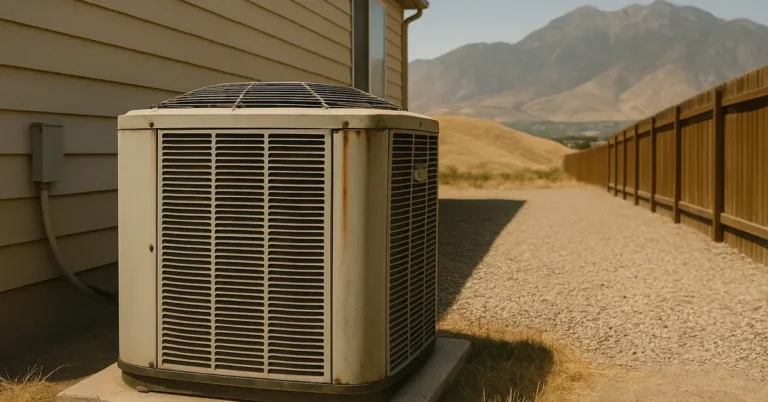
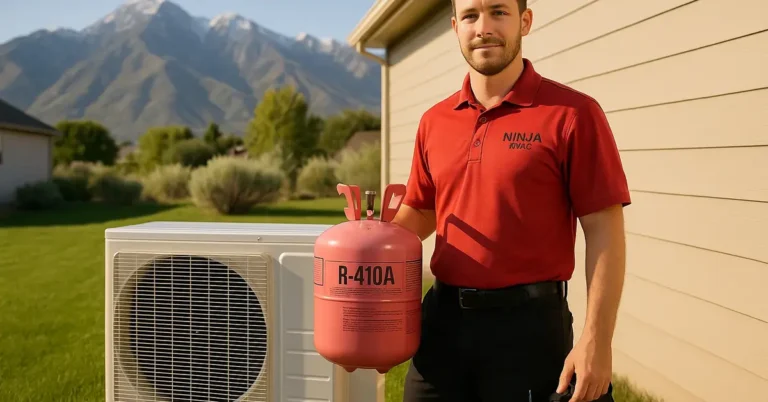
Last July, a homeowner in Lehi walked downstairs and stopped cold. A brown ring was spreading across the finished basement ceiling, right under the furnace closet. No burst pipe, no storm, and a bone-dry roof. So where was the water coming from?
This is the part that catches almost everyone off guard. Utah is high desert — Salt Lake summer humidity often sits in the teens, and the summer of 2025 was so dry we went 48 days without measurable rain. Most folks figure a water leak like this can’t happen here. That assumption is exactly why it floods so many basements every July.
The culprit is a part you’ve probably never thought about: your AC condensate drain line. It’s the quiet little pipe that carries water away from your AC — until it clogs and sends that water straight into your living space. Below, we’ll cover what the line does, why our dusty air clogs it in a drought, the signs to catch early, and when a five-dollar flush turns into a call you shouldn’t put off.
Already seeing water around the furnace or a stain creeping across the ceiling? Don’t wait it out. Give us a call at (801) 997-8909 and we’ll help you sort it out.
What Your AC Condensate Drain Line Actually Does

Your air conditioner does two jobs at once. It cools the air, and it pulls moisture out of it. As warm indoor air passes over the cold evaporator coil inside your air handler, water condenses on the metal — the same way a glass of iced tea sweats on a hot day.
All that water has to go somewhere. It drips into a drain pan, and the condensate line carries it away — usually to a floor drain or outside. On a hot Utah afternoon, a running AC can make several gallons a day. That’s a steady stream through one narrow pipe, all summer long.
Why does this matter more here than elsewhere? In our dry climate, your AC is basically the only thing pulling moisture out of your indoor air. The line runs constantly, with nowhere else for that water to go.
And here’s the local kicker. In most Utah homes, the furnace and air handler live in the basement — not a Florida-style attic or garage. When that little line backs up, the water doesn’t drip onto a slab.
It lands on finished ceilings, carpet, and drywall. The most expensive place in your house to get wet.
Why a Bone-Dry State Like Utah Still Gets Clogged Drain Lines
Almost every article online blames humidity for condensate clogs — algae and mold fed by muggy Gulf Coast air. That story makes sense in Houston. It falls apart in Eagle Mountain, where the summer air is drier than a soda cracker.
What actually clogs the line here? Two things working together.
Number one is dust. The Wasatch Front kicks up a lot of it, and that fine grit gets pulled into your system and caked onto the wet coil. Wet dust doesn’t stay dust — it turns to sludge, slides into the pan, and slowly chokes the line. A dirty filter makes it dramatically worse, which is why we’re always nagging people about a smart filter schedule for Utah’s dusty summers.
Cause number two is the moisture itself. Since your AC is the one appliance dehumidifying your home, every bit of indoor moisture runs through that line. Day after day, it narrows from the inside like a clogged artery — and you’d never know until it can’t keep up.
That day usually comes in July. When one of our rare monsoon bursts spikes the outdoor humidity, your system suddenly makes far more condensate than usual — and a line that was 80% blocked can’t keep up. The pan overflows, the water finds your ceiling, and we call it overflow night. We see a wave of these calls every summer.
Warning Signs Your Condensate Line Is Clogging
Good news: your house gives you plenty of warning before overflow night. Most people just don’t know what they’re looking at. Here are the signs we’d want you to catch early — and a quick way to tell whether it’s really the drain.
Water Pooling Around the Furnace or a Stain on the Basement Ceiling
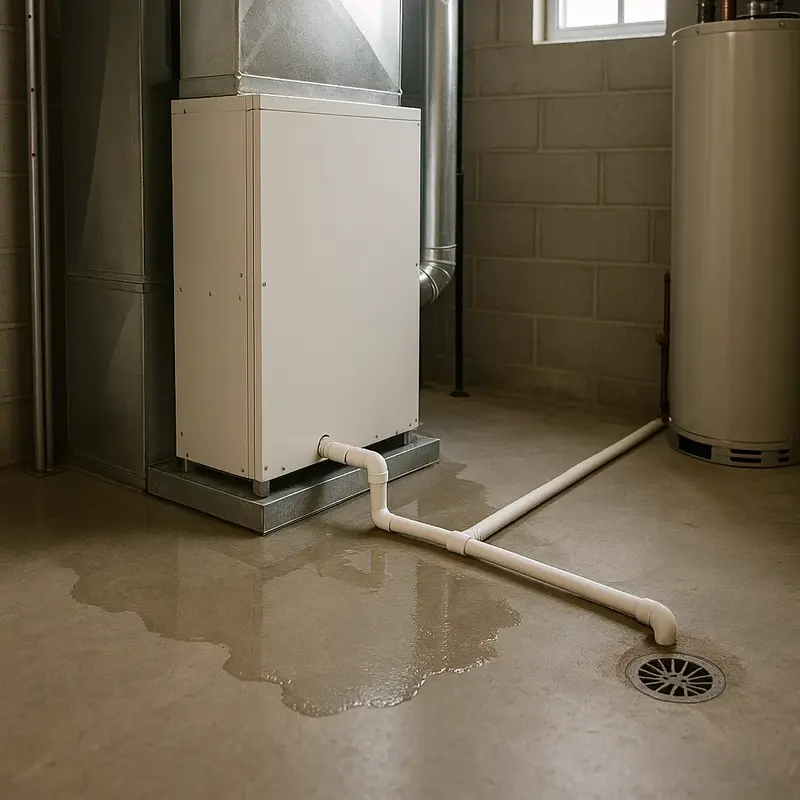
That brown ring is the big one. A damp spot by your air handler, a growing ring on the basement ceiling, or beads of water in the pan all point the same direction. If you can safely reach the pan and it’s holding standing water, the line isn’t draining. That water has one way out, and it’s down.
A Musty, Damp Smell When the AC Runs
Notice a moldy, sock-drawer smell that kicks in with the cool air? That’s standing water in the pan or a slow-draining line growing biofilm. Your nose often catches a clog before your eyes do. Don’t ignore it just because everything looks fine.
Your AC Shut Itself Off (and Won’t Stay On)
People misread this one all the time. If your AC quits cooling on the hottest day of the year and there’s water in the pan, it may have shut off on purpose — a safety device called a float switch killed the power to stop the pan from overflowing. Folks assume the AC is broken and keep resetting it. What it’s really telling you is the drain is blocked, and resetting it just invites the flood.
If you’ve got basement water and aren’t sure the AC is the cause, our guide on drains backing up in the basement can help you narrow it down.
Why a Few-Dollar Clog Turns Into a Five-Figure Basement Flood
Let’s talk about what’s on the line, because the math is rough. Caught early, the fix costs about five bucks in vinegar and ten minutes. Ignored, it becomes one of the priciest mistakes a Utah homeowner can make.
When a basement air handler overflows, the water doesn’t politely pool in a corner. It soaks into drywall, runs into insulation, and wicks across carpet and pad. According to industry restoration data, the average home water-damage insurance claim runs north of twelve thousand dollars, and restoration crews commonly quote several hundred to a few thousand dollars for even a contained ceiling repair.
Then there’s the part that scares us more than the drywall. A slow leak in a finished basement isn’t just water — it’s a mold clock. The EPA notes that mold can start growing within 24 to 48 hours of materials getting wet. A drip you don’t notice for a week is a remediation bill waiting to happen.
And here’s where it helps that we run HVAC and plumbing under one roof. A condensate flood is half AC problem, half water problem. Most shops diagnose the drain, then hand you off to a separate plumber for the wet basement — we handle both, one company, one call, the same way a summer sewer-line backup doesn’t have to mean juggling two contractors.
If water is actively spreading in your basement right now, that’s a same-day call. We offer a 120-minute emergency response during business hours across the Wasatch Front, and emergency calls are handled after hours. Reach us at (801) 997-8909 and we’ll get someone moving.
How to Flush Your AC Drain Line Yourself
Caught it early and the line’s only partly blocked? This is genuinely a homeowner job. Take it slow and put safety first — you’re working around electrical and a live system.
Step 1: Cut the Power and Find the Drain Access
Turn the AC off at the thermostat first, then kill the power at the breaker — don’t skip the breaker step. Once it’s safe, find your air handler and look for the white PVC drain line running off the pan. Most have a capped T-shaped fitting near the top, and that’s your access port. Pop the cap and keep a towel handy.
Step 2: Clear and Flush the Line (Vinegar, Not Bleach)
Plenty of advice online tells you to pour bleach down the line. We’d skip it. Bleach can pit some metal pans and degrade certain PVC, and if the line is fully blocked, it just sits there doing nothing. Plain white vinegar — or hot water with a squirt of dish soap — is the safer flush.
Pour about a cup through the access port and let it sit a few minutes to break down the sludge. For a stubborn clog, go to where the line exits outside and hold a wet/dry vac over the end to suck the gunk out. You’ll often pull a slug of gray sludge, and then you’ll hear it run free. If it still won’t budge, that’s the point to bring in professional drain cleaning for a fully blocked line.
One Utah-specific tip: because of our dust, flush the line every six to eight weeks during cooling season instead of the usual one to three months. Keep that filter changed, too. Want to get ahead of it? Run through our spring AC startup checklist before the first heat wave.
The Float Switch, Utah Code, and When to Call a Pro
Remember that AC that shut itself off? Let’s come back to it, because the float switch is the unsung hero of this story. It’s a small water-level sensor that cuts power before the pan can overflow — if yours tripped, it just saved your basement. Resetting it over and over without clearing the drain is how people turn a warning into a flood.
Here’s the piece no out-of-state article will tell you. Utah builds to the International codes, and IMC Section 307 requires that wherever a condensate spill could damage your home, the system has a backstop — either an auxiliary drain pan with its own separate drain, or a float switch that shuts things down before it overflows. That code exists for exactly the flood we’ve been describing.
When is it time to call us instead of flushing again? A few red flags:
- You have no float switch at all — common in older Lehi and Bountiful homes.
- The switch keeps tripping even after you’ve flushed the line.
- The line is fully blocked and a vinegar flush plus a wet/dry vac won’t budge it.
Clearing a stubborn condensate line runs $129, and on weekdays, 9 AM-5 PM, the $49 dispatch fee is applied to your repair. We’re a family-owned, Utah state licensed shop that’s been doing this for 20-plus years across Lehi, Eagle Mountain, and Provo. Honestly, the cheapest path is to never get here at all — our $39 AC tune-up includes flushing and checking the condensate line, and the Home Health Plan bakes that into two visits a year so the drain never gets the chance to clog.
Condensate Drain Line FAQ
Why is my AC leaking water inside the house?
Nine times out of ten, it’s a clogged condensate drain line. Your AC pulls moisture from the air, that water drips into a pan, and a blocked line sends it overflowing into your home instead of safely outside. A frozen coil or cracked pan can do it too, but the drain is the usual suspect.
Why does my AC drain clog if Utah is so dry?
Because our clogs come from dust, not humidity. Wasatch Front grit cakes onto the wet coil, turns to sludge, and chokes the line. On top of that, your AC is the only thing dehumidifying your home, so all that moisture runs through one pipe all summer. Dry air outside, busy little drain inside.
Can I unclog my AC drain line myself, or should I call a pro?
A partial clog is a fair DIY job — power off, flush with vinegar, clear the outdoor end with a wet/dry vac. Call a pro when there’s standing water you can’t clear, the line is fully blocked, or the float switch keeps tripping. We charge $129 to clear a stubborn line, with the weekday 9 AM-5 PM dispatch fee applied to your repair.
What is the float switch, and why did it shut my AC off?
It’s a safety sensor that cuts power when water backs up in the drain pan. If your AC shut itself off and there’s water in the pan, the switch did its job — it stopped a basement flood. Don’t just reset it. Clear the drain first, or you’ll flood the very space it protected.
How often should I clean my condensate drain line in Utah?
Most guides say every one to three months. We’d push that to every six to eight weeks during cooling season here, because our dust loads the line faster. Keeping your air filter fresh helps too. Or let an AC tune-up handle the flush for you.
Here’s the takeaway from someone who’s wrung out a lot of Utah basements. In a dry state, the condensate line is the leak nobody sees coming, and because our air handlers live downstairs, it lands in the worst possible spot. Ten minutes and a cup of vinegar every few weeks keeps you out of a five-figure mess. When the line won’t clear, the switch keeps tripping, or there’s already water on the floor, call us at (801) 997-8909 — we’re open 7 days a week, with a 120-minute emergency response during business hours when your basement can’t wait.