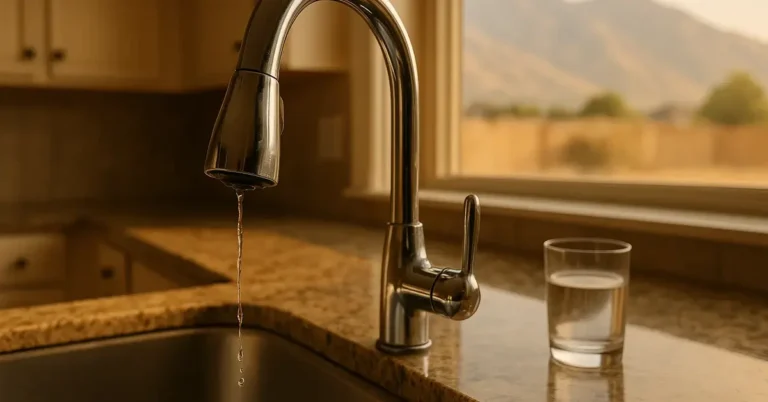
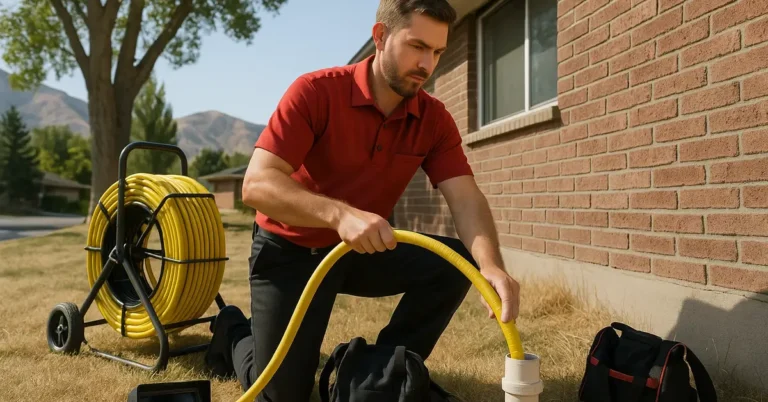
Picture a second-floor laundry room in a newer Lehi home. The family’s gone for the weekend. The washer sits quiet — but the rubber supply hose behind it, the one nobody’s looked at in nine years, finally gives out. Water starts pumping. Not a trickle. A burst supply hose gushes clean water under full household pressure, and it doesn’t stop until someone shuts the main. By Sunday night it’s soaked through the ceiling, down the walls, and pooled in a finished basement. A washing-machine hose claim like that runs well into the thousands of dollars.
Here’s the part most Utah homeowners never hear: it’s not the drain that floods your house. It’s the supply line — the cheap rubber hose carrying clean water in under constant pressure. And on the Wasatch Front, three things stack up to make that $5 hose a bigger risk here than almost anywhere. Let’s walk through why, and the simple fix stack that stops it cold.
If the hoses behind your washer are older than a few years, give us a call at (801) 997-8909. We’re happy to take a look.
Why Washing Machine Supply Hoses Burst
Your washer supply hose lives a hard life. It holds back full household water pressure every hour of every day, whether the machine is running or not. Most people picture a hose failing in some dramatic pinhole spray. What actually happens is quieter and sneakier — the rubber rots from the inside, where you can’t see a thing.
The Rubber Liner Fails Where You Can’t See It

Inside every rubber hose is a liner, a set of washers, and O-rings that hold the seal. Those parts degrade with age and pressure until one day the wall gives out. Most washing-machine water-damage claims trace back to a failed supply hose — and those failures overwhelmingly strike hoses that are years old and worn. That’s the scary part. The hose looks fine on the outside right up until the morning it doesn’t.
Water Hammer and High Pressure Do the Rest
Ever hear that bang in the pipes when the washer valve snaps shut? That’s water hammer — a pressure spike slamming against the hose wall. Plumbing is built for normal household water pressure, and there’s a sweet spot it’s designed to stay within. Push past that range and burst risk climbs fast. One thing to keep straight: this is the supply line, not the drain. A drain clog sends dirty water back up slowly. A supply-line burst sprays clean water out under pressure — a very different, much faster kind of flood.
Why This Is a Bigger Risk in Utah Homes
Now stack Utah on top of an aging hose. If you live along the Wasatch Front, you’re dealing with two conditions that quietly speed up hose failure — and a third that turns a small failure into an expensive one. This is the story no national plumbing blog will tell you, because it only applies here.
Hard Water Eats the Rubber From the Inside
The Wasatch Front sits on some of the hardest water in the country. That mineral scale is abrasive, and it chews through the rubber washers, O-rings, and hose liner that seal your washer’s supply. A hose that might reach five years in soft-water country can degrade faster here. Our hard water does a number on every seal in the house — this hose is just one of the first to go.
High Wasatch Front Pressure Pushes Past the Limit
Homes sit at different elevations along the bench, and to reach the higher ones, cities push water hard. In some spots, incoming pressure runs well past normal — high enough to push a tired hose over the edge. High pressure and an aging rubber hose are a bad pair. The fix is a pressure-reducing valve (a PRV) that brings your incoming pressure back into the safe range. We can test your pressure in a few minutes and tell you if you need one.
Upstairs Laundry Means Downstairs Damage
Plenty of newer Utah homes put the laundry room on the second floor. Convenient? Sure. But it means a burst hose upstairs sends water straight down — through the ceiling, into the walls, and onto that finished basement you spent good money on. Same $5 part. Ten times the damage.
How to Flood-Proof Your Washer Hookup
Good news: there’s no magic gadget you have to chase. It’s a stack of small, cheap steps, and each one covers a gap the others leave. Do a couple and you’re far safer. Do all of them and a weekend away stops being a gamble.
Upgrade to a Braided Steel Hose

Swap the rubber for braided stainless steel. The braided sleeve resists the bulging and rot that kill rubber, and if you handle it yourself, a pair of hoses costs just a few dollars in parts at any hardware store. Plan to replace even the braided ones every three to five years. Want it done right and checked for leaks? Our Washer Hose Replacement is $129 for a single line or $197 for the pair, and we’ll eyeball the whole hookup while we’re back there.
Know and Use Your Shutoff Valve
Here’s something most folks don’t realize: you already have a shutoff. Utah’s plumbing code (IPC 606.2) requires an individual shutoff valve on the supply to every appliance, so there’s one behind your washer right now. Most homeowners have never touched it. Turn it off when you leave town for more than a day or two. Thirty seconds of effort, zero pressure on those hoses while you’re gone.
Add a Drain Pan and a Whole-Home Leak Detector
A drain pan under the machine catches slow drips before they spread. For the big worry — a burst while you’re away — you want a leak detector. Here’s the honest part: those flow-triggered “FloodSafe” hoses often don’t trip on a washer, because a burst doesn’t create the sudden flow spike they need. A real whole-home leak sensor with auto-shutoff is the safeguard that actually works. We install a simple Leak Detector Alarm for $68, and can set up a shutoff system that kills the water the moment it senses a leak.
Want to get ahead of all of this in one shot? Because we do both plumbing and HVAC, we can swap the hose, check the shutoff valve, test your pressure, and add a supply-line upgrade on the water heater too — one visit, one call at (801) 997-8909.
Your Insurance Might Not Cover a Neglected Hose
People assume homeowners insurance has their back on this. Sometimes it does. Washing-machine hose failures are one of the most common household water-damage claims, and insurers pay out heavily for them every year. But read the fine print. An insurer can deny a claim as neglect if the burst hose was clearly old and worn out.
Think about what that means here. An eight- or nine-year-old rubber hose, sitting in Utah hard water under high pressure, is the exact profile an adjuster points to and says “you should’ve replaced that.” A fresh braided hose every few years is the cheapest insurance you’ll ever buy against a five-figure loss and a denied claim. When you need a plumber you can trust in a flood emergency, you also want one who helped you avoid it in the first place.
Frequently Asked Questions
Why do washing machine supply hoses burst?
They fail from the inside as the rubber liner, washers, and O-rings wear out with age and pressure. High water pressure and water hammer speed it up. On the Wasatch Front, hard water accelerates the wear. Most hoses that fail have been in service for years and are visibly worn.
How often should you replace washing machine hoses?
Every three to five years, even braided steel ones. In Utah’s hard water, lean toward the shorter end. If yours are older than five years or you can’t remember installing them, replace them now — it’s a cheap job that prevents a costly flood.
Should you turn off the water to your washing machine when not in use?
For daily use, no need. But before you leave town for more than a day or two, absolutely. Utah code already put a shutoff valve behind your washer. Turning it off takes the pressure off those hoses while nobody’s home to catch a leak.
Are braided stainless steel hoses better than rubber?
Yes. The braided steel sleeve resists the bulging and rot that cause rubber hoses to burst. They cost only a few dollars more and last longer. They’re not permanent, though — still plan to replace them every three to five years.
Does homeowners insurance cover a burst washing machine hose?
Often, but not always. If the failed hose was clearly old and worn, an insurer can deny the claim as neglect. Keeping fresh hoses on a replacement schedule protects both your home and your coverage.
The Cheapest Flood Insurance You’ll Ever Buy
That $5 rubber hose behind your washer is the biggest small risk in your house. A braided upgrade, a shutoff you actually use, and a leak sensor add up to real peace of mind for very little money. We’re family-owned, Utah state licensed, and we’ve spent 20-plus years keeping Wasatch Front basements dry — plumbing and HVAC under one roof. Give us a call at (801) 997-8909 and we’ll check the hose, the shutoff, and your water pressure in one visit. The $49 business-hours dispatch fee is applied to the work.