It’s 102 degrees out on the Wasatch Front. Your AC has run all afternoon. But the air from the vents is warm, the house won’t cool, and when you check the indoor unit you find something that makes no sense at all: ice. Actual ice, coating the metal on the hottest day of the year.
That frost is a frozen evaporator coil — the part inside that’s supposed to pull heat out of your air. And yes, a coil can freeze solid in July. Here’s the good news for the homeowner staring at it right now: this is almost always an airflow problem, not a dead system. Shut it down fast and you’ve probably saved the expensive part. We’ll walk you through it — turn it off now, thaw it the safe way, then figure out why it froze so it doesn’t happen again.
First Thing: Turn Your AC Off Right Now
Before you read another word, go to your thermostat. Switch it from COOL to OFF. Then set the fan from AUTO to ON. That keeps the blower pushing room-temperature air across the iced-up coil, which is exactly what melts it.
Why the rush? Because a frozen coil and a running system are a dangerous combination. When that coil ices over, refrigerant that’s supposed to boil into a gas can stay liquid and slug straight back into your compressor — the heart of the whole system, sitting in the unit outside. Compressors are built to pump gas, not liquid. Feed them liquid and they fail.
And here’s the part that should make you walk to the thermostat right now: a compressor replacement is no small bill. It’s one of the most expensive repairs your system can need — a costly fix priced only after a proper assessment. The frozen coil that triggered it? Often something as simple as a clogged air filter. Shut the system down in time and you almost certainly protected the costly part.
So that’s the rule, plain and simple: never run your AC with a frozen coil. If you’re not sure what you’re looking at, give us a call at (801) 997-8909 and we’ll talk you through it — no pressure, no obligation.
How to Safely Thaw a Frozen AC Coil
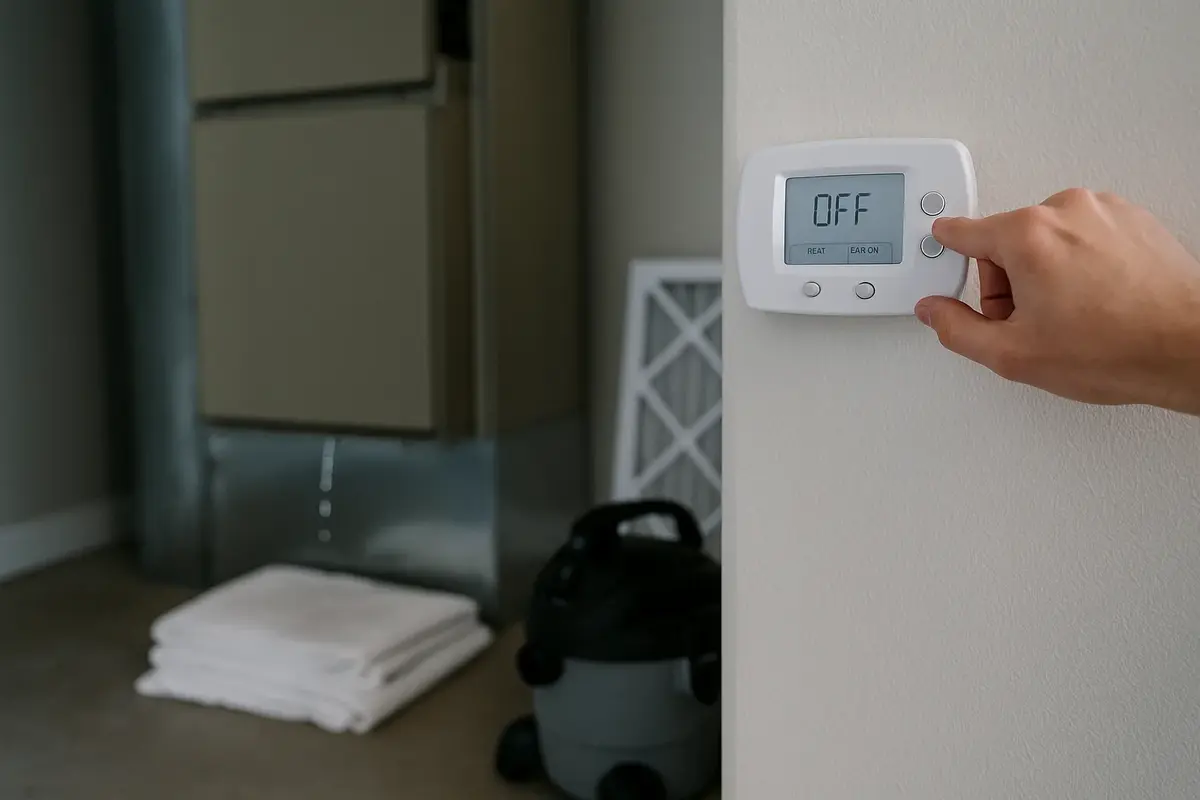
Once the system’s off, thawing is mostly a waiting game. But there are a few moves that speed it up and a couple of mistakes that can turn a cheap fix into an expensive one. Here’s how to do it right.
Step 1: Shut It Down and Run the Fan
You may have already done this — good. Thermostat to OFF, fan to ON. The blower now moves warm house air over the coil and melts the ice gently, no tools required. Whatever you do, resist the urge to grab an ice pick or screwdriver and chip at the frost. The coil walls are thin copper. One slip and you’ve punctured them, and a refrigerant leak turns this into a repair you can’t finish yourself.
Step 2: Swap the Air Filter While You Wait
Now’s the time to pull your air filter. If it looks gray, fuzzy, or packed with dust, that’s very likely your culprit right there. Slide a fresh one in. A clean filter is the single biggest thing standing between you and another freeze — more on why that matters so much in Utah in a minute.
Step 3: Catch the Meltwater Before It Damages Your Floor
All that ice has to go somewhere as it melts. Normally it drips into the condensate pan and drains away, but a big freeze can overflow the pan fast and soak the floor, the drywall, or your finished basement — the same way the AC condensate drain that floods Utah basements does. Lay down towels around the indoor unit. Keep a shop vac handy if you’ve got one. Five minutes of prep here beats a water-damage cleanup later.
Step 4: Wait It Out, Then Restart and Watch
Patience is the hard part. A frozen evaporator coil usually takes one to four hours to thaw completely — sometimes up to a full day if it froze solid. Carrier recommends leaving the system off at least three to four hours before you restart it, just to be sure the ice is gone. And skip the hairdryer or space heater. Blasting cold metal with concentrated heat can crack components through thermal shock. Let the fan do the slow, safe work. Once everything’s dry, flip it back to COOL and watch closely. Cold air means you won. Ice creeping back means it’s time to call a pro.
Why Your Coil Freezes Over in Utah’s Peak Heat
Let’s settle the paradox, because it bugs everybody: how does a coil freeze when it’s 100 degrees outside? It’s the same heat that makes an AC strain to keep up on Utah’s hottest days. The answer is airflow, not temperature. Your coil gets very cold by design. As long as enough warm return air keeps flowing across it, that warmth keeps the surface above freezing. Choke off that airflow, though, and the coil temperature drops below 32 degrees — and the moisture in your air freezes right onto it (the same moisture that managing indoor moisture levels with whole-house dehumidifiers can control during Utah’s monsoon season). Less airflow, more ice. That’s the whole story.
Which raises the real question: what’s choking your airflow? Run them in order and the usual suspect comes first — a dirty filter, then a dirty coil, blocked or closed return vents, a clogged condensate drain, low refrigerant from a leak, and a thermostat set unreasonably low. And here in Utah, that top cause shows up faster than the national guides admit.
The #1 Cause: A Filter Choked by Utah Dust
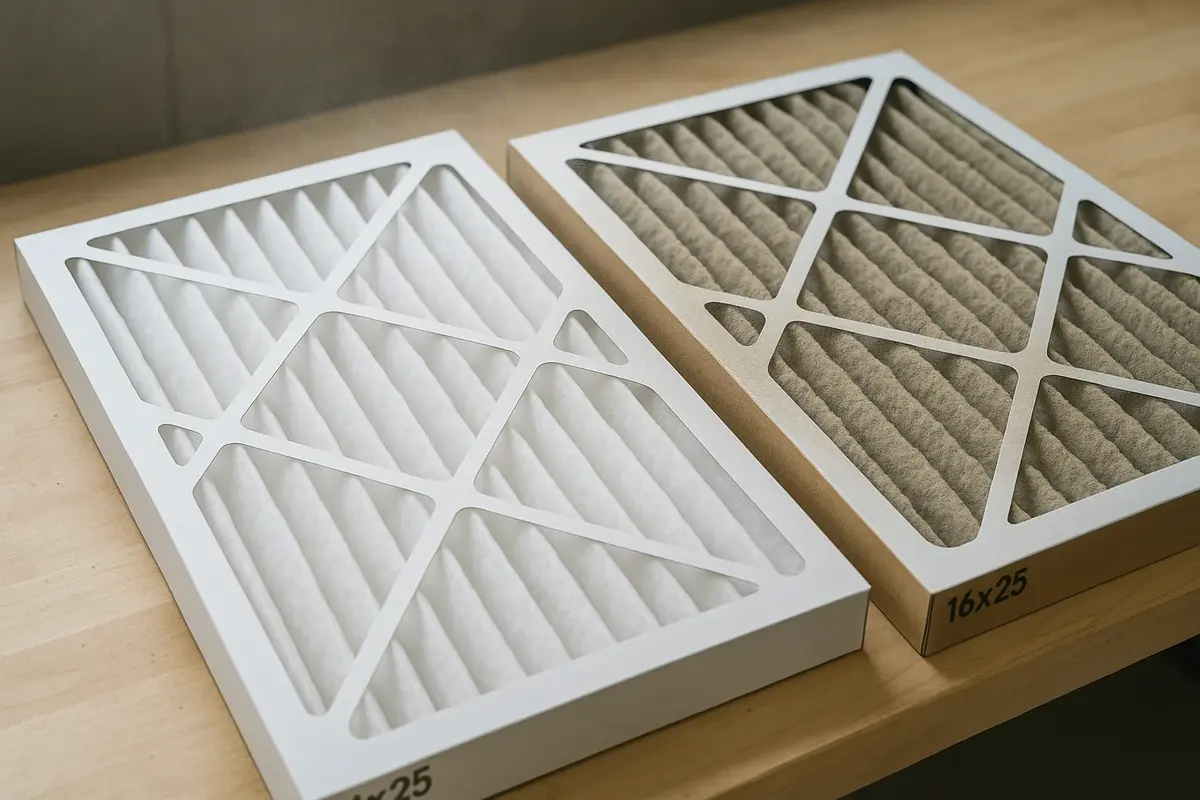
Utah’s high desert is hard on filters. Our air is bone-dry, which keeps fine dust lightweight and airborne longer, so it drifts deeper into your system instead of settling. Add the Great Salt Lake’s shrinking shoreline — the exposed lakebed periodically lofts PM10 dust plumes across the Wasatch Front, including one in January 2025 that stretched from Farmington Bay clear into Utah County. All that grit loads a filter weeks faster than the national “change it every 90 days” rule assumes. A choked filter starves the coil, the coil drops below freezing, and you get ice. The fix is cheap and worth doing on a schedule — here’s how often to change your filter during Utah’s dusty summer.
Altitude and Airflow at 4,200 Feet
There’s a second Utah factor the manufacturer blogs ignore. Salt Lake sits around 4,200 feet, and the air up here is thin. To deliver the same cooling, your blower has to move 15 to 20 percent more air than it would at sea level. So your motor is already working harder before anything goes wrong.
A filter that’s only “kind of dirty” at lower elevation is enough to tip a straining system into a freeze. We see this on 100-degree days across the valley — it’s why Utah’s altitude quietly cuts your AC’s cooling power. The Department of Energy backs up the math: a dirty filter makes your system use 5 to 15 percent more energy, and dirty coils can cut efficiency by up to 15 percent (a clean coil is also one of the simplest ways to cut your Utah summer cooling bill) — the same airflow loss that ices the coil.
Want someone to clean the coil and check the charge before peak heat hits? Our Home Health Plan covers two professional tune-ups a year and priority scheduling for $18.99 a month. Or just call us at (801) 997-8909 and we’ll get you on the books.
Froze Once vs. Keeps Freezing: When to Call a Pro
Here’s the simple decision rule, the one no manufacturer blog will give you straight. Froze once, you changed the filter, and it’s been blowing cold ever since? You handled an airflow problem. Pat yourself on the back and keep that filter clean. But if it thaws, runs fine for a day, then freezes all over again — stop chasing it yourself and call a pro.
A repeat freeze usually points to something you can’t safely DIY — the kind of fault our Utah AC repair technicians diagnose and fix in a single visit. It might be low refrigerant from a leak, a clogged condensate drain backing up, or a blower motor that’s losing its strength. Low refrigerant is the common one, and it’s worth knowing the warning signs your AC is low on refrigerant — a leak is never a “top it off and forget it” job, which is exactly why a refrigerant leak is more than just a cooling problem.
Call us and you get a Utah state licensed, family-owned crew that’s worked the Wasatch Front for 20-plus years. Every truck carries 200 or more parts, so we usually diagnose and fix the freeze in a single visit instead of leaving you sweating for a return trip. Our quotes are flat-rate and upfront — no salespeople disguised as technicians. The dispatch fee is $49 weekdays 9 AM-5 PM, applied to your repair.
How to Keep Your Coil From Freezing Again This Summer
Prevention here is genuinely easy, and it’s mostly about airflow. Check your filter every month during cooling season and replace it every 30 to 60 days through our dusty summers — not the 90-day rule you’ll see everywhere else. ENERGY STAR recommends checking monthly during heavy use, and in Utah’s high desert that’s the floor, not the ceiling.
While you’re at it, walk the house and make sure your return vents are open and clear — no rugs, furniture, or boxes parked in front of them. Closed-off returns starve the coil the same way a dirty filter does. The bigger play is a tune-up before the heat peaks, which cleans the coil and checks the refrigerant charge before a freeze ever starts. That’s exactly what our Home Health Plan handles with two visits a year, and you can see what to expect from an AC tune-up or read up on cleaning your condenser after a Utah winter. Keep the air moving and the coil clean, and freeze-ups mostly just stop happening.
Frequently Asked Questions About Frozen AC Coils
Why is my AC freezing up in summer?
It comes down to airflow, not the outside temperature. When too little warm air moves across your evaporator coil, the coil drops below freezing and moisture ices onto it. In Utah, a dust-clogged filter is the most common trigger, especially during our dry, dusty summers.
How long does it take for a frozen AC coil to thaw?
Usually one to four hours with the system off and the fan running, though a solid freeze can take up to a full day. Carrier recommends leaving it off at least three to four hours before restarting, so don’t rush it.
Can I run my AC while the coil is frozen?
No — shut it off right away. Running a frozen system can send liquid refrigerant back to the compressor and ruin it, turning a cheap filter fix into a major compressor repair. Switch the thermostat to OFF and the fan to ON.
Why does my AC keep freezing up after I thaw it?
When it freezes again and again, that usually means more than airflow. The likely culprits are low refrigerant from a leak, a clogged condensate drain, or a weakening blower motor. If the outdoor fan won’t spin at all, suspect a capacitor cooked by the July heat instead. Those need a pro — here are the signs your AC is low on refrigerant.
Does a frozen evaporator coil mean I’m low on refrigerant?
Not always. A dirty filter or blocked vents freeze coils far more often than low refrigerant does. But if you’ve already cleaned the airflow path and it still freezes, a refrigerant leak moves to the top of the list and should be diagnosed.
Finding a frozen coil on a 100-degree day looks like a catastrophe, but it usually isn’t one. Nine times out of ten it’s airflow — a dusty Utah filter or a starved coil — and it’s fixable if you shut the system down before the ice can hurt your compressor. So remember the move: off now, thaw it slow and safe, fix the airflow, and if it freezes again, get it diagnosed.
If it keeps icing over or you’d rather not guess, give us a call at (801) 997-8909. We’re a family-owned, Utah state licensed crew that’s thawed and diagnosed these all over the Wasatch Front, we’re open 7 days a week, and the $49 dispatch fee (weekdays 9 AM-5 PM) is applied to your repair.