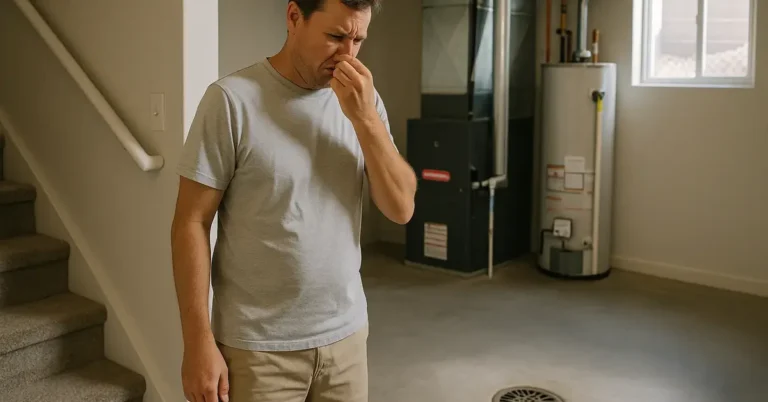
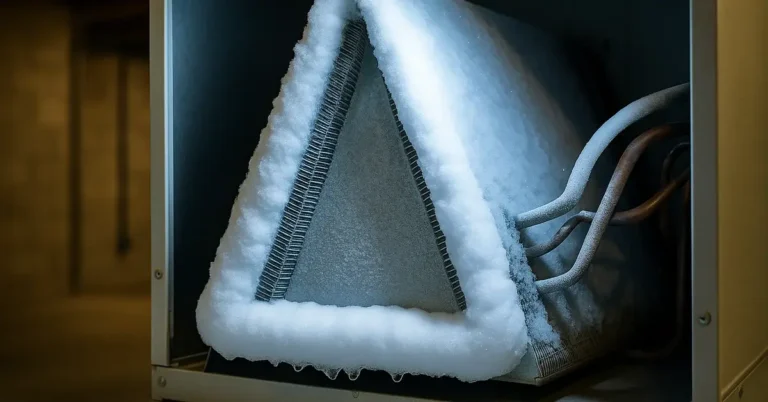
It’s a late-July afternoon on the Wasatch Front. The thermometer reads 96, the kind of dry Utah heat that bakes the driveway and makes the lawn crunch. Inside, your AC is humming away — you can hear it — but the house keeps creeping warmer. You walk out back, look at the condenser, and notice the big fan on top isn’t spinning. Just that low electrical drone, going nowhere.
Here’s the part that surprises most folks: the piece that just stranded you on the hottest day of the year is probably a little metal can called a capacitor. It runs about twenty bucks at the parts counter. The cheapest component in your entire cooling system is the one most likely to leave you sweating.
We’ll walk through how to spot a failing capacitor, why late July in Utah is exactly when it dies, and why ignoring it can drag your compressor — a part that costs thousands — down with it. If your fan’s not spinning right now, give us a call at (801) 997-8909. We’re happy to take a look.
What an AC Capacitor Actually Does
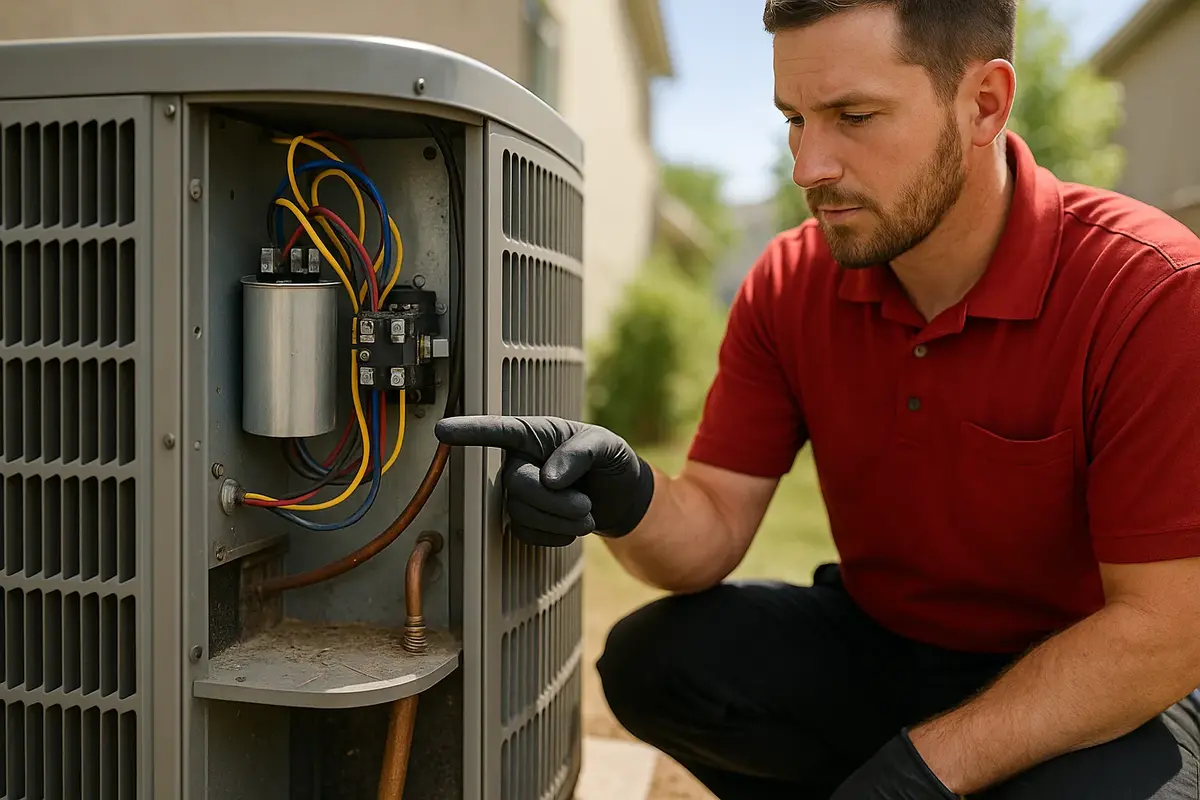
Think about pushing a heavy storm door that’s stuck. It takes a real shove to get it moving, then almost nothing to keep it swinging. Your AC motors work the same way. They need a hard jolt to break loose, then a steady nudge to keep going.
That jolt comes from the capacitor. It’s a small cylinder, usually mounted inside your outdoor condenser cabinet, and its only job is to store electrical energy and release it in a burst. No burst, no spin.
Most home AC units use what’s called a dual-run capacitor. One can, two jobs: it gives the outdoor fan motor its push and the compressor its push. You don’t need to memorize the names. Here’s what matters — every spinning thing in your system leans on this one part.
So when a twenty-dollar capacitor quits, it doesn’t matter that the compressor is fine and the refrigerant is full. Nothing moves. The whole system sits there humming, dead in the water, because the one part that gets it started gave up.
Signs of a Bad AC Capacitor
The good news? A dying capacitor usually warns you. You just have to know what you’re hearing and feeling. Here are the symptoms we get called about most, starting with the one that lands on our schedule almost daily in July.
Humming but No Fan Spinning
This is the classic. You hear that steady electrical hum from the outdoor unit, but the fan blade on top sits perfectly still. The motor’s getting power and trying to start — that’s the hum — but without the capacitor’s jolt, it can’t break loose and turn. Leave it humming and the motor overheats fast, so shut the system off at the thermostat right away. (A hum is just one of several noises worth knowing — we cover the rest in our guide to weird AC noises and what they mean.)
AC Not Blowing Cold Air
Sometimes the fan inside is still pushing air through your vents, but it’s room-temperature or barely cool. That points to the compressor side of a dual-run capacitor failing (though weak airflow can also mean a frozen evaporator coil in summer). The compressor is what actually cools the refrigerant, and if it can’t start, you get airflow with no cold. Air that moves but never chills is a telltale sign, though it can also point to the warning signs of low refrigerant.
Hard Starts and Random Shut-Offs
A capacitor rarely dies all at once. Usually it weakens first. You might hear a strained click-and-grunt when the unit kicks on, like it’s struggling to wake up. Or the system runs a few minutes, then trips off on its own, then tries again. That on-again, off-again cycling is a capacitor losing its punch — strong enough to start sometimes, too weak to keep things running.
Climbing Energy Bills and a Burning Smell
A weak capacitor forces your motors to work harder to do the same job, and that extra strain shows up on your Rocky Mountain Power bill. If your usage jumped this summer and the house still isn’t comfortable, a tired capacitor could be the reason, and it’s worth knowing the other levers for cutting your summer cooling costs. And if you ever catch a sharp, electrical burning smell near the outdoor unit? Shut it down and call us. That’s a part cooking itself, and it shouldn’t wait.
Why July Heat Kills Capacitors in Utah
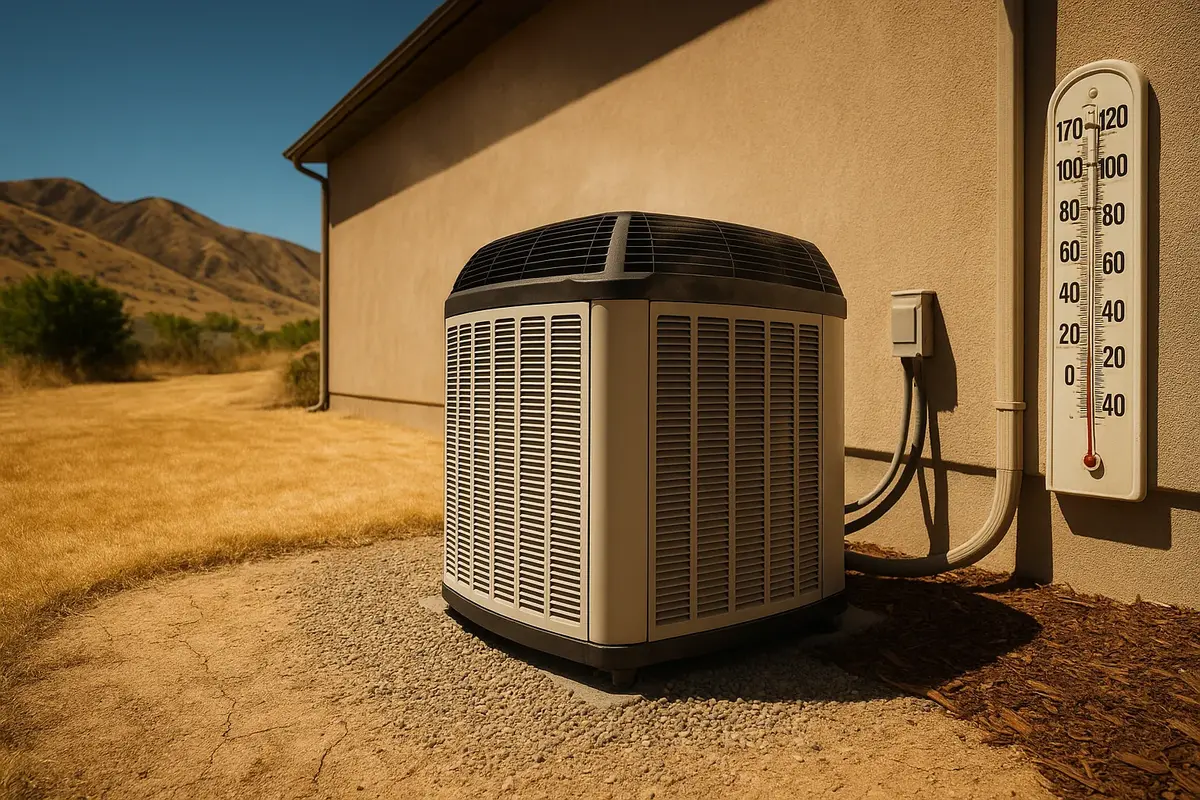
Capacitors fail year-round. But they fail in clusters during the last week of July, and that’s not bad luck — it’s physics. This is the part almost no other guide explains, so stick with me.
The Temperature Rating Most Homeowners Never Hear About
Every capacitor has a maximum operating temperature, and for the common motor-run type it sits around 70°C — that’s about 158°F. Push past that rating and the insulation inside breaks down quickly, and the part shorts or fails open.
Now picture your condenser. It’s a dark metal cabinet sitting in full sun. Where it sits matters too, since your condenser’s placement shapes how well it performs. On a 96°F afternoon, the metal skin of that cabinet and the components baking inside it run far hotter than the air around them. The capacitor lives right in that oven, flirting with its limit just when the system needs it most. Salt Lake City’s daily highs peak around 96°F during the July 23–27 stretch — exactly the window we field the most fan-not-spinning calls.
Utah’s Altitude, Sun, and Long Run Cycles
Here’s where Utah is different from the Texas and Florida heat those national articles love to talk about. Our heat is dry and high. At Wasatch Front elevation, under those famously clear skies, the sun hits your outdoor cabinet with more intensity than it would at sea level. More direct solar load means a hotter capacitor, day after day.
Then there’s run time. During the late-July peak, your AC barely shuts off. It runs near-continuously through the afternoon and into the evening, so the capacitor never gets a cool-down break to recover. Stack a record-hot stretch on top — 2025 was Utah’s hottest year in nearly a century — and you’ve got a part being cooked and overworked at the same time. Add a summer thunderstorm rolling off the Wasatch with a power surge, and that’s the final straw. This is the same heat strain that makes your whole AC fight harder at 95 degrees, made worse by our altitude cutting into cooling power.
Want to get ahead of it before the heat hits? Our Home Health Plan includes two tune-ups a year, and we test your capacitor’s strength every spring — catching a weak one before July does. Here’s what a spring AC tune-up covers. Or just call us at (801) 997-8909.
What to Do (and What Not to Touch)
There’s one safe check you can do from arm’s length. Turn the unit off at the thermostat and the breaker. Then, with a long stick or a wooden dowel — not your hand — give the fan blade a gentle nudge through the grille. If it was frozen and that little push gets it spinning freely, your capacitor is the likely culprit. The motor was fine; it just had no jolt to start.
That’s where the at-home work stops. Please don’t open the unit to swap the part yourself. Here’s the real danger: a capacitor stores a high-voltage charge even after the power’s been off for a while. Touch the wrong terminals and it can discharge through you. That’s not a scare tactic — it’s why this is a licensed-tech job, not a weekend project.
Honestly, the part is cheap. What you’re really paying for is a tech who can safely discharge it, match the exact microfarad rating your system needs, and confirm nothing else got damaged. Get the rating wrong and you’ll be back here in weeks. If you’d rather try one safe step first, here’s how to reset your AC unit safely. After that, call a pro.
When you call us, you get a Utah state licensed technician driving a truck stocked with 200+ parts — including the common capacitor sizes — so we fix it on the first visit. That’s what fast, dependable AC repair on the Wasatch Front looks like. We’ve been family-owned and serving the Wasatch Front for 20-plus years. No salespeople in tech uniforms, no upsell theater.
Replacement Cost and the $20-Part Cascade
Let’s talk numbers, because that’s what brought a lot of you here. At Ninja, a standard A/C capacitor replacement runs $311, flat-rate — diagnosis, the part, the safe install, and a quick check that the rest of your system is healthy, all in one number. No surprise add-ons after the fact. On weekdays 9 AM-5 PM, our $49 dispatch fee is applied to your repair.
You might be thinking the part is twenty bucks, so why isn’t the bill? Fair question. You’re paying for the safe trip, the right diagnosis, and the exact-match part installed by someone who won’t get zapped or guess the rating. That’s the value — and we quote it upfront, so there’s never a number on the invoice you didn’t agree to.
Now the part that gives this post its name. While a capacitor is dying, it forces your fan motor and compressor to muscle through every start with too little help, and that strain wears them out early. Ignore the cheap part long enough and you can lose the compressor — a repair that runs into the thousands, sometimes more than the AC is worth. A twenty-dollar can, left alone, can total your whole system. Catching it early is the whole game.
Frequently Asked Questions
Why is my AC humming but not turning on?
Hear a hum but no fan spin? That almost always points to a failed capacitor. The motor’s getting power and trying to start, but without the capacitor’s jolt of energy, it can’t break loose and turn. Shut the system off so the motor doesn’t overheat, then call a tech to confirm and replace the part.
Can you run an AC with a bad capacitor?
You shouldn’t, even on the days it limps along. Running with a failing capacitor forces the motor and compressor to strain on every cycle, and that’s exactly what turns a cheap fix into an expensive one. You also risk overheating the fan motor. Best to shut it down and get the part swapped.
How long do AC capacitors last?
About 10 years is typical, with a range of roughly 5 to 20. In hot, high-demand climates like ours, they trend toward the shorter end — all those long Utah summer run cycles and that intense high-altitude sun add up. A spring tune-up that tests the capacitor’s strength is the easiest way to catch a weak one before it strands you.
How much does it cost to replace an AC capacitor in Utah?
At Ninja, a standard A/C capacitor replacement is $311 flat-rate — that covers the diagnosis, the part, and the safe install. The weekday (9 AM-5 PM) dispatch fee is waived when you proceed with the repair. We quote the full number upfront, so there’s no surprise on the invoice.
Can a bad capacitor damage the compressor?
Yes, and that’s the real reason not to wait. A weak capacitor makes the compressor work harder to start every single cycle, and that repeated strain can wear it out years early. The compressor is the most expensive part in your system — losing it can cost thousands. Replacing a struggling capacitor early protects it.
The cheapest part in your AC is the one most likely to leave you sweating on a 96-degree afternoon — and the one that can quietly take your compressor down with it if you let it slide. Catch it early and it’s a quick, affordable fix. Wait too long and it’s a whole new system.
If your fan’s not spinning or your house won’t cool, give us a call at (801) 997-8909. We’re open 7 days a week — and handle emergency calls after hours — with a guaranteed 120-minute emergency response during business hours across the Wasatch Front. One call, and we’ll get you cool again.