
Picture your house in mid-July. You’re floating on Bear Lake or halfway to Moab, and back home your place sits sealed up tight while the Salt Lake Valley bakes past 100 degrees. Nobody’s there to hear the drip. A $5 rubber washer hose lets go, or a P-trap dries out, and a week later you walk into a soggy floor and a smell you’ll never forget. That’s the difference between a great trip and a homecoming that costs you thousands.
The good news? A few minutes before you lock the door protects the whole thing. We’re a family-owned crew that’s spent 20+ years on the Wasatch Front, handling both HVAC and plumbing under one roof. This is the pre-vacation checklist we’d run in our own homes — built for a Utah summer, not a generic one. By the end you’ll know exactly what to shut off, what to leave on, and how to come home dry.
Want a second set of eyes before a long trip? Give us a call at (801) 997-8909 — we’re happy to help.
Should You Shut Off Your Water Before Leaving Town?
Short answer: it depends on how long you’re gone. Longer answer? The length of your trip is the whole decision. A leak that runs for two hours is a headache. A leak that runs for nine days in a closed-up, 100-degree Utah home is a mold-farm and a floor replacement. That same relentless heat also works on the pipes themselves, which is why the way summer heat expands and stresses your pipes matters most when nobody is home to catch a failure.
Here’s the framework we give neighbors who ask:
- 1–3 days: You can usually skip the main shutoff. A weekend at the lake isn’t long enough for a slow drip to do real damage.
- 4–7 days: Worth considering, especially if your home has older valves or braided supply lines you’ve never replaced.
- A week or more: Shut off the main. The math tips hard once nobody’s home for that long.
- 30+ days: Shut it off — and check your insurance, because your policy may actually require it.
That last point catches a lot of people off guard, and we’ll get into it below. For now, remember the principle: the longer the house sits empty, the more a small failure has time to become a big one. If you’re already thinking about pre-trip maintenance, our spring plumbing checklist pairs nicely with this one.
Your Pre-Vacation Plumbing Checklist: 7 Steps for a Utah Summer
Run these in order before you leave. Most take under five minutes, and none of them require a tool you don’t already own.
1. Find and Test the Main Water Valve First
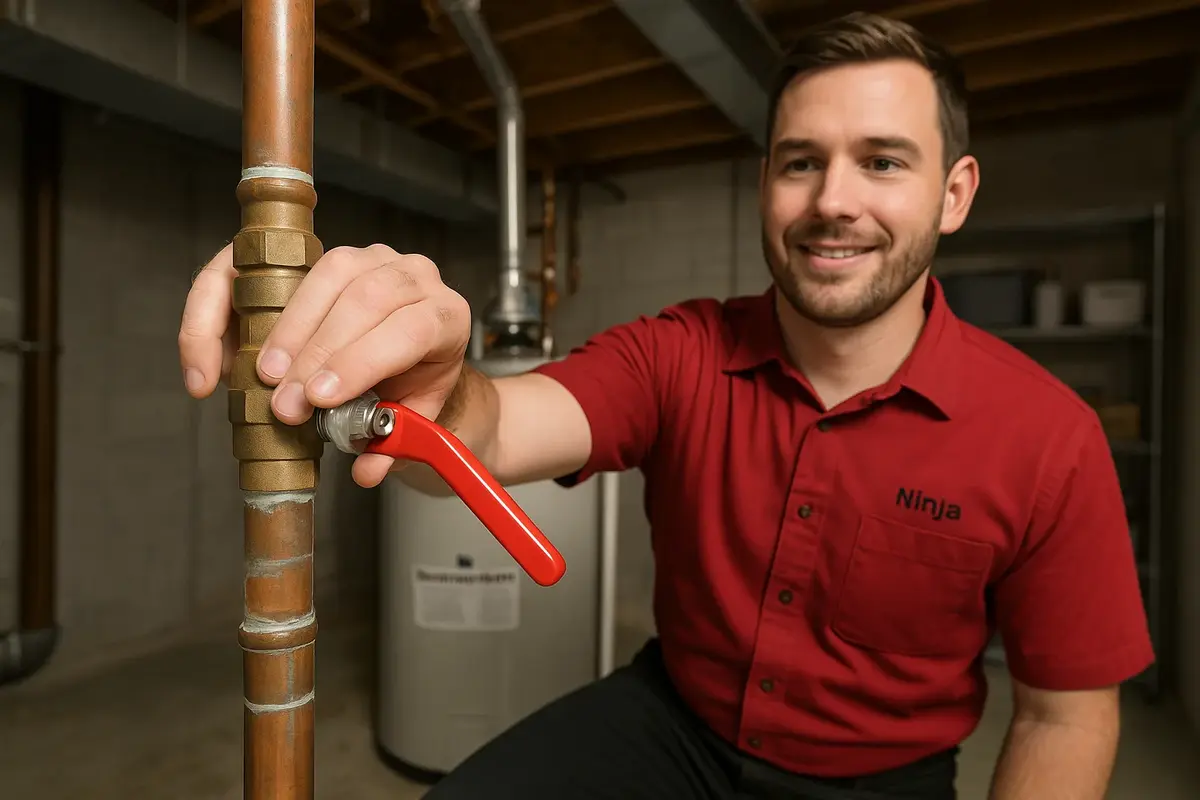
Don’t wait until you’re rushing out the door to hunt for your shutoff. In most Wasatch Front homes it’s near the front hose bib, in the basement, or by the water heater. Turn it off, then open a faucet to confirm the water actually stops. Utah’s hard water is rough on valves, and a stiff, seized shutoff is exactly the thing you want to find now — not the day a pipe bursts.
2. Set Your Water Heater to Vacation Mode
If you shut the main, you have to deal with the water heater too. A sealed tank still heating with no water moving through it can build pressure — not something you want cooking all week. On a gas unit, turn the dial to “VAC” or “Pilot.” On an electric unit, flip its breaker off. It’s free, it takes ten seconds, and it saves energy while you’re gone.
3. Close the Supply Valves to Your Washer and Dishwasher
Those braided hoses behind your washing machine stay under full pressure every second of every day, whether the machine runs or not. The Insurance Information Institute calls a burst supply hose one of the fastest, most common sources of home water damage. Utah’s summer heat only speeds up how quickly that rubber ages. Reach back and turn both valves clockwise. If yours are corroded or you’ve never touched them, read up on the $5 supply line that floods Utah homes before you go.
4. Remember Utah’s Secondary Water — the Main Shutoff Misses Your Sprinklers
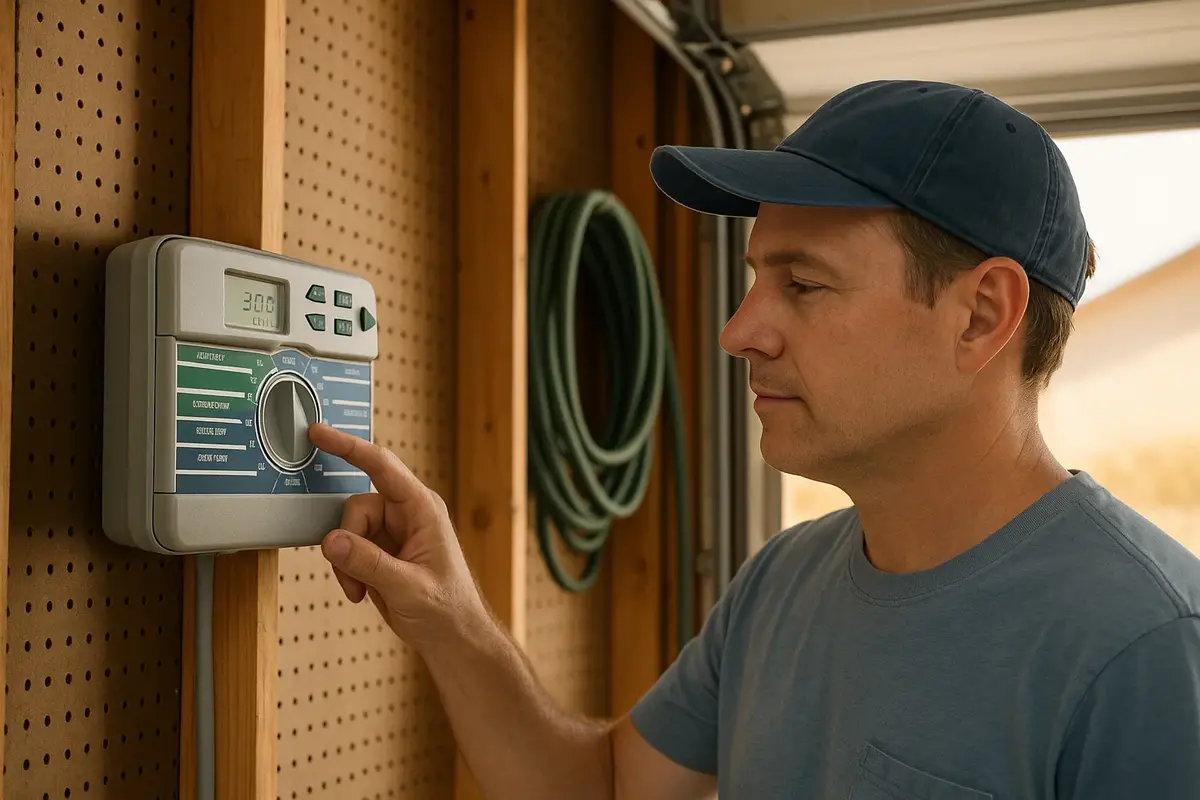
This is the one every national blog gets wrong. Loads of homes across Lehi, Eagle Mountain, and the rest of the Wasatch Front run sprinklers on a separate pressurized secondary line. Shutting off your culinary main does nothing to that system. A stuck valve or a cracked sprinkler line can still flood a window well or your yard while you’re away. Set the controller to a sensible summer schedule. And know where your secondary shutoff is. Our guide to Utah’s secondary water systems walks through it.
5. Test Your Sump Pump Before Monsoon Season Hits
A summer vacation is not a dry-season free pass in Utah. Our monsoon rolls in around mid-July and runs into September, and the National Weather Service ranks flash flooding among the region’s deadliest hazards. Pour a bucket of water into the sump pit and watch the pump kick on and clear it. If it groans, hesitates, or does nothing, that’s your sign — here’s how to check and maintain a sump pump the right way.
6. Protect Your Drains From Sewer Smell While You’re Gone
Every drain in your home has a P-trap holding a little water that blocks sewer gas. When a fixture sits unused, that water evaporates — faster in July heat — and the smell creeps in. For a long trip, pour a couple tablespoons of mineral oil down the drains you rarely use, like a guest bathroom or basement floor drain. The oil floats on top of the water and slows evaporation way down. Want the full breakdown? We cover it in why your house smells like sewer in summer.
7. Set the Thermostat Right — and Don’t Just Switch It Off
Turning the AC completely off in a Utah July is a mistake. A house that climbs to 95 degrees inside cooks your appliances, warps wood, and grows mold in any spot of standing water. Set it to about 85 degrees instead. Your system loafs along, the house stays reasonable, and your energy bill barely notices. That’s the sweet spot — protected home, low cost.
Feeling like this is a lot to track before a big trip? Our Home Health Plan members get priority scheduling for a quick pre-vacation once-over. Or just call us at (801) 997-8909 and we’ll walk your shutoffs with you.
The Insurance Angle Most Utah Homeowners Miss
Now for the part almost nobody tells you. Many homeowners policies carry a vacancy clause. Say your house sits empty for an extended stretch — often 30 to 60 days, per Policygenius. If a pipe fails because the water wasn’t shut off, your claim can get denied outright.
Think about what that means for a long summer away. You come home to a flooded basement, file the claim, and learn you’re paying for the repair yourself. That’s the real reason the trip-length framework matters. For a short getaway it’s about convenience. For a month-long absence, shutting the water off isn’t just smart — it may be the fine print keeping your claim alive.
So before any long trip, do two things. Read your policy language on vacancy, and confirm your main shutoff actually works. Five minutes now beats a five-figure surprise later.
Coming Home: Your 5-Minute Plumbing Walkthrough
Getting home is only half of it. Turning everything back on wrong can leave you with air-hammering pipes and lingering smells. Take five minutes before you unpack.
Open the main slowly — cracking it a quarter turn first lets the system fill without slamming the pipes. Then run every faucet, flush every toilet, and pour a little water down each drain to refill those P-traps and clear the sewer gas. Switch your water heater back from vacation mode and give it 30 to 45 minutes to recover before you shower.
Last, do a quick drip check. Look under the sinks, behind the washer, and around the base of the water heater. If you come home to a flood instead, that’s the moment to call for help — and we handle emergency calls after hours, too. Not sure who to trust in a pinch? Here’s how to pick an emergency plumber in Utah before you ever need one.
Frequently Asked Questions
Should you turn off the water heater when the water is off?
Yes. If you’ve shut off the main for a long trip, set the water heater to vacation mode too. A sealed tank that keeps heating with no water flow can build pressure, and it just wastes energy heating water nobody’s using. On a gas unit, turn the dial to “VAC.” On electric, flip the breaker.
How long do you have to be away to shut off the water?
Our rule of thumb: a week or more, shut the main off. For 1–3 day trips you can usually skip it. Anything past 30 days, shut it off and check your policy — a vacancy clause may require it.
Should you leave faucets open when the water is turned off?
Opening a faucet after you close the main is a smart way to relieve the pressure still sitting in the lines and confirm the shutoff worked. For a summer trip you can then leave a couple open a crack. There’s no freeze risk to worry about in a Utah July — that’s a winter concern.
Why does my house smell like sewer after vacation?
Dried-out P-traps. When drains sit unused, the water seal that blocks sewer gas evaporates, and July heat speeds that up. Run water down every drain and flush the toilets when you get home to refill the traps. The smell usually clears within an hour.
Does homeowners insurance cover water damage while you’re on vacation?
Often, yes — but not always. Sudden accidental damage is usually covered. But a vacancy clause can deny a claim if the home sat empty a long time and the water wasn’t shut off. Read your policy before a long trip so you know where you stand.
Enjoy the Trip — Come Home to a Dry House
Run the seven steps, sort out the water heater and thermostat, and you can actually relax on your trip instead of wondering about the house. If you’d rather have a pro confirm your shutoffs before a long summer getaway, that’s exactly what our full range of residential plumbing services covers.
Give us a call at (801) 997-8909 — we’re family-owned, Utah state licensed, and backed by a guaranteed 120-minute emergency response during business hours if you ever come home to a problem. The $49 dispatch fee (weekdays 9 AM-5 PM) is applied to your repair, and Home Health Plan members get priority pre-trip scheduling. No pressure — just a dry house waiting when you get back.


